One treatment that stops keratoconus getting worse. Standard or laser-assisted, performed by a fellowship-trained corneal surgeon in Colchester.
Riboflavin drops and ultraviolet light strengthen the cornea so it holds its shape. About 30 minutes per eye. The choice when your keratoconus is progressing but you still see well in glasses or lenses.
A topography-guided laser smooths the irregular surface of the cornea first, then the cross-linking locks the new shape in. Stabilises and improves vision in one session. The choice when the cone is already distorting what you see.
If the cornea needs reshaping beyond what laser can do, CAIRS ring segments can be combined with cross-linking instead.
Speak to our team first. No referral needed.

Cross-linking keeps the cornea as it is on the day of treatment. Treated early, it protects good vision. Treated late, it protects poor vision, and improving it afterwards takes more involved surgery.
If you are under 30, or your scans show change between visits, we would rather see you now than at next year's check.
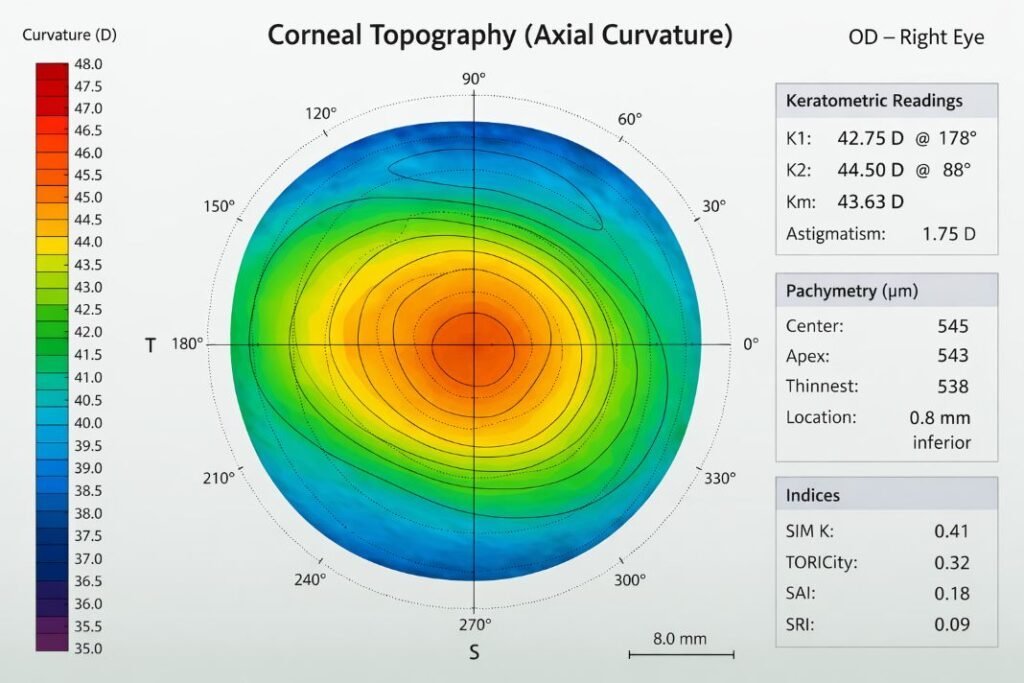
Most of the patients we cross-link:
Stable keratoconus over 40 usually needs monitoring rather than treatment, and we will say so.
Bring your latest corneal scans if you have them. They show whether the cornea is changing.
Book a Consultation →No referral needed.


Cross-linking is corneal surgery. Mr Mukherjee is fellowship-trained in corneal disease, and keratoconus is a large part of his practice.
Standard CXL, laser-assisted CXL, CAIRS and corneal transplant are all done here. If your cornea needs more, the plan changes without a referral elsewhere.
Mr Mukherjee plans your treatment, performs it and reviews your scans afterwards. The team looks after you in between.
Anaesthetic drops numb the eye. The thin surface layer of the cornea is gently removed so the riboflavin can soak in.
Drops for several minutes, then the ultraviolet light on the cornea. With laser-assisted CXL, the laser reshaping comes first.
A soft contact lens protects the eye for a few days. You go home the same day. Mr Mukherjee performs every treatment himself.
The sore part. Stinging, watering and light sensitivity while the surface heals under the bandage lens. Drops and ordinary painkillers manage it. Plan to be off work.
The bandage lens comes out. Discomfort eases quickly from here.
Vision is hazy while the cornea settles. Most people are back at work within a week. Contact lens wearers wait 4 to 6 weeks.
The cornea stabilises. Repeat scans confirm the treatment has done its job.
Private cross-linking in the UK is typically £1,500 to £2,500 per eye. Laser-assisted CXL costs more than standard. You get a written quote at your consultation, covering the treatment, the bandage lens and the follow-up scans.
The NHS offers cross-linking for progressive keratoconus, but waiting times vary by area, and a progressing cornea does not wait. Payment plans are available.
Your consultation confirms whether you need treatment and what it would cost.
Or call 01206 670712
No referral needed.
One treatment, one day, and the cornea holds. The sooner we see your scans, the more there is to protect.
No referral needed.
The practice team will call you shortly to arrange your appointment. If you’d rather not wait, call 01206 670712.
Thanks — your details are saved. Choose a time that suits you:
Loading the calendar… if it doesn’t appear, the team will call you instead.
