
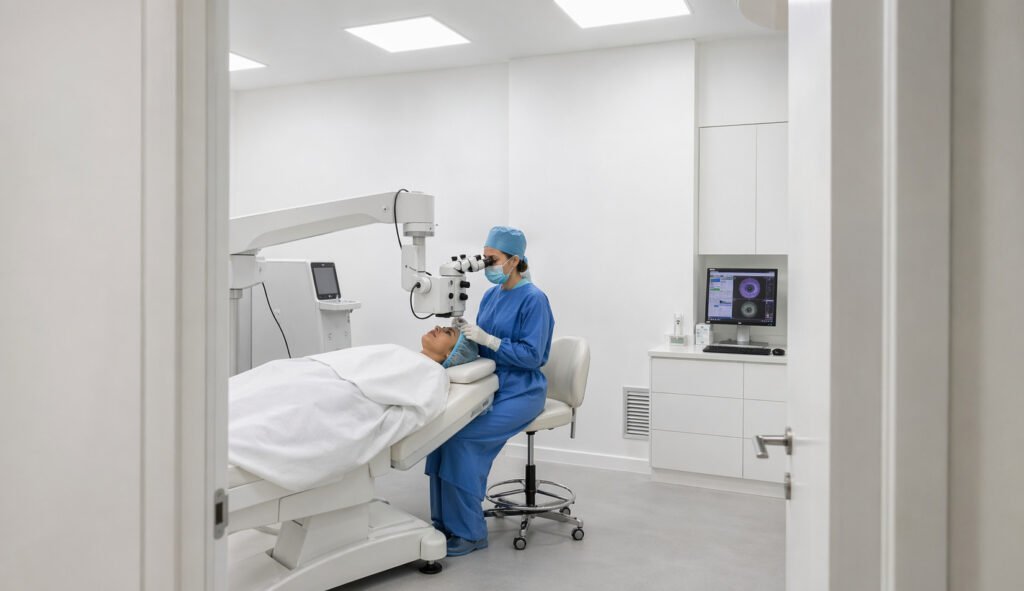
Can ICL surgery be reversed if you need the lens removed?
Yes. An Implantable Collamer Lens, or ICL, can be surgically removed or exchanged. We describe it as removable, not risk-free or automatically undone, because removal is another eye operation and cannot promise that every symptom or visual change disappears. That wording matters when you are weighing it against laser treatment.
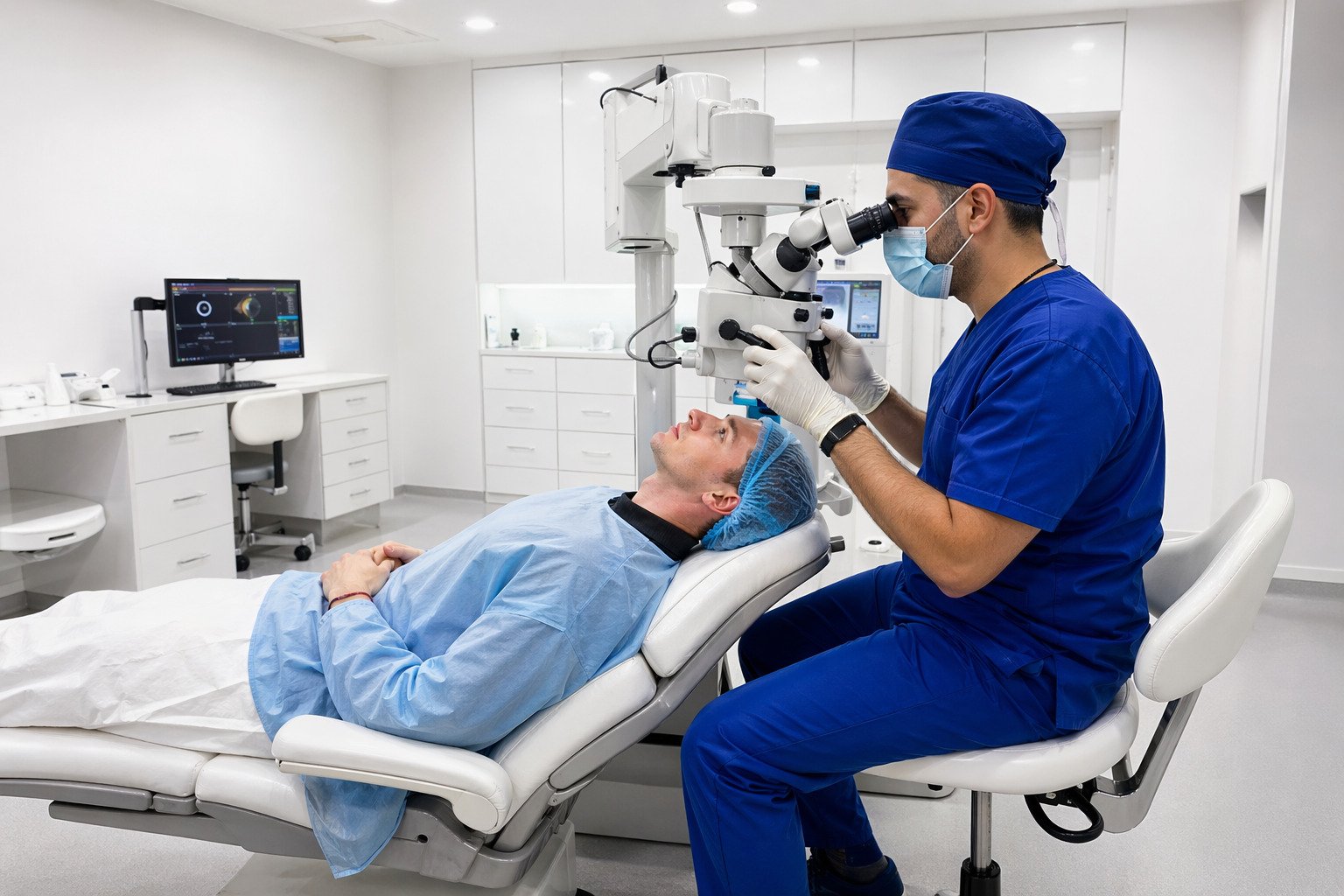
The clear answer on ICL removal
You may be considering ICL because Laser-Assisted In Situ Keratomileusis, known as LASIK, may not suit your prescription, corneal thickness, dry eye profile or astigmatism. That is exactly where ICL becomes attractive, but the obvious worry follows: if a lens goes inside your eye, are you stuck with it?
We would describe ICL as a removable lens implant. It is a phakic intraocular lens, which means a lens placed inside an eye that still has its natural lens. The Royal College of Ophthalmologists describes phakic lenses as being placed just in front of, or just behind, the pupil, “a bit like building your contact lenses into your eyes.”
That makes ICL different from LASIK and TransPRK, a surface laser technique used for some thinner corneas or certain prescriptions. Laser treatment reshapes corneal tissue. ICL adds a lens inside the eye to correct the prescription, with the natural lens left in place.
After ICL lens removal, vision and eye health will usually be close to the position before implantation, but we would never treat that as a promise. You may need glasses or contact lenses again after removal, and if a problem has developed, further treatment may still be needed. The useful distinction is simple: removable, exchangeable and planned for the long term.
Discuss your vision goals with our experienced consultant and receive a thorough personal assessment.
EnquireThe reason “removable” is more accurate than “fully reversible”
The word reversible is useful, but it is often used too loosely. We use removable because it keeps the promise in the right place: the lens can be taken out, but the eye has still had intraocular surgery.
Removable is not the same as consequence-free. A lens can be removed, yet that does not prove every visual symptom or eye health issue will disappear. Glare, halos, starbursts and ghost images can occur after phakic intraocular lens surgery. They are usually mild and improve within a few months, but they do not always settle completely.
At The Vision Surgeon, we explain this plainly during assessment because good consent starts with accurate language. You should know the benefit of ICL removability without treating it as a reset button. If symptoms appear, the right response is examination, measurement and a decision based on what is happening in that eye.
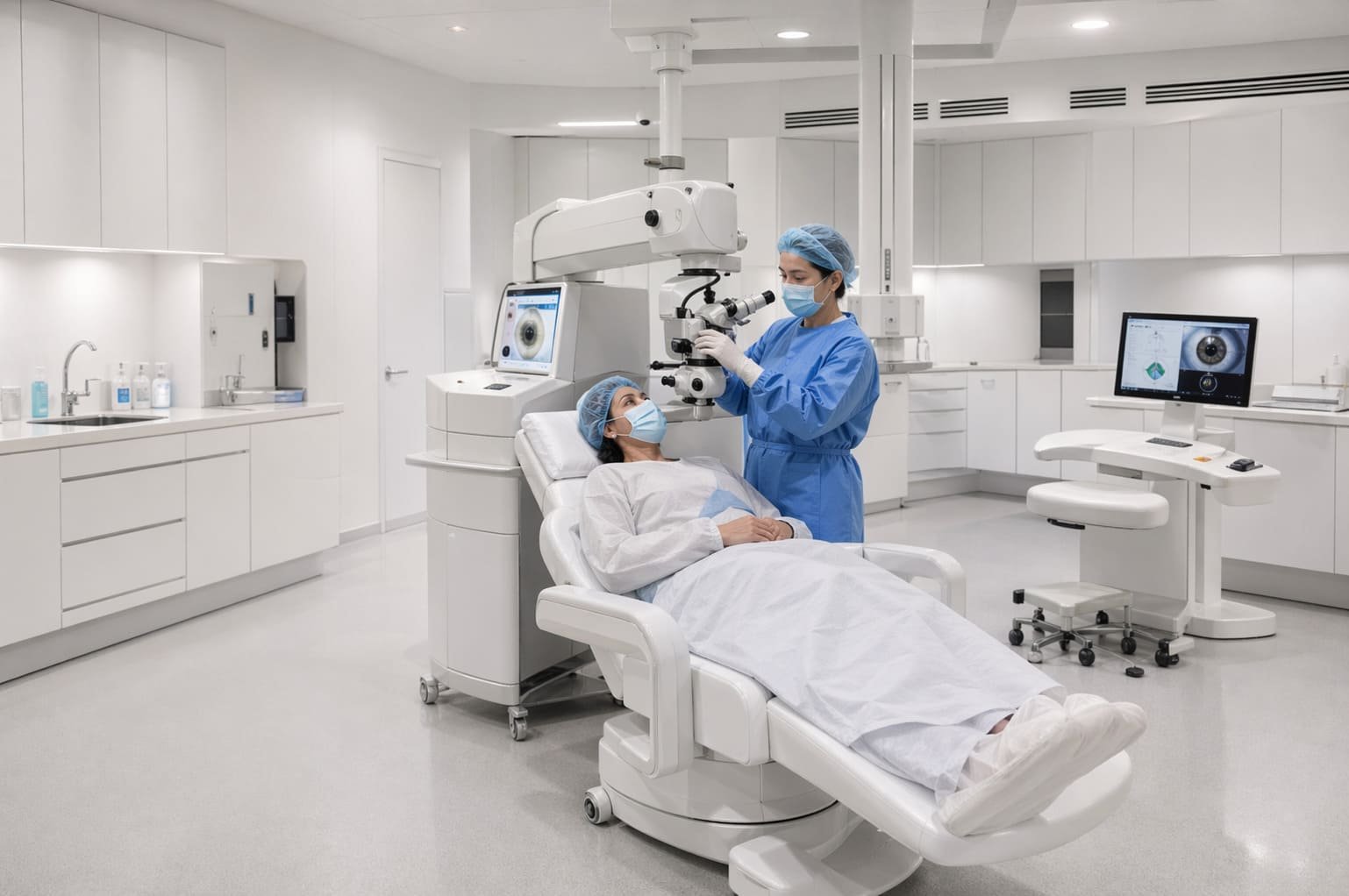
Patients asking about reversibility often need the broader discussion about fit, vault, and future cataract planning, because those factors influence whether ICL remains the right option over time.

Why ICL removal, exchange or repositioning may be needed
“Needing the lens removed” can mean several different clinical situations. Some involve taking the ICL out altogether, some involve replacing it with a better-fitting lens, and some involve adjusting position.
The table below separates the scenarios that are often blurred together.
| Situation | What it usually means | What you should understand |
|---|---|---|
| ICL removal | The implanted lens is taken out because it no longer suits the eye or another eye operation is needed. | Removal is possible, but it is still surgery inside the eye. |
| ICL exchange | The lens is replaced with another ICL, commonly because a different size gives a better fit. | Exchange does not mean ICL has failed as an option. It means the fit needs correcting. |
| Repositioning or rotation | The lens position is adjusted, which may be relevant with lens alignment or astigmatism correction. | The aim is to improve how the lens sits or works without abandoning the treatment plan. |
| Cataract-related removal | The ICL is removed as part of cataract surgery. | Cataract surgery after ICL remains possible, but the plan changes because two lenses are involved. |
Fit matters because the ICL must sit at the right distance from the natural lens. We call that space the vault. If the vault is too high or too low, the surgeon may advise further treatment, which can include an exchange.
The Royal College of Ophthalmologists says ICL removal is uncommon unless cataract surgery is needed or a different ICL size is required. It gives an approximate figure of 1 in 40 cases needing replacement with a different ICL size to get the best fit in the eye. That is why accurate measurements before surgery are not admin, they are part of the safety plan.
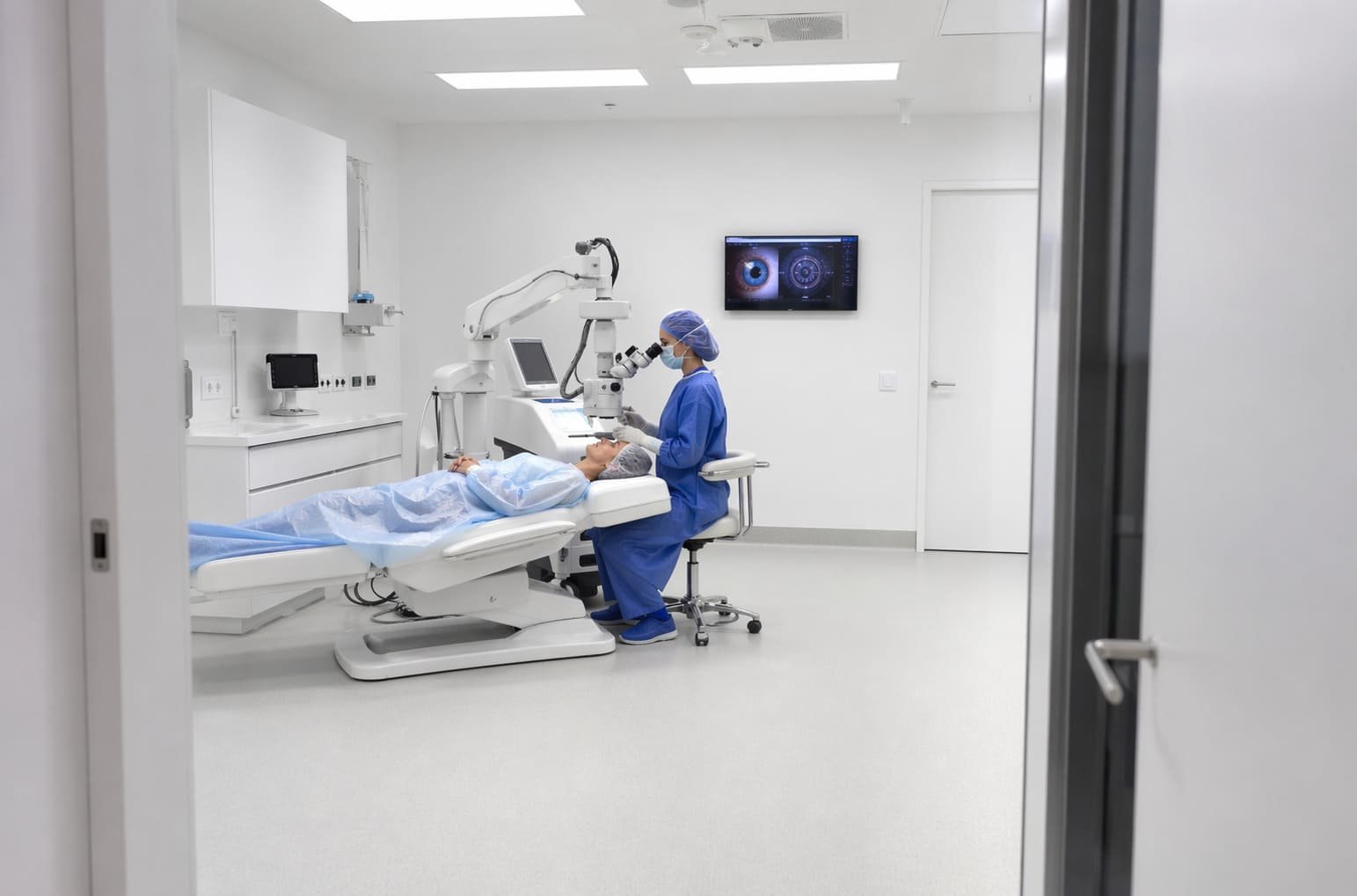
The cataract pathway after ICL
When cataract surgery is needed later, the presence of an ICL changes the plan but does not close the door. ICL sits in an eye that still has its natural lens, and cataract surgery deals with that natural lens when it becomes cloudy.
ICL removal during cataract surgery
Cataract surgery after ICL involves removing the phakic lens as part of the cataract operation. The Royal College of Ophthalmologists says the ICL can be removed through a normal cataract entry incision, so this situation is planned as part of the cataract pathway.
That point matters if you are choosing ICL at a younger age. The question is not whether cataract surgery can happen later. The better question is whether your surgeon has already thought through what your future lens options might look like if your eyes change with age.
Lens replacement after the natural lens is removed
Cataract surgery removes the natural lens and replaces it with an artificial intraocular lens. Refractive lens exchange, also known as lens replacement surgery, is a related procedure where the natural lens is replaced to correct vision, even when a cataract is not the main issue.
For some older patients, lens replacement may fit the long-term plan better than ICL. For a younger patient with a high prescription, thin corneas or dry eye concerns, ICL may make more sense because it preserves the natural lens. We judge that through age, prescription, eye health and expectations, rather than treating one procedure as the answer for every eye.
The right ICL decision is planned beyond the first operation
The best way to reduce the chance of ICL removal or exchange is to decide carefully before the first operation. We look at whether ICL suits the whole eye, as well as whether it can correct the prescription.
The checks that matter include:
- Prescription stability, because the Royal College of Ophthalmologists says suitability normally requires being over 18 and having no change greater than 0.5 dioptres in the last 2 years.
- Corneal thickness and dry eye profile. These can make ICL more suitable than LASIK or TransPRK for some people.
- Anterior chamber depth, which means the space inside the front part of the eye where the lens needs to sit safely.
- Endothelial cell count. These are the cells lining the inner surface of the cornea, and they need to be healthy before an internal lens is considered.
- Intraocular pressure, meaning the pressure inside the eye, which forms part of the glaucoma and safety check.
In Colchester, we see many people from Essex, Suffolk and the surrounding counties who are comparing ICL with LASIK, TransPRK and lens replacement. At The Vision Surgeon, Mr Mukherjee assesses suitability personally and offers the full range of vision correction procedures, so the discussion is not forced around one technique.
Mr Mukherjee holds the Certificate in Laser Refractive Surgery, known as CertLRS, from the Royal College of Ophthalmologists. That matters here because reversibility is a narrow question, and your real decision is wider: prescription, anatomy, future cataract planning and the standard of aftercare all belong in the same conversation.
Once you understand ICL as removable rather than simply reversible, the decision becomes much clearer. You know to check the measurements, the alternatives and the long-term plan before you treat the word “reversible” as enough.
Get answers to your questions about surgery, aftercare and the benefits of consultant-led treatment.
Message UsQuestions we hear about ICL removal
Will I need glasses if an ICL is removed?
You may need glasses or contact lenses again if the ICL is removed, because the implanted lens was correcting your prescription. Removal does not remove the original prescription from the eye.
Does a prescription change always mean the ICL has to come out?
A prescription change does not automatically mean ICL removal. We would reassess the eye, the lens position and your visual needs before deciding whether glasses, monitoring, exchange or another option is more suitable.
Can dry eye make ICL a better option than laser eye surgery?
Dry eye concerns can make ICL worth considering because ICL does not reshape the cornea in the same way as LASIK or TransPRK. Suitability still depends on a full eye assessment.
Is ICL removal painful?
ICL removal is a surgical procedure performed with anaesthetic care, so pain control forms part of the plan. Your surgeon should explain what to expect before any removal or exchange is agreed.
Can I have lens replacement later if I have had ICL?
Lens replacement or cataract surgery can still be considered after ICL, but the ICL has to be included in the surgical plan. If cataract surgery is needed, the phakic lens is removed as part of that pathway.
This is general information, not medical advice.