Which vision correction surgery is right for your eyes?
We choose between LASIK, ICL and lens replacement by looking at the part of the eye that should be treated. LASIK reshapes the cornea, ICL adds a lens while keeping your natural lens, and lens replacement removes that natural lens and replaces it. Age, prescription and eye health decide the route.
Marketing names can make these eye surgery options for vision correction sound interchangeable. They are not. Laser-Assisted In Situ Keratomileusis, or LASIK, works on the clear front window of the eye, called the cornea. Implantable contact lens surgery, or ICL, places a lens inside the eye while preserving your natural lens. Refractive lens exchange, or lens replacement surgery, replaces your natural lens with an artificial intraocular lens.
Two people can have similar glasses prescriptions and receive different advice. A younger adult with a high level of short-sightedness may need a different discussion from someone in their 50s who has reading vision changes. Online comparisons can narrow the question, but they cannot measure your cornea, lens clarity or eye health.
The three-way comparison
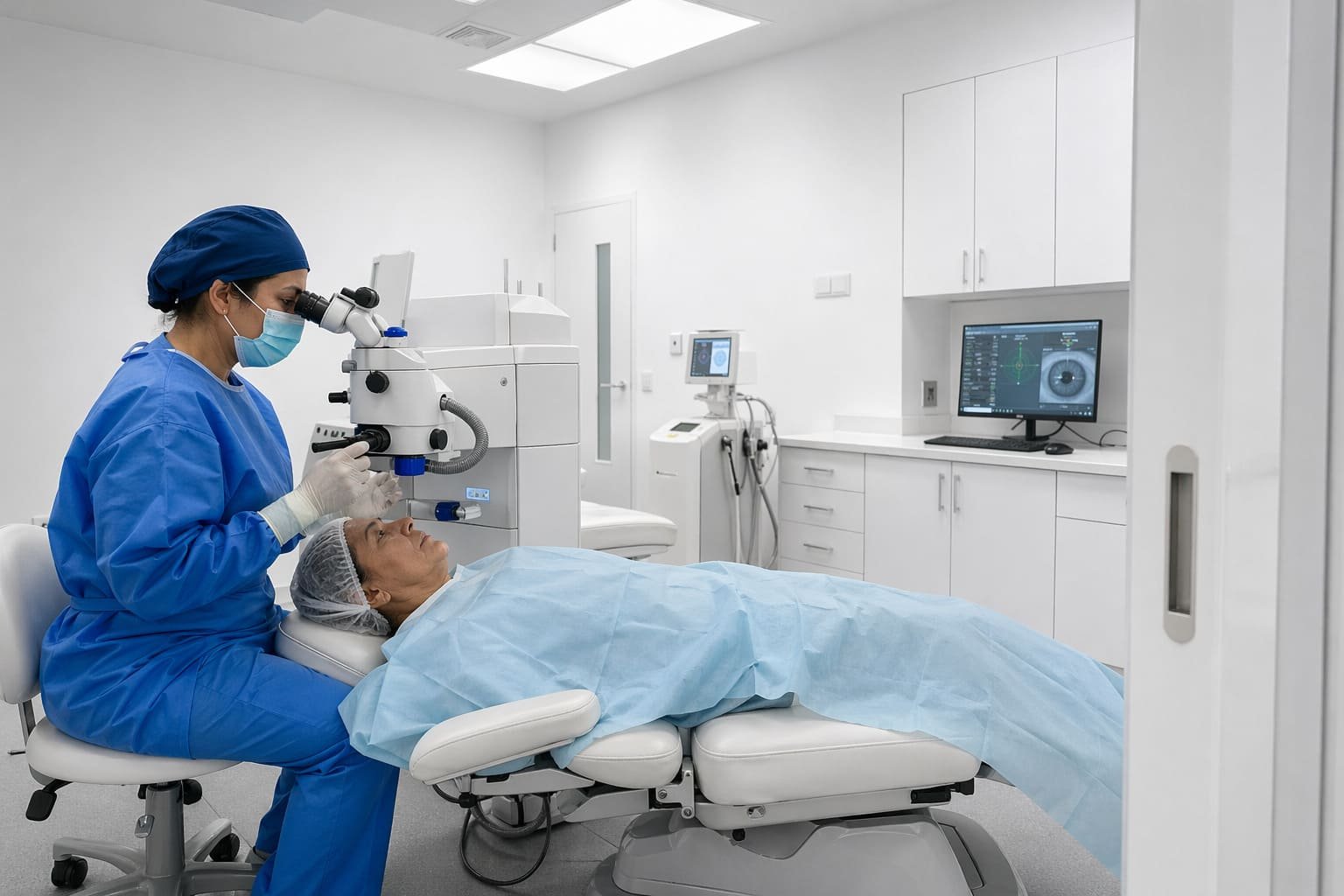
A useful LASIK vs ICL vs lens replacement comparison starts with one question: what part of the eye changes? Once that is clear, the trade-offs become easier to judge.
| Point of comparison | LASIK | ICL | Lens replacement surgery |
|---|---|---|---|
| What changes in the eye | The cornea is reshaped with a laser. | A lens is placed inside the eye, behind the iris, while your natural lens stays in place. | The natural lens is removed and replaced with an artificial intraocular lens. |
| Common fit | People with suitable corneal thickness, stable prescription and healthy eye surface. | People with higher prescriptions or thinner corneas, where laser surgery may not be the right route. | People over 50, those with presbyopia, or those unsuitable for laser correction. |
| Main trade-off | Corneal suitability matters. Dry eye, visual disturbance or flap-related issues need careful discussion. | The lens may be removable, but removable does not mean risk-free or a guaranteed return to your exact previous vision. | The natural lens cannot later develop a cataract, but lens choice affects how distance and reading vision are balanced. |
| Practical feel of recovery | Recovery is linked to the corneal flap and laser reshaping. | Recovery is linked to an intraocular procedure, because surgery takes place inside the eye. | Recovery is linked to lens surgery and the way your chosen implant manages focus. |
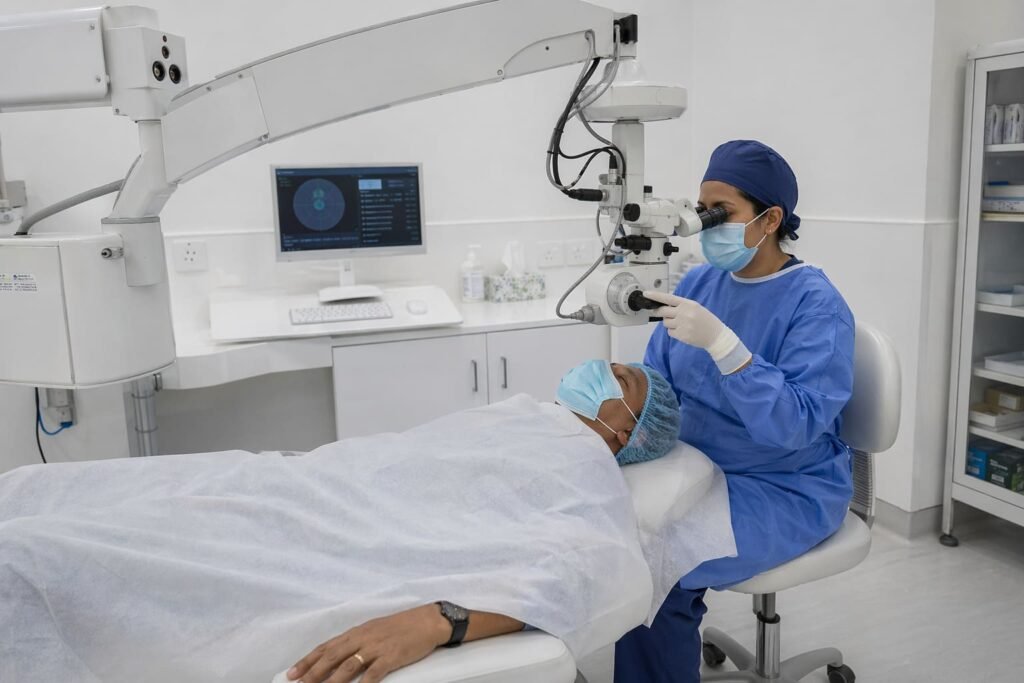
NICE describes LASIK as a laser technique involving a corneal flap, laser reshaping and flap repositioning. NICE also describes phakic intraocular lens surgery, the clinical term for ICL-type surgery, as inserting an artificial lens while keeping the natural lens in place. Those details matter because they explain why the risk profile differs.
Lens replacement deserves equal weight in this comparison. For many over-50s, the lens inside the eye has become the main part of the decision, especially when reading vision has changed or early lens changes are present. A table can guide your thinking, but it cannot decide whether your own eyes fit one route.
Discuss your vision goals with our experienced consultant and receive a thorough personal assessment.
EnquireAge, prescription and eye health
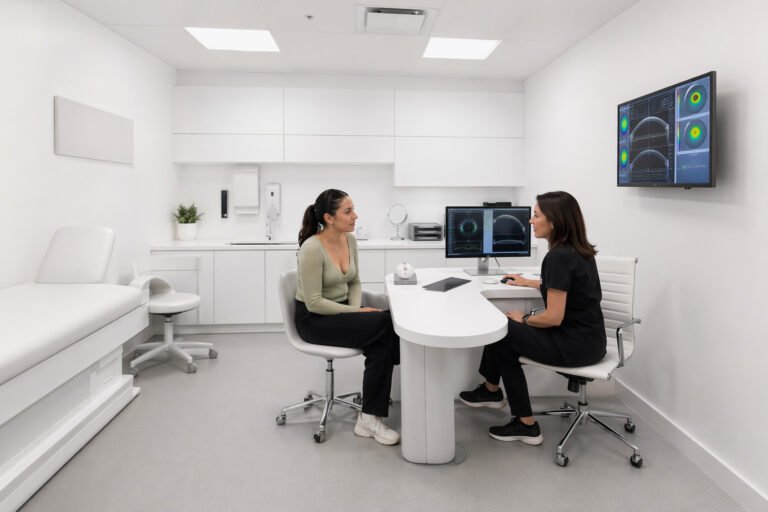
A 28-year-old with high myopia and a 55-year-old with presbyopia are asking different clinical questions. We look at your prescription, corneal thickness, corneal shape, lens clarity and eye surface before any procedure name becomes meaningful.
Younger eyes and high prescriptions
High prescriptions can push the discussion beyond standard laser eye surgery. At The Vision Surgeon, we assess whether the cornea has enough strength and the right shape for laser treatment, because reshaping a cornea that is too thin or unsuitable is the wrong starting point.
ICL can be useful for higher levels of short-sightedness. Our published guidance says ICL can correct short-sightedness up to approximately -18.00 dioptres, but that figure does not make it the answer for every high prescription. We still need to check the space inside the eye, retinal health and the stability of your glasses prescription.
Thin corneas also change the conversation. Some people who arrive asking for LASIK are better suited to a surface laser option such as TransPRK, and some are better suited to ICL. The scan decides the route, not the advert.
Over-50s and lens changes
Reading vision changes after midlife because the natural lens loses its ability to focus up close. That change is called presbyopia, and it is one reason laser eye surgery or lens replacement becomes a different decision after 50.
Lens replacement surgery deals with the natural lens directly. If the lens is beginning to lose clarity, or if your prescription and reading vision are both part of the problem, changing the lens may make more clinical sense than reshaping the cornea. Still, lens replacement is not automatic for everyone over 50, because your eye health, prescription and expectations all matter.
A useful assessment separates what glasses can correct from what the eye itself is doing. Once we have measured the cornea and assessed the lens, the choice becomes much narrower.
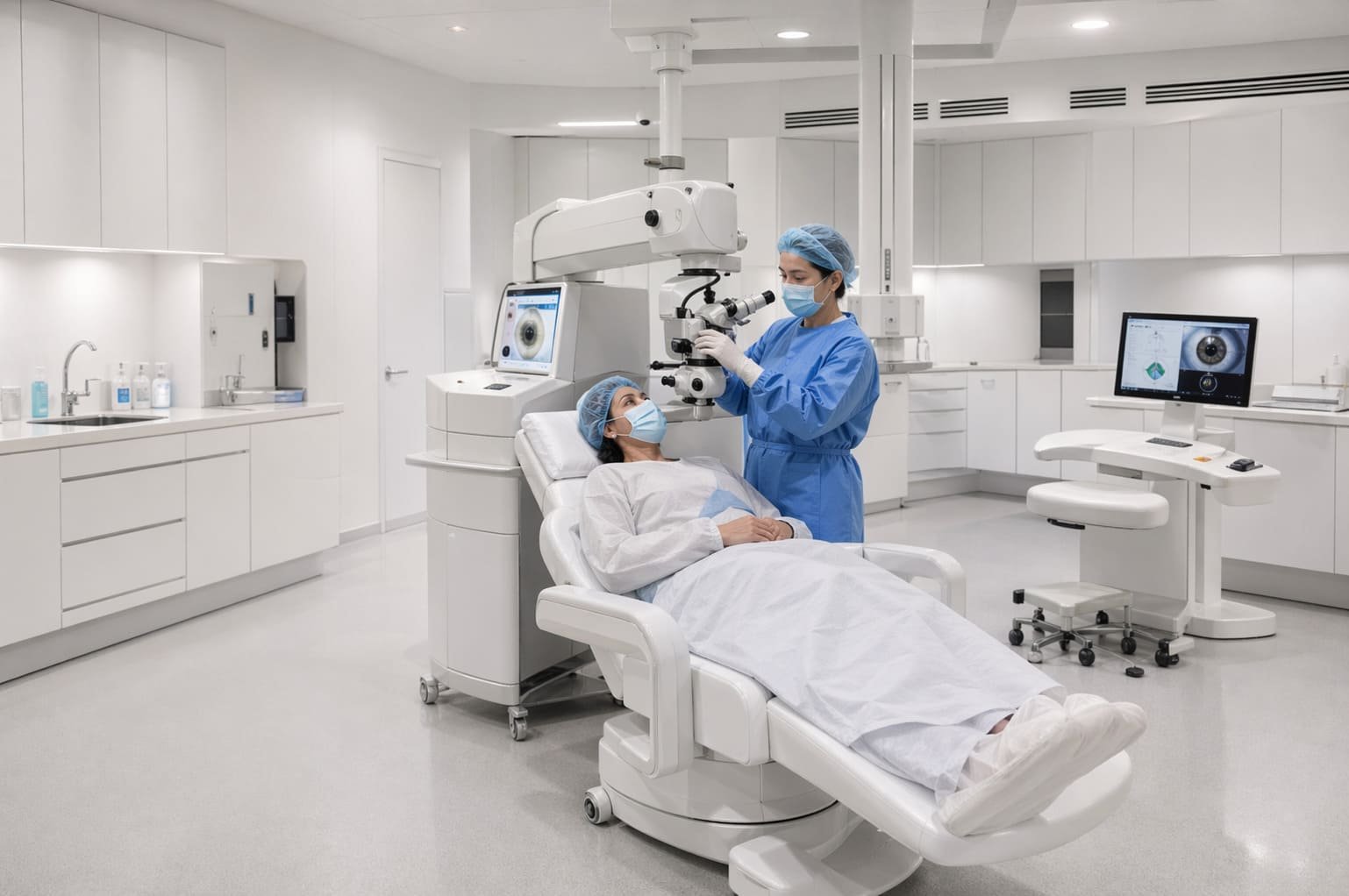
If a reader has thin corneas or a high prescription, point them towards assessment pages that explain how the cornea, natural lens and implanted lens change the decision. That keeps the journey focused on suitability rather than procedure names.

Recovery, risks and cost
Practical differences matter as much as technical ones, because LASIK, ICL and lens replacement affect different structures in the eye. Recovery, risks and price should be discussed together, since a good choice has to fit your eye as well as your plans.
NICE states that evidence supports laser refractive surgery for properly selected patients, with consent covering risks such as visual disturbance, corneal infection and flap complications. For phakic intraocular lens surgery, NICE highlights consent points including cataract, corneal damage, retinal detachment and limited long-term evidence. That does not mean these procedures should be feared. It means consent must be honest and specific.
No procedure should be sold as a guarantee of complete freedom from glasses. Some people still need glasses for certain tasks after surgery, especially when reading vision or lens choice is part of the equation. Glare, halos and dry eye symptoms also need plain discussion before you choose.
At The Vision Surgeon, we publish indicative 2026 prices so you can plan with sensible figures: LASIK or TransPRK is £1,400 to £1,800 per eye, ICL is approximately £3,000 per eye, and cataract surgery or lens replacement is £2,000 to £4,000 per eye depending on lens type. These include consultation, surgery and standard aftercare appointments, with final pricing confirmed after your individual assessment.
The main factors that shape recovery, risk and cost are straightforward:
- Your corneal measurements, especially thickness and shape.
- Your natural lens, including clarity and reading focus.
- Lens choice, particularly for lens replacement or cataract surgery.
- Any dry eye, retinal issue or wider eye health finding that changes the plan.
- The aim you care about most, such as distance vision, reading vision or lower dependence on contact lenses.
Price matters, but a lower figure is poor value if it leads you toward a procedure that does not suit your eyes. We prefer to separate affordability from suitability first, then compare realistic options.
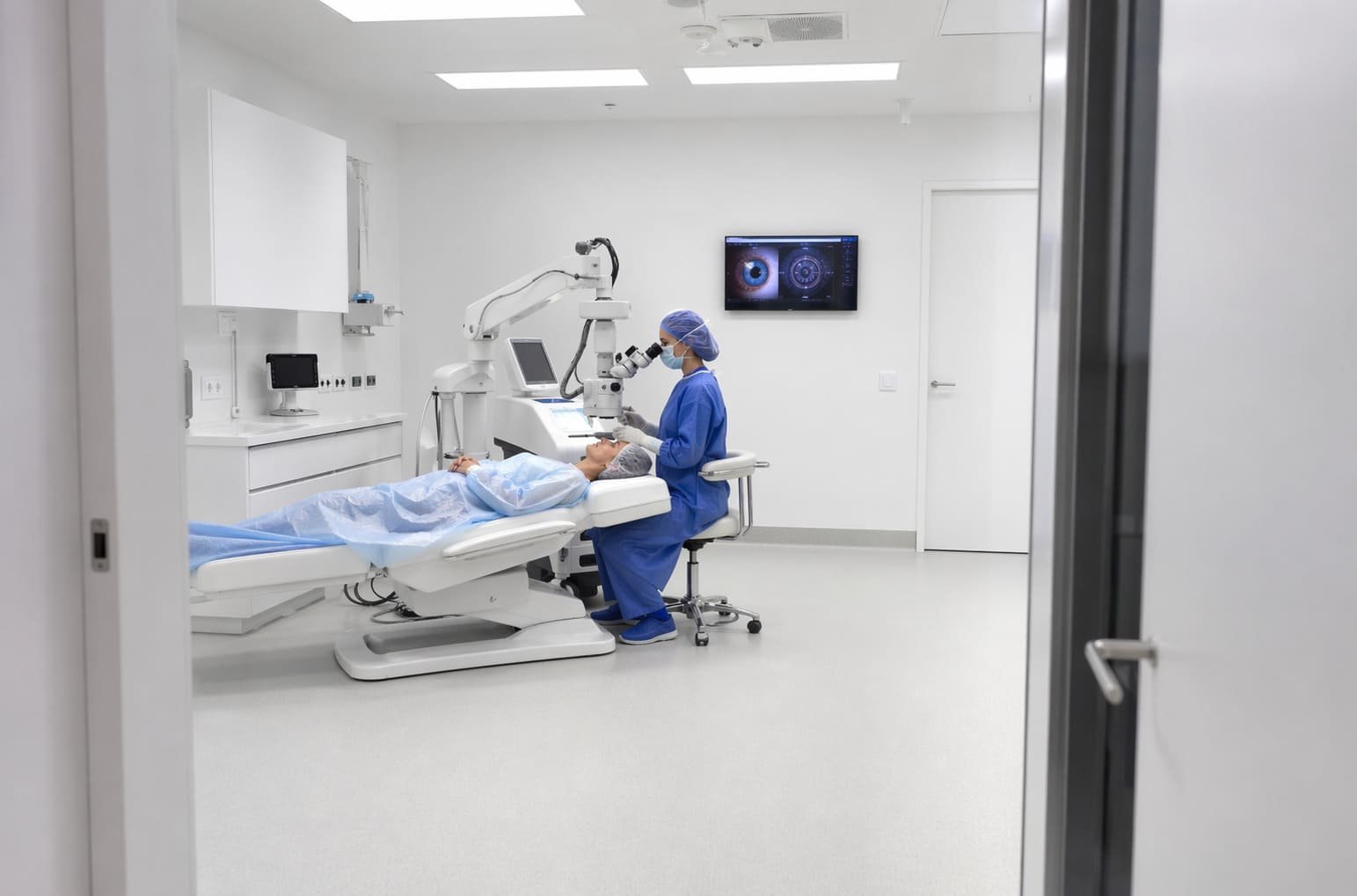
Use internal links from comparison content to the individual LASIK, ICL and lens replacement pages, then finish with the consultation CTA. That path mirrors how patients decide in practice and supports conversion.
The right assessment
Once the right measurements are in front of us, the decision stops being a contest between procedure names. The better question is whether your cornea, an added lens or your natural lens is the right place to make the correction.
At The Vision Surgeon, we offer LASIK, ICL and lens replacement locally in Colchester, so the assessment is not limited to one pathway. Mr Mukherjee is a consultant ophthalmologist with FRCOphth, CertLRS and FWCRS credentials, and he personally sees patients from first consultation through surgery and follow-up. That continuity matters because the same clinical judgement runs through the whole process.
Patients from Essex, Suffolk and the surrounding counties often assume that advanced vision correction requires travel to London. For this decision, the more useful point is simpler: you need a full refractive assessment by someone who can compare the whole range and explain why one route fits your eyes better than another.
After proper measurements, the choice looks different. You are no longer weighing three similar-sounding procedures; you know whether to question the cornea, the implanted lens option or the natural lens before agreeing to surgery.
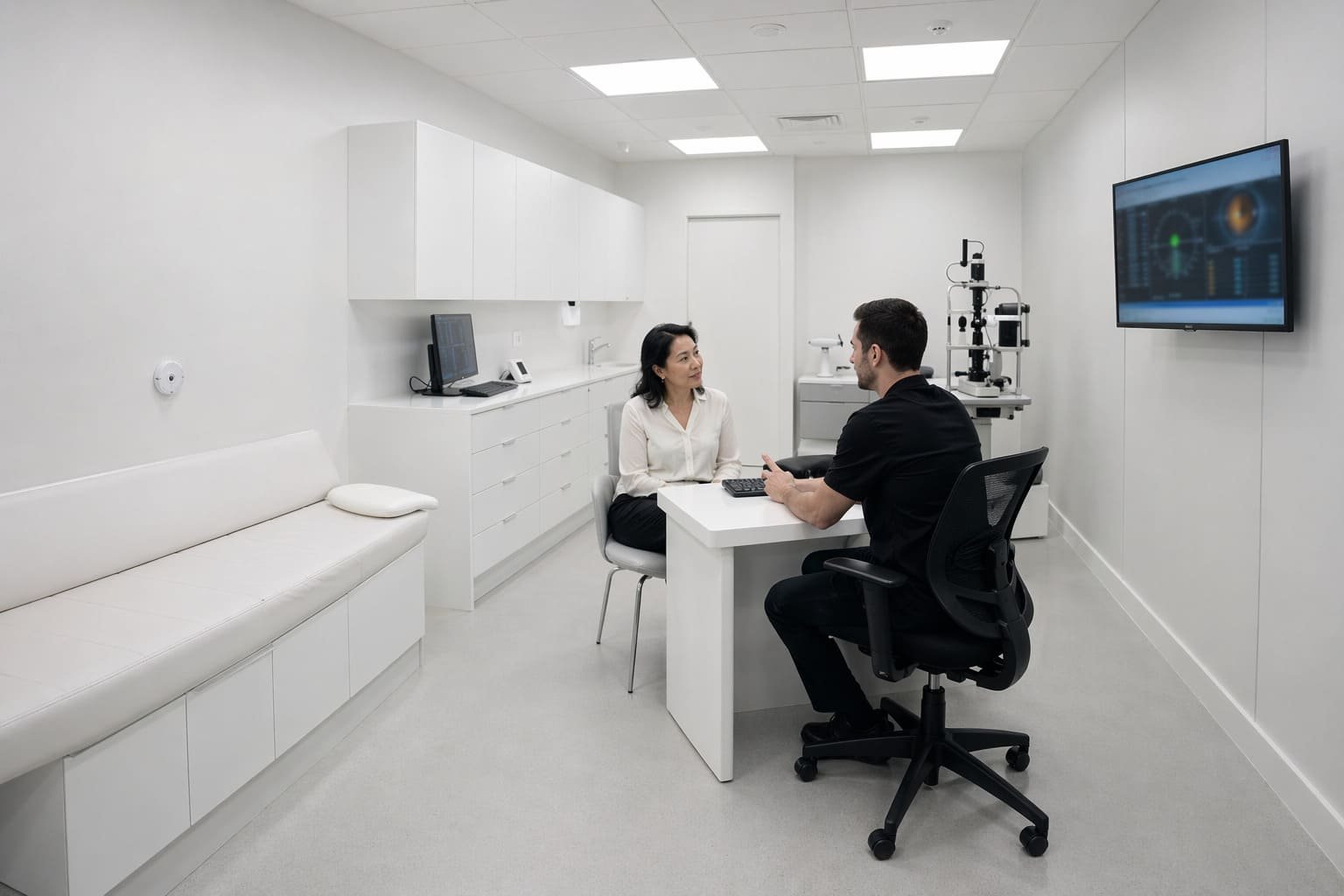
Get answers to your questions about surgery, aftercare and the benefits of consultant-led treatment.
Message UsQuestions we hear about LASIK, ICL and lens replacement
Can I have LASIK if my corneas are thin?
Thin corneas can make LASIK unsuitable, because LASIK reshapes the cornea. We would assess corneal thickness and shape before discussing whether LASIK, TransPRK or ICL is a better fit.
Is ICL the same as lens replacement surgery?
ICL is different from lens replacement because ICL adds a lens inside the eye while keeping your natural lens. Lens replacement removes your natural lens and replaces it with an artificial intraocular lens.
Does lens replacement mean I will not get cataracts later?
Lens replacement removes the natural lens, so that lens cannot later develop a cataract. You may still need normal eye care in the future, because cataract prevention is only one part of eye health.
Could I still need glasses after vision correction surgery?
Yes, you could still need glasses for some tasks after LASIK, ICL or lens replacement. The chance depends on your prescription, age, lens choice and the visual aim agreed before surgery.
Is ICL better than LASIK for high prescriptions?
ICL can be a strong option for higher prescriptions, especially where corneal laser surgery is unsuitable. We still need diagnostic measurements before saying whether ICL is safer or more suitable for your eyes.
This is general information, not medical advice.