What is presbyopia and why has your near vision changed?
Presbyopia is an age-related reduction in your eye’s focusing range for close work. It is why reading, phone use or computer work gets harder while your distance vision still seems fine. Glasses, contact lenses and, for some people, surgery can reduce how much you depend on reading glasses.
Accommodation is the natural adjustment that lets you shift focus from the road ahead to a page in your hand. Presbyopia is that adjustment gradually running out of range. Every current treatment corrects or compensates for it. None restores it, and any treatment described as reversing presbyopia is overstating what it does.
You will probably have noticed some of the signs already: holding things further away, enlarging text on your phone, wanting more light, or tired eyes and headaches after close work. Which of those bothers you most depends entirely on the distances you use every day.
That is also what decides the right correction, so it is worth being specific about the tasks you want to manage without reaching for glasses.
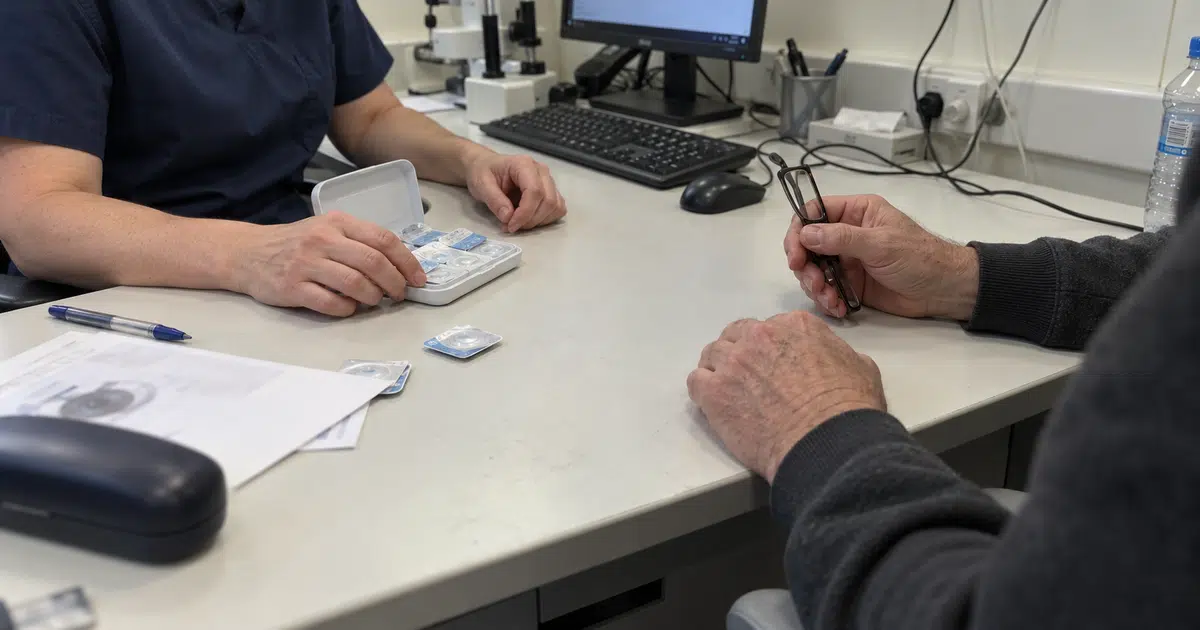
Which presbyopia treatments can reduce reliance on reading glasses?
There is no single best treatment. The right one depends on the distances you need most, the visual quality you expect, and which compromises you are willing to live with.
Someone who reads printed documents, works at a computer and drives at night has quite different priorities from someone who mainly wants clearer text on a phone. A useful assessment starts with the tasks that actually fill your day.
- Reading glasses correct one distance well, and suit people whose close work is occasional rather than constant.
- Bifocals and varifocals put more than one prescription into the same lens. Varifocals, also called progressive addition lenses, cover a range of distances and often suit reading alongside computer work.
- Multifocal contact lenses give each eye access to more than one focal range.
- Monovision contact lenses set one eye for near work and the other for distance. Because it is a lens rather than surgery, you get to try that balance before committing to anything permanent.
Beyond optical correction, laser treatment reshapes the cornea, the clear front surface of the eye, while lens replacement removes the natural lens and puts an artificial one in its place. Both can reduce spectacle dependence for the right eyes, and reading glasses often still earn their place for particular tasks.
Discuss your vision goals with our experienced consultant and receive a thorough personal assessment.
EnquireHow do laser eye surgery and lens replacement compare for presbyopia?
The two routes change different parts of the eye, and that is the distinction worth grasping. Laser alters the cornea. Lens replacement alters the lens.
Which matters more depends on your own eyes. Someone with a clear, flexible natural lens may suit a corneal approach. Someone whose natural lens has already started to change may be better served by replacing it. Neither recreates the focusing range of a younger eye.
| Feature | Corneal laser correction | Refractive lens exchange |
|---|---|---|
| How focusing power is altered | Laser reshapes the cornea | Surgery replaces the natural lens with an artificial one |
| Common presbyopia strategy | Monovision, mini-monovision, blended vision or a broader depth-of-focus approach | A monofocal lens for one chosen range, or a lens strategy aiming to cover more distances |
| Reading glasses afterwards | Some people still use them for close work | Some people still use them for detailed reading or particular tasks |
| Private cost | LASIK £2,000 per eye | £4,000 per eye |
| Key trade-off | Visual quality can differ between the distance-focused and near-focused eyes | A higher risk of permanent serious visual loss than laser correction |
LASIK is laser-assisted in situ keratomileusis, which reshapes the cornea beneath a thin flap. Surface procedures such as TransPRK reshape the corneal surface without creating that flap. Presbyopia-focused laser correction usually gives the two eyes different focal priorities rather than trying to make one eye do everything.
Lens replacement uses the same core operation as modern cataract surgery, done earlier and for a different reason: to reduce dependence on glasses rather than to remove a lens that has already clouded. Lens options can target one main distance or aim for a wider range.
Final pricing follows the assessment and the lens chosen, so treat the figures above as a starting point rather than a quote.
Try monovision in contact lenses before committing to it surgically. A fortnight of living with the focal balance tells you more about whether you can tolerate it than any consultation can.

What determines whether presbyopia surgery is suitable for you?
Two people of the same age can need completely different recommendations, because their eyes and their daily tasks differ. Age is one input. Your prescription, cornea, natural lens and working distances carry at least as much weight.
A proper assessment goes well beyond a standard distance prescription. It needs to establish how you see at distance, at intermediate range and up close, because a laptop, a phone and a printed page all sit at different points.
- Start with your visual priorities. Reading, screen work, night driving and detailed hobbies each ask something different of your eyes.
- Measurements narrow the options. Distance prescription, remaining focusing ability, binocular vision, pupil size, and the health of the cornea, natural lens and retina.
- A contact lens trial can test monovision. You experience the focal balance for yourself before anything permanent is decided.
- Then, and only then, a recommendation. Glasses or contact lenses remain the right answer whenever surgery offers a poor balance of benefit and compromise.
Assessment matches treatment to visual priorities
Binocular vision means your two eyes working together to judge distance and depth. It matters here because monovision reduces distance clarity in the near-focused eye, and some people find the loss of depth perception genuinely uncomfortable.
Night driving deserves its own conversation. Glare, halos, starbursts, ghost images, fluctuating vision and dry-eye symptoms are all recognised after laser vision correction. Most improve over the first few months. Some do not.
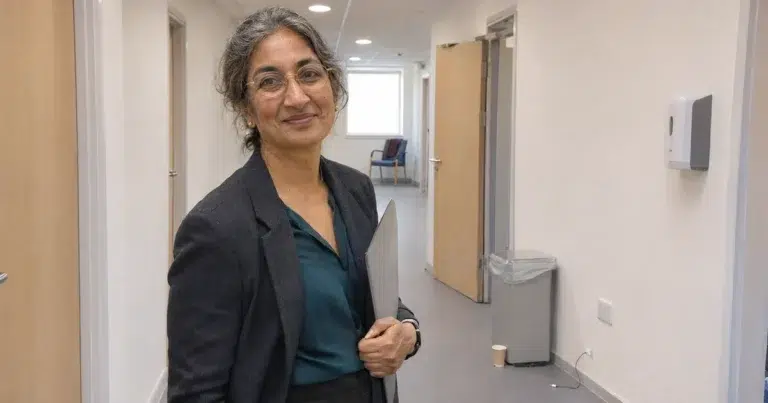
Mr Mukherjee assesses suitability and carries out treatment himself in Colchester, which means corneal and lens-based options get compared on the same basis by the same person rather than each being judged by whoever offers it.
The comparative evidence is thinner than the marketing suggests. A 2025 Cochrane review found four studies covering 300 people, followed for three or six months, and could not identify any one surgical option as offering the best balance of effectiveness and safety.
Measure the distances that matter to you before the appointment: how far your screen sits, where you hold a book, what your dashboard needs. Those numbers make the assessment far more precise than describing your vision in general terms.
What is the realistic long-term choice for presbyopia?
Every option here is a correction fitted to your eyes as they are now. None of them turns back the focusing mechanism, and treatments will need revisiting as your vision continues to change.
Monovision reduces reliance on reading glasses for many people. It also costs you some distance quality in one eye, and can bring reduced depth perception or headaches. Trying it in contact lenses first tells you far more than any description will.
The two surgical routes carry different risks rather than different amounts of the same risk. Laser correction brings the visual effects described above. Lens replacement is the more invasive operation and carries a higher risk of permanent serious visual loss.
The durable choice is the one whose compromises you can live with for years, in the reading, work and driving you actually do. Chasing complete freedom from glasses is how people end up with a result that technically succeeded and still disappoints them.
Get answers to your questions about surgery, aftercare and the benefits of consultant-led treatment.
Message UsCommon questions about presbyopia
At what age does presbyopia start?
Most people notice it from their mid-forties onwards, though the timing varies with your existing prescription, how much close work you do and the distances you need to hold.
Can varifocals help with computer work?
Yes. They correct across more than one viewing distance, and because a screen usually sits further away than a book, your optician can set the design around whichever task dominates your day.
Should I try monovision contact lenses before surgery?
Yes, if monovision is on the table. A trial shows you how different focal targets between your eyes affect distance, intermediate and near vision, and lets you judge depth perception and comfort before anything is permanent.
Will lens replacement remove the need for glasses?
Not entirely, for most people. It can reduce dependence considerably, and glasses often still help with detailed reading or specific distances, depending on the lens strategy chosen.
Can eye drops treat presbyopia?
Not as an established option here. Drops that temporarily improve near vision do exist and have been licensed in some countries, but the UK position is worth checking with your clinician rather than assuming, because licensing and availability change. The established options in the UK remain glasses, contact lenses, laser correction and lens replacement.
This is general information, not medical advice.
Reviewed by Mr Hatch Mukherjee, Consultant Ophthalmologist, FRCOphth, CertLRS, FWCRS, NHS Consultant and Clinical Lead at Colchester Eye Centre, East Suffolk and North Essex NHS Foundation Trust.