Can you have eye surgery with thin corneas?
Thin corneas do not automatically rule out eye surgery, but they can make Laser-Assisted In Situ Keratomileusis, known as LASIK, the wrong choice. We decide by looking at corneal thickness, corneal shape, prescription strength and lens age. Surface laser surgery, implantable contact lenses or lens replacement may still suit some eyes.
Most people hear “thin corneas” and assume the answer is no surgery. We see it differently. Thin corneas are a reason to be more selective, because the question changes from “Can I have LASIK?” to “Which procedure leaves enough safety margin for my exact eyes?”
LASIK is often the first option to be challenged because it reshapes the cornea and involves making a thin flap. The U.S. Food and Drug Administration lists thin corneas among the reasons LASIK may not be suitable, because treating a cornea that is too thin can lead to serious complications.
That does not make every other option unsuitable. We need scans, a stable glasses prescription, an eye surface check and a clear view of your lens before we can say whether thin corneas laser eye surgery is sensible, or whether a lens-based option gives a better plan.
A single thickness number is not enough
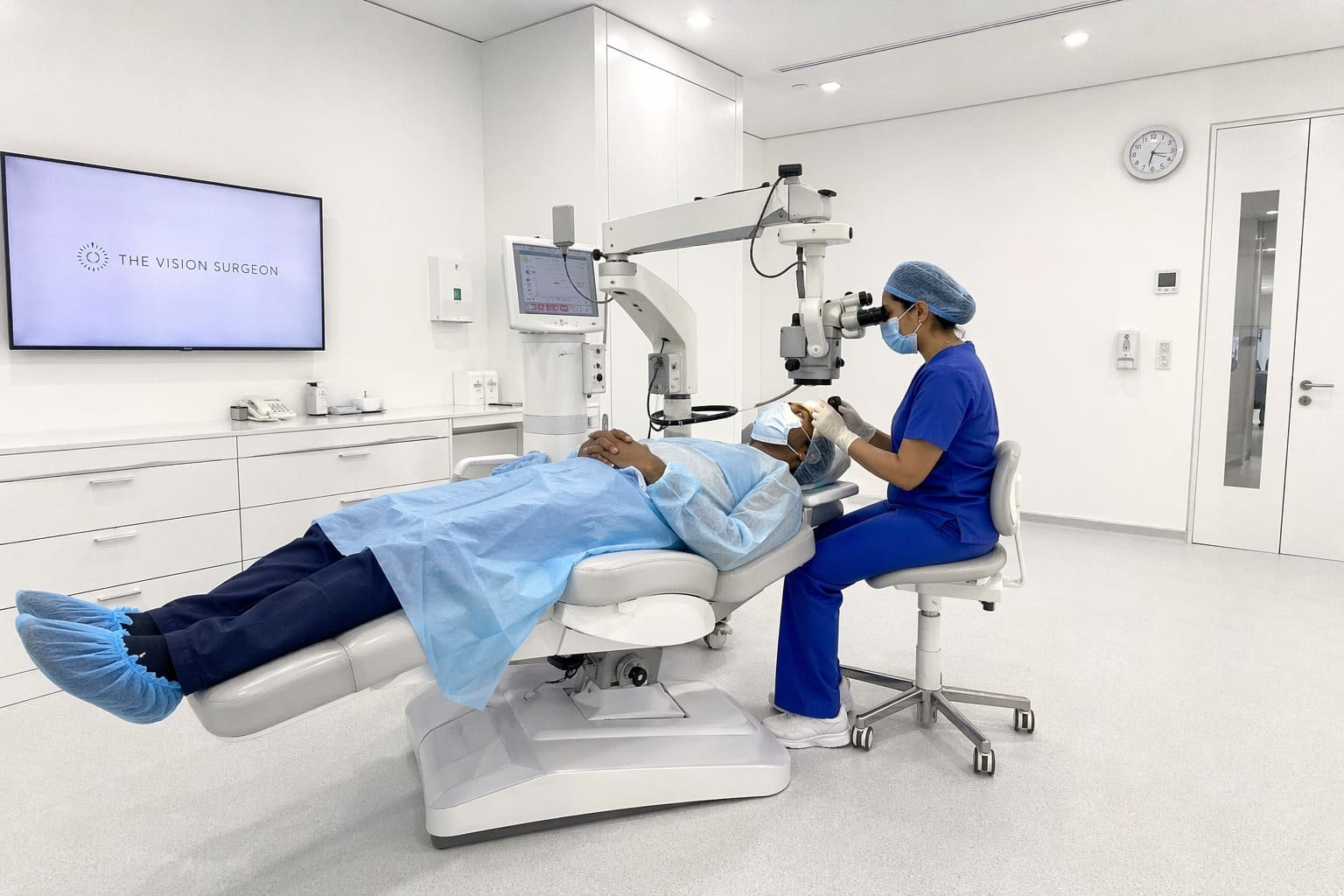
Corneal thickness matters, but a measurement on its own is a poor way to decide suitability. We look at the whole scan because a thin, regular cornea is a different problem from a thin cornea with an unusual shape.
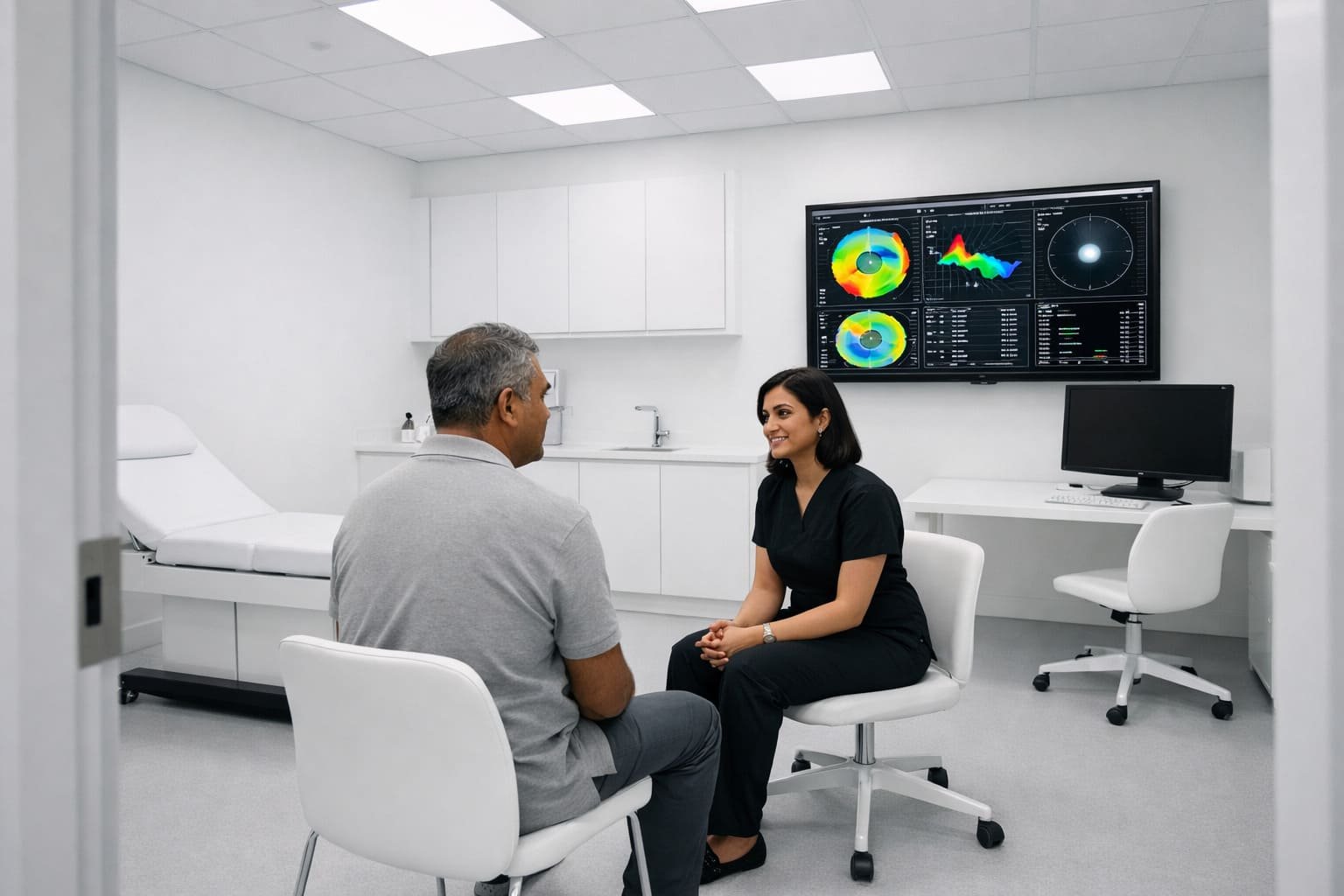
Corneal topography is the scan that maps the shape of the cornea. Pachymetry is the measurement of corneal thickness. Put together, they tell us far more than a single figure, because the map shows whether the cornea has a regular curve or whether there are signs that need closer checking.
Prescription strength changes the calculation as well. A higher prescription usually needs more tissue reshaping with corneal laser surgery, so thin corneas and high myopia need a more cautious plan than thin corneas with a lower prescription. Astigmatism, dry eye, pupil size and whether your prescription has been stable also affect the choice.
Keratoconus is another reason not to rely on one number. Keratoconus is a condition where the cornea thins and bulges forward, causing distorted vision. Thin corneas do not always mean keratoconus, but an abnormal scan can make us move away from routine laser correction and assess the cornea more carefully.
We do not want you chasing a magic online cut-off for corneal thickness for laser eye surgery. The safer answer comes from matching the scan pattern with your prescription and your age.
Discuss your vision goals with our experienced consultant and receive a thorough personal assessment.
EnquireLASIK is the option thin corneas most often challenge
LASIK reshapes vision by making a fine flap in the cornea, lifting it and then using a laser beneath it. That flap-based method works well for many suitable people, but it needs enough corneal tissue left behind after treatment.
Thin corneas reduce that margin, especially if your prescription is strong. If the planned treatment would leave too little tissue, we would not treat that as a small technical concern. We would treat it as a reason to choose another option or to say surgery is not the right answer.
NICE states that photorefractive laser surgery for refractive errors is safe and works in appropriately selected patients, provided they understand the benefits and risks. Those risks include not achieving the expected improvement in unaided vision, new visual disturbances, corneal infection and flap complications.
That balanced point matters. LASIK is not unsafe as a category, but LASIK thin cornea suitability has to be judged with restraint. A no to LASIK can still leave TransPRK, implantable contact lens surgery or lens replacement on the table, depending on what the full assessment shows.

Thin corneas need a scan based decision. Corneal topography and pachymetry together give a clearer answer than a thickness figure on its own.

TransPRK, ICL and lens replacement solve different problems
Eye surgery alternatives to LASIK are not interchangeable back-up plans. Each one solves a different problem, and choosing between them means looking at the cornea, the prescription and the stage of life your eyes are in.
At The Vision Surgeon, we offer LASIK, transepithelial photorefractive keratectomy, known as TransPRK, implantable contact lens surgery, known as ICL, and refractive lens exchange, also called lens replacement surgery. That range matters because thin corneas, very high prescriptions or keratoconus concerns can point away from corneal laser and into lens-based planning.
| Procedure | Where it may fit | Main trade-off |
|---|---|---|
| LASIK | Suitable corneal thickness and shape, with enough tissue margin after reshaping | Thin corneas can make the flap and tissue plan unsuitable |
| TransPRK | A no-flap surface laser option that can suit some thinner corneas | Early recovery is slower than LASIK because the surface has to heal |
| ICL | A lens is placed inside the eye to correct vision without removing corneal tissue in the same way as laser | It is surgery inside the eye, so it needs its own checks and risk discussion |
| Lens replacement | The natural lens is replaced with an artificial lens, often relevant when age-related lens changes affect the plan | Lens choice affects the balance between distance, reading vision and night-time visual symptoms |
Indicative 2026 pricing gives a useful starting point. LASIK or TransPRK is listed at £1,400 to £1,800 per eye, lens replacement or cataract surgery at £2,000 to £4,000 per eye depending on lens type, and ICL at approximately £3,000 per eye. Final suitability and cost depend on the eyes being treated, because the right procedure is the one that fits the clinical plan.
The right assessment protects the result
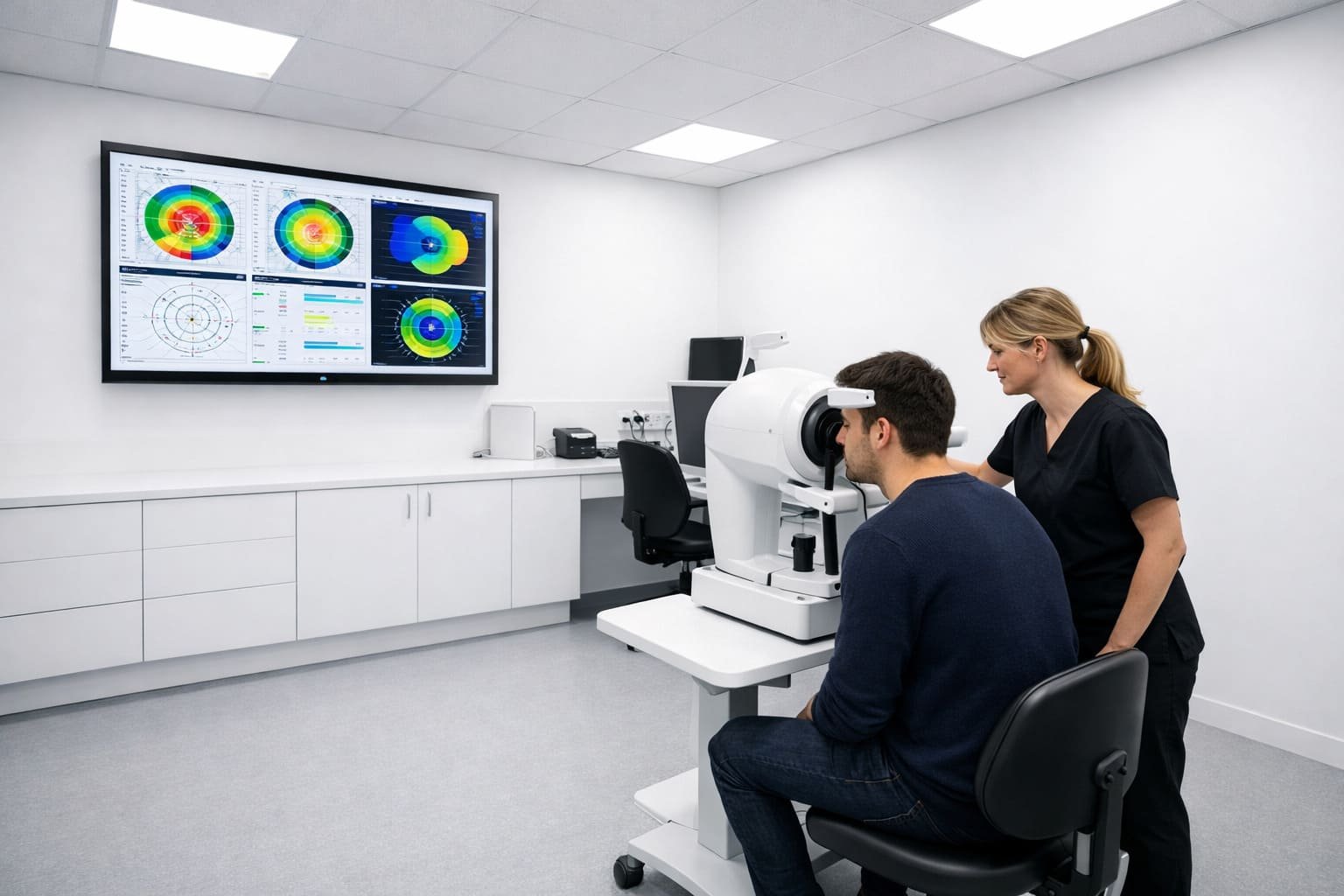
Two people can both be told their corneas are thin and still need different advice. One may have a regular corneal map, a modest prescription and stable refraction. Another may have a stronger prescription, dry eye or early lens changes that shift the decision away from laser.
At The Vision Surgeon, we assess thin-cornea cases in Colchester for patients across Essex, Suffolk and the wider East Anglia area. Mr Mukherjee is a triple fellowship-trained consultant ophthalmologist, holds the Royal College of Ophthalmologists Certificate in Laser Refractive Surgery, and is an elected Fellow of the World College of Refractive Surgery.
A proper thin cornea eye assessment should cover the checks that actually change the recommendation:
- Corneal topography: The scan shows whether the cornea has a regular shape or whether keratoconus needs to be considered.
- Pachymetry: Thickness matters because laser treatment removes tissue, and the remaining tissue margin must be appropriate.
- Refraction history: We look at whether your prescription has been stable, because a moving prescription weakens the case for surgery.
- Dry eye assessment: A dry surface can affect comfort, healing and the accuracy of measurements.
- Lens status and age: Early cataract, reading vision changes or a shifting prescription can make lens replacement a more logical route than corneal laser.
Local assessment matters because thin-cornea vision correction is rarely a quick yes or no. Having scans, advice and treatment planning handled by the same consultant in Colchester keeps the decision joined up from the start.
For patients over 50, lens changes often matter as much as the cornea. A full assessment should include the lens so the recommendation reflects the eye as a whole.
Your best option may change over time
When thin corneas are part of the decision, the best eye surgery option has to make sense beyond the procedure that looks possible today. Prescription stability, dry eye and natural lens changes can alter the recommendation over the next 12 to 24 months.
Younger thin-cornea patients often compare TransPRK and ICL
Younger patients with stable prescriptions are usually weighing up whether a surface laser approach or ICL fits better. TransPRK keeps treatment on the surface of the cornea and avoids a LASIK flap, but recovery in the early phase is slower. ICL avoids corneal tissue removal in the same way as laser, but it places a lens inside the eye and needs a separate suitability discussion.
No sensible plan forces one route because it happens to be available. We want the option that gives a clear optical aim while respecting the cornea you have.
Over-50s often need lens replacement in the conversation
Once reading vision, early cataract or lens ageing starts to affect your prescription, refractive lens exchange can become a stronger conversation. Lens replacement surgery treats the lens inside the eye, so corneal thickness is no longer the main limiting factor in the same way it is with laser.
That does not make lens replacement the automatic answer for every over-50 patient with thin corneas. It means the assessment should include the lens, because choosing laser for the cornea alone can miss the part of the eye that is about to matter more.
Over the next 12 to 24 months, the line between laser planning and lens planning will matter more for patients who have thin corneas and early age-related vision change. The safest plan is the one chosen from the full range, not squeezed through the first procedure you hoped would fit.
Get answers to your questions about surgery, aftercare and the benefits of consultant-led treatment.
Message UsQuestions we get asked about thin corneas and eye surgery
What is pachymetry in a laser eye surgery assessment?
Pachymetry is the measurement of corneal thickness. We use it alongside corneal topography because thickness and shape together give a clearer view of laser eye surgery suitability.
Do thin corneas always mean keratoconus?
Thin corneas do not always mean keratoconus. An abnormal corneal shape can raise that question, so the scan pattern matters more than the thickness figure alone.
Is SMILE better than LASIK for thin corneas?
Small Incision Lenticule Extraction, known as SMILE, is still a corneal laser procedure and still depends on the corneal scan and prescription. It is not a simple fix for thin corneas.
Can high myopia be treated if the corneas are thin?
High myopia with thin corneas needs careful planning because stronger prescriptions place more demand on corneal laser treatment. In some cases, ICL or lens replacement may be a better fit than LASIK.
Will surgery guarantee that I never need glasses again?
No eye surgery should be described as a guarantee of never needing glasses. The aim is to reduce dependence on glasses or contact lenses, but your result depends on your eyes, prescription and the procedure chosen.
This is general information, not medical advice.