Do you need to go to London for ICL surgery, or can you have it in Essex?
No, you do not automatically need to travel to London for ICL surgery. High-quality Implantable Contact Lens surgery can be available closer to home in Essex, provided the clinic offers proper consultant-led assessment, regulated facilities, and suitable aftercare.
Many people assume advanced eye surgery only happens in London. In practice, the better question is whether your surgeon is appropriately qualified, the clinic is regulated by the Care Quality Commission, and your care remains consistent from consultation through recovery.

The short answer on local versus London care
A London address does not by itself make ICL surgery better. Standards of care depend on the surgeon, the quality of assessment, the safety systems around the procedure, and the follow-up you receive afterwards.
For many patients, local eye surgery options make the whole patient process simpler. Appointments are easier to attend, aftercare is less disruptive, and any concerns after surgery can be reviewed without a long return trip. That matters because ICL is not just a single procedure. It includes assessment, surgery, and planned follow-up.
GMC guidance, CQC regulation, and the professional standards expected by the Royal College of Ophthalmologists apply wherever treatment is provided. A well-run Essex clinic can therefore offer consultant-led ICL care without requiring a process into London.
Who is ICL surgery for and what makes someone suitable?
ICL, short for Implantable Contact Lens, is a vision correction procedure in which a small lens is placed inside the eye to reduce or correct short sight, and in some cases astigmatism. It is often considered by people who want freedom from glasses or contact lenses but are not suitable for laser eye surgery.
Some readers looking up ICL surgery Essex are already aware that laser treatment was ruled out. Others are comparing options for the first time and want to know whether ICL is a better fit for a stronger prescription.
Typical suitability factors include the following:
- Adults whose prescription has been stable for a reasonable period
- People with higher levels of short sight
- Patients with corneas that are too thin for laser treatment
- Those who want a reversible alternative to corneal laser surgery
- Eyes with healthy internal structures and enough space for the lens
Suitability always needs a proper examination. Eye measurements, corneal shape, prescription strength, and the depth inside the front part of the eye all play a part.
At The Vision Surgeon, that assessment is led by a consultant ophthalmologist with CertLRS, the Certificate in Laser Refractive Surgery, and fellowship training in refractive surgery. That matters because ICL should be recommended for clinical reasons, not simply because it is available. In some cases, laser surgery is still the better option. In others, lens replacement surgery may make more sense, especially with age-related lens changes.

Discuss your vision goals with our experienced consultant and receive a thorough personal assessment.
EnquireHow ICL surgery works: from consultation to recovery
For most patients, the process feels much more straightforward once it is explained clearly. The procedure itself is usually quick, but the planning beforehand is what makes safe treatment possible.
Consultation and assessment
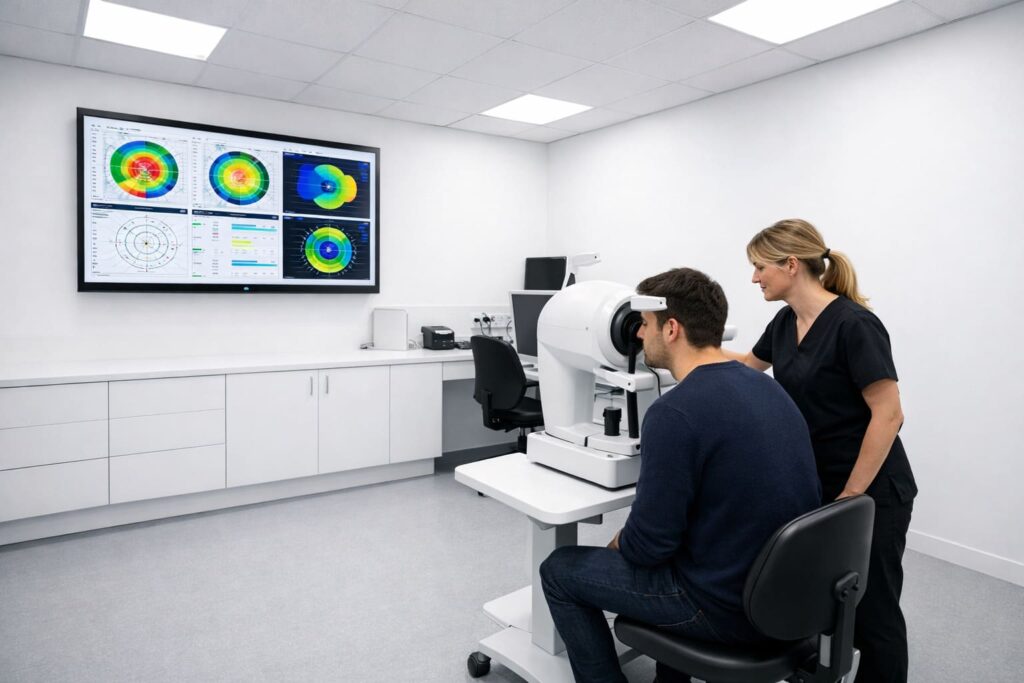
Your first appointment focuses on suitability. The surgeon checks your prescription, eye pressure, corneal health, pupil size, and measurements inside the eye. Those tests help determine whether an implantable lens is appropriate and which size is needed.
You should also expect a conversation about your work, hobbies, contact lens use, and visual priorities. Someone who drives long distances at night may have different expectations from a person mainly concerned with sport or office work.
The day of surgery
ICL surgery is usually carried out with anaesthetic drops rather than a general anaesthetic. The eye is numbed, the eyelids are kept gently open, and the lens is inserted through a very small opening before being positioned behind the iris and in front of the natural lens.
Most people describe pressure or awareness rather than pain. Vision can be misty straight after the procedure, which is normal in the early hours.
In Colchester, treatment may be provided in a regulated surgical setting such as Oaks Hospital, with consultations and follow-up also supported through local clinic facilities including Colchester Eye Centre, depending on the stage of care.
Early recovery
Recovery after ICL is often fairly quick, although exact timing varies from person to person. Many patients notice improved vision soon after surgery, but the eye still needs time to settle.
During the first days, you may be asked to use eye drops, avoid rubbing the eye, and take care with swimming, eye make-up, and dusty environments. Follow-up appointments are used to check healing, lens position, eye pressure, and vision.
One practical advantage of local care becomes obvious here. If you need review appointments in the days or weeks after treatment, Essex-based follow-up is a great deal easier than repeated travel into London.
When reviewing eye surgery pricing, always clarify if consultations and aftercare are included so you understand the full package.

Risks, benefits, and realistic outcomes of ICL surgery
Any private eye surgery should be discussed in a balanced way. GMC guidance and ASA/CAP advertising rules are clear on this point, and patients are best served by honest information rather than broad promises.
Benefits often discussed with ICL include:
- Correction of higher prescriptions that may not be suitable for laser treatment
- No removal of corneal tissue
- A lens that can be removed or exchanged if clinically needed
- Fast visual improvement for many patients
- Reduced dependence on glasses or contact lenses
Risks and limitations also need proper attention:
- Infection, which is uncommon but serious when it occurs
- Raised eye pressure
- Inflammation
- Glare, haloes, or other visual symptoms, especially in low light
- Cataract formation over time in some cases
- The possibility that glasses may still be needed for certain tasks
Results vary, and no surgeon should guarantee a perfect outcome. Some patients achieve excellent unaided vision. Others still need a light prescription for night driving or close work. Age matters too, because ICL does not stop the natural lens from changing later in life.
Follow-up is part of the safety picture, not an optional extra. Monitoring after surgery helps confirm that healing is on track and that the lens remains well positioned inside the eye.
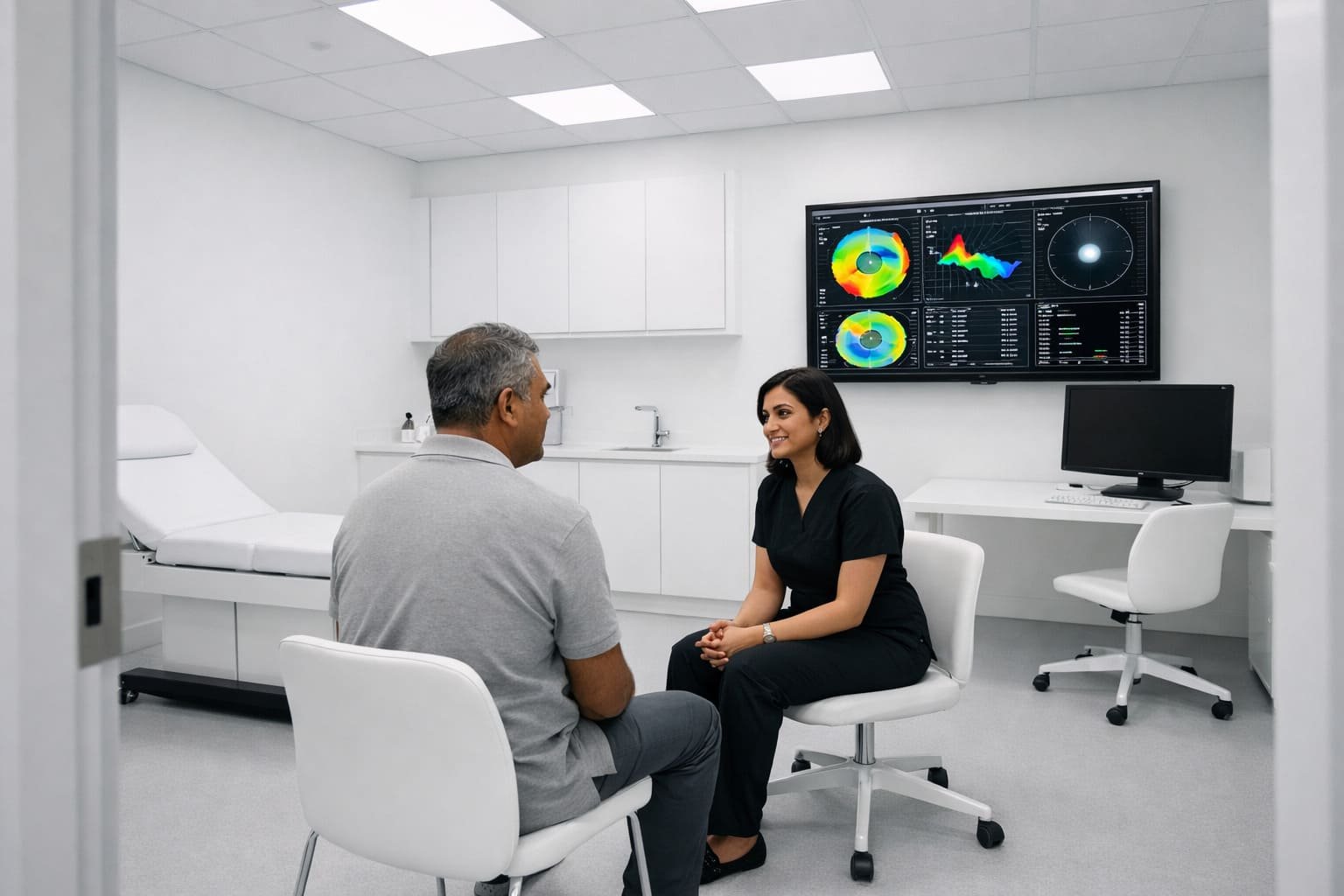
Choose a clinic where the same consultant handles your assessment, surgery, and follow-up for greater continuity and reassurance.
Cost of ICL surgery in Essex vs. London: what should you expect?
ICL is a private procedure, so price matters to most people comparing local and London-based treatment. A common guide is around £3,000 per eye, although exact fees can vary depending on the lens used, the clinic setting, and what is included in the package.
A lower advertised figure does not always tell the full story. Some quotes may separate consultation fees, surgery fees, scans, or aftercare, so it is sensible to look at the whole package rather than one headline number.
When comparing eye surgery price options, ask what is included in the fee:
- Pre-operative assessment and imaging
- The lens itself and the surgical facility
- Planned aftercare appointments and post-operative drops guidance
London fees can be higher because of location and overheads, but that is not universally the case. Essex pricing may be similar in some settings and lower in others. The key issue is value for money, which means consultant continuity, a regulated environment, and clear pricing transparency.
NHS cataract pathways are separate from ICL, so this is usually a private self-pay decision. That makes it especially important to understand whether your aftercare is local and whether the same consultant remains responsible for your treatment throughout.
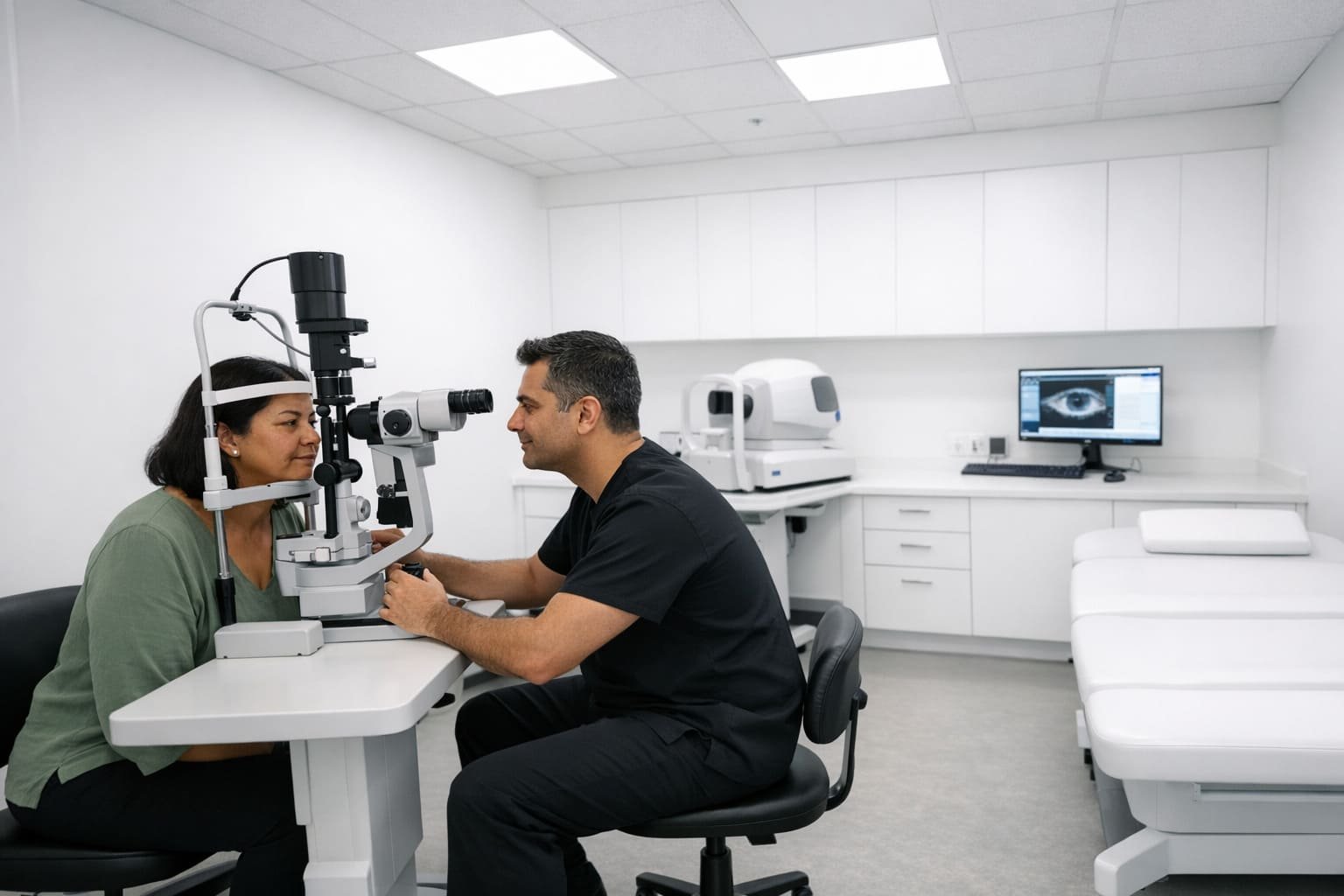
Local expertise: why choose ICL surgery in Colchester and Essex?
A patient considering an ICL surgeon in Colchester is often weighing convenience against confidence. In reality, the two can sit together very well if the care is genuinely consultant-led.
Mr Mukherjee’s practice is built around that continuity. He sees patients personally, assesses suitability himself, and performs surgery without handing care over to a different surgeon on the day. For people who feel uneasy about being passed between teams, that consistency can be reassuring in a very practical way.
His background also matters. Mr Mukherjee is a triple fellowship-trained consultant ophthalmologist, holds the Royal College of Ophthalmologists CertLRS qualification, and has extensive NHS consultant experience alongside private practice. Those details are relevant because ICL surgery requires judgement as much as technical skill, especially when choosing between laser, ICL, or lens-based options.
Geography adds another layer of comfort. Colchester is accessible from across Essex and Suffolk, and local treatment reduces the strain of multiple long journeys for assessment and review. If an early post-operative check is needed, the trip is manageable, which can make the whole process feel more grounded and less exhausting.
Get answers to your questions about surgery, aftercare and the benefits of consultant-led treatment.
Message UsThe bigger picture: rethinking where to have your eye surgery
The idea that specialist eye care must involve London is often more assumption than fact. For many patients, choosing eye surgery location comes down to a few sensible priorities: who is treating you, where surgery takes place, how follow-up works, and whether you feel properly informed.
Personalised eye surgery is about more than postcode. A named consultant, regulated facilities, clear consent, and accessible aftercare often matter more than travelling farther for the sake of a city address.
Before deciding, focus on the points that directly affect your care:
- whether the surgeon who advises you is the same surgeon who operates
- whether the clinic is CQC regulated
- whether follow-up is easy to access if you need reassurance or treatment
That shift in perspective can make the decision feel simpler. Good eye surgery is defined by judgement, continuity, and safety, and those qualities can be found much closer to home than many people first expect.