What is the full sequence from consultation to recovery?
Refractive lens replacement surgery is planned through assessment and eye measurements, then performed with anaesthetic drops while you are awake. We remove the natural lens, place a clear artificial lens inside the eye, protect the eye afterwards, and follow you as vision settles over the early recovery period.
What is the full sequence from consultation to recovery?
The common mistake is thinking the operation starts in theatre. In practice, the safest lens replacement surgery process starts earlier, because the measurements and lens choice shape what we do on the day.
Refractive lens exchange, also known as RLE, lens replacement surgery or clear lens exchange, replaces your eye’s natural lens with a small artificial lens implant. The formal name for that implant is an intraocular lens, or IOL. The lens is chosen to reduce your dependence on glasses or contact lenses, although no responsible surgeon can promise that you will never need glasses again.
The Royal College of Ophthalmologists describes RLE as clinically identical to modern cataract surgery. The main difference is the reason for doing it: cataract surgery removes a cloudy lens, while refractive lens exchange is usually done to improve focus and reduce glasses dependence.
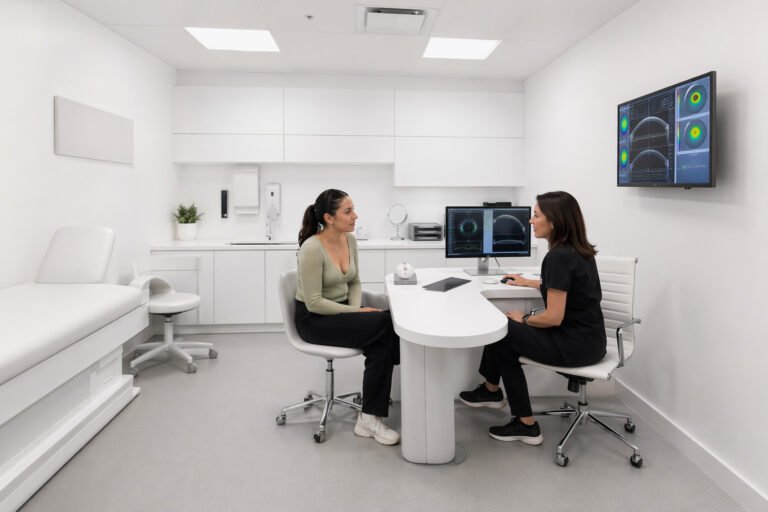
For you, the sequence is simple to follow. We assess your eyes, measure them in detail, choose the lens plan, prepare the eye on the day, numb it with drops, remove the natural lens, place the intraocular lens, protect the eye, and check recovery afterwards. That ordered pathway matters because RLE is surgery planned around your individual eye.
Discuss your vision goals with our experienced consultant and receive a thorough personal assessment.
EnquireHow do we decide whether RLE is suitable and which lens to use?
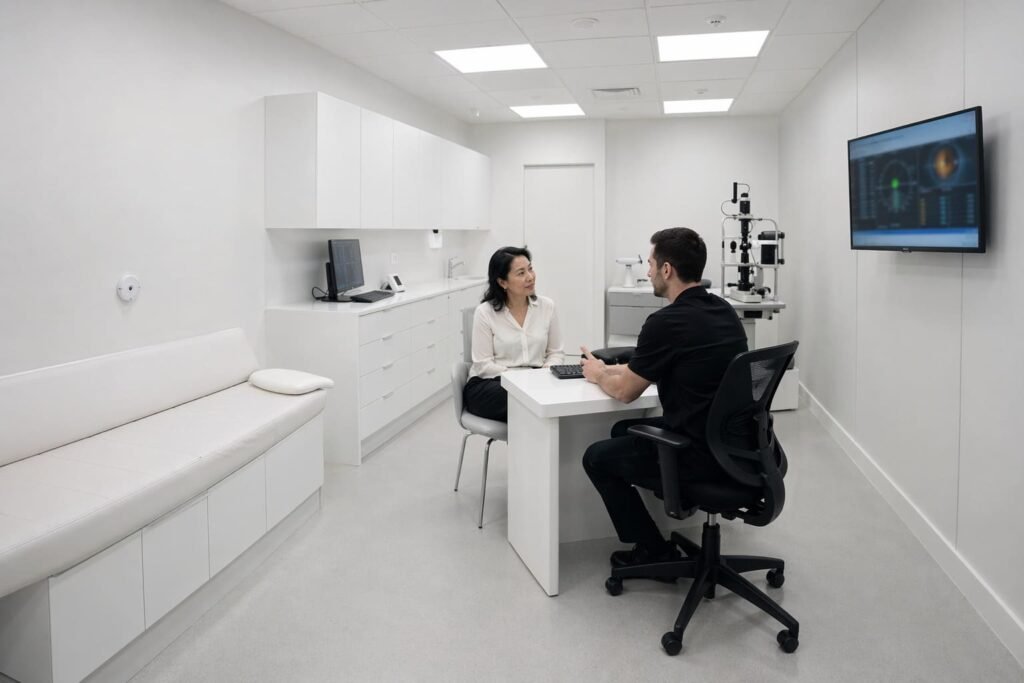
The consultation is where the operation is planned. A lens replacement surgery consultation is not a formality, because the wrong lens choice or the wrong patient selection can create avoidable disappointment.
At The Vision Surgeon, we assess suitability and lens choice with Mr Mukherjee personally involved from the first consultation through to aftercare in Colchester. That continuity matters most when the decision is close, such as when you have astigmatism, presbyopia, early lens changes, or a prescription outside the normal range for laser eye surgery.
How lens choice changes the plan
A monofocal IOL is usually set to give clear focus at one main distance. A multifocal IOL is made to spread focus across more than one range, which can reduce reliance on reading glasses for some people. A toric IOL is used when astigmatism correction needs to be built into the lens.
Lens choice also affects the trade-offs we discuss with you. Multifocal lenses can suit some patients well, but they are not the automatic answer for everyone, especially if night vision, glare or halos are major concerns. Monofocal lenses can be more straightforward, but they may leave more need for glasses at certain distances.
We look at your prescription, corneal health, eye measurements and visual priorities before recommending an intraocular lens. A person who reads for long periods, drives at night, or uses several screen distances may need a different plan from someone whose main priority is distance vision.
How suitability changes the recommendation
RLE is often relevant for people over 50, especially where the glasses prescription is higher than the normal range for laser eye surgery. The same assessment may show that a different treatment is a better fit, and that is a clinical decision, not a sales decision.
For most younger people with a clear, flexible natural lens, laser vision correction or phakic intraocular lens implantation, known as PIOL, can be more appropriate. Laser options include Laser-Assisted In Situ Keratomileusis, known as LASIK, photorefractive keratectomy, known as PRK, laser-assisted subepithelial keratectomy, known as LASEK, and TransPRK, a no-flap surface laser technique. PIOL means placing a lens inside the eye without removing the natural lens.
Good planning narrows the choice before you reach theatre. By that point, the aim is clear, the lens has been selected, and the surgery is being carried out to a plan already agreed with you.
For patients over 50, the consultation should focus on lens choice, night vision needs and whether glasses independence is realistic for the individual eye.

What happens on the day of refractive lens replacement surgery?
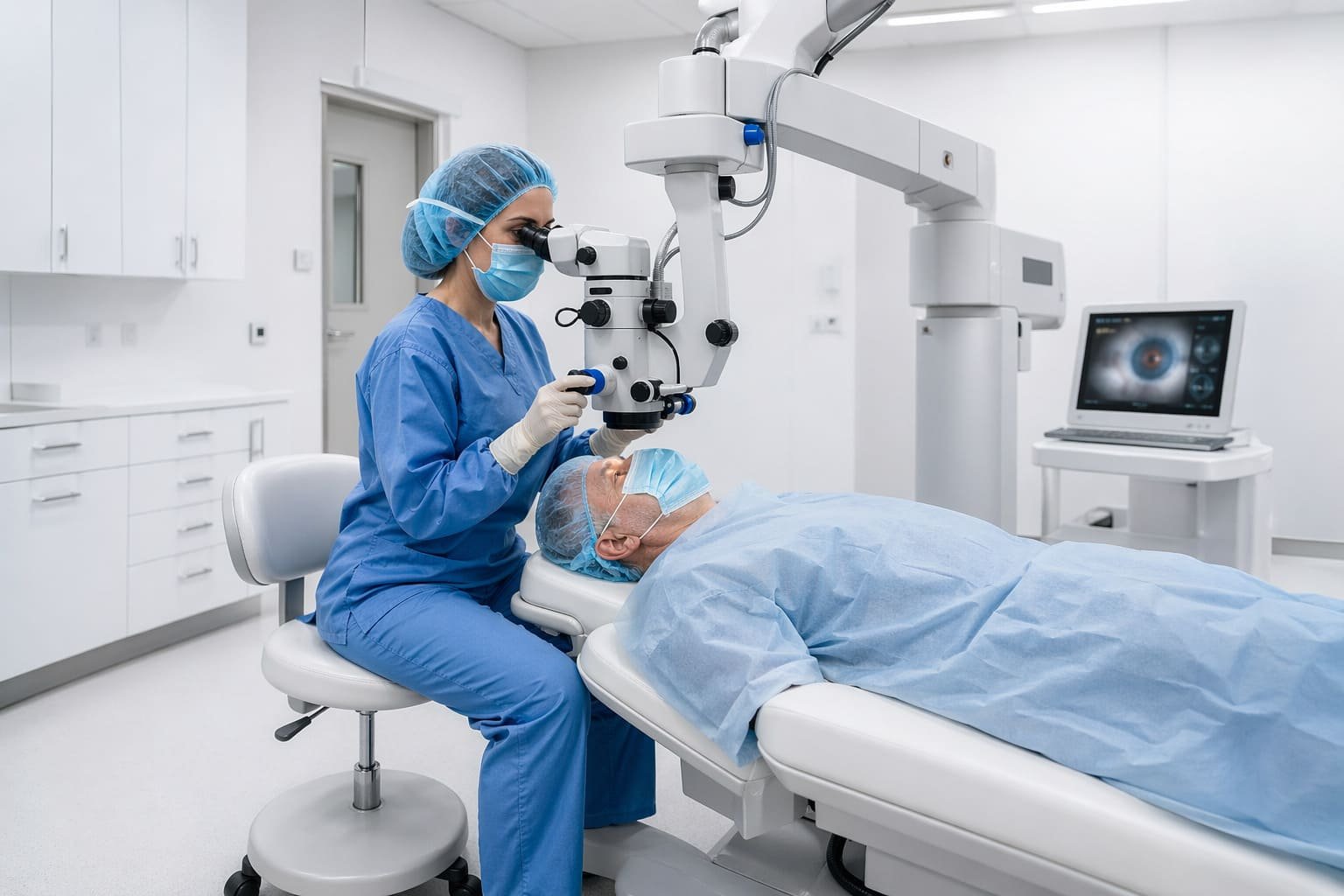
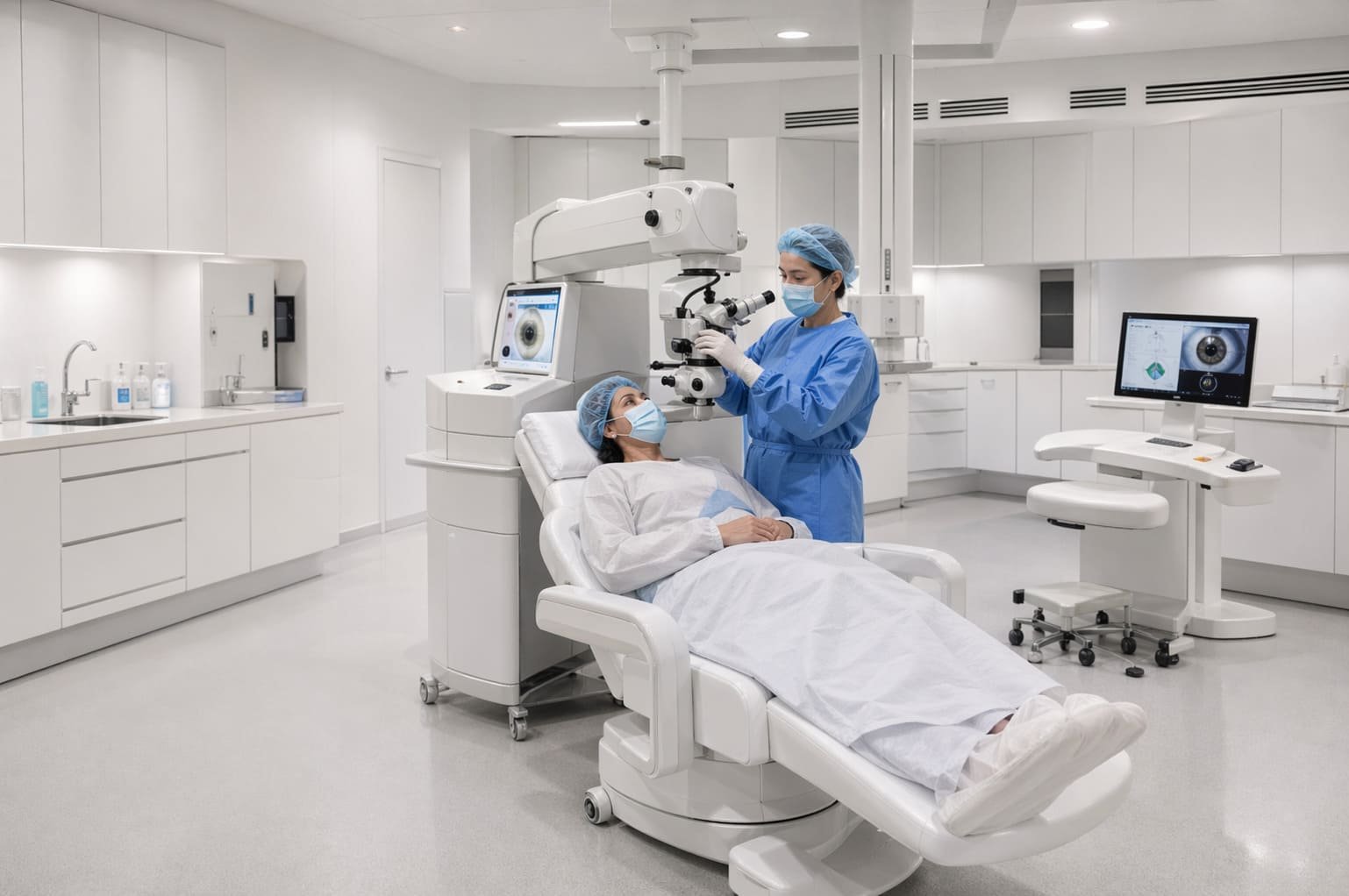
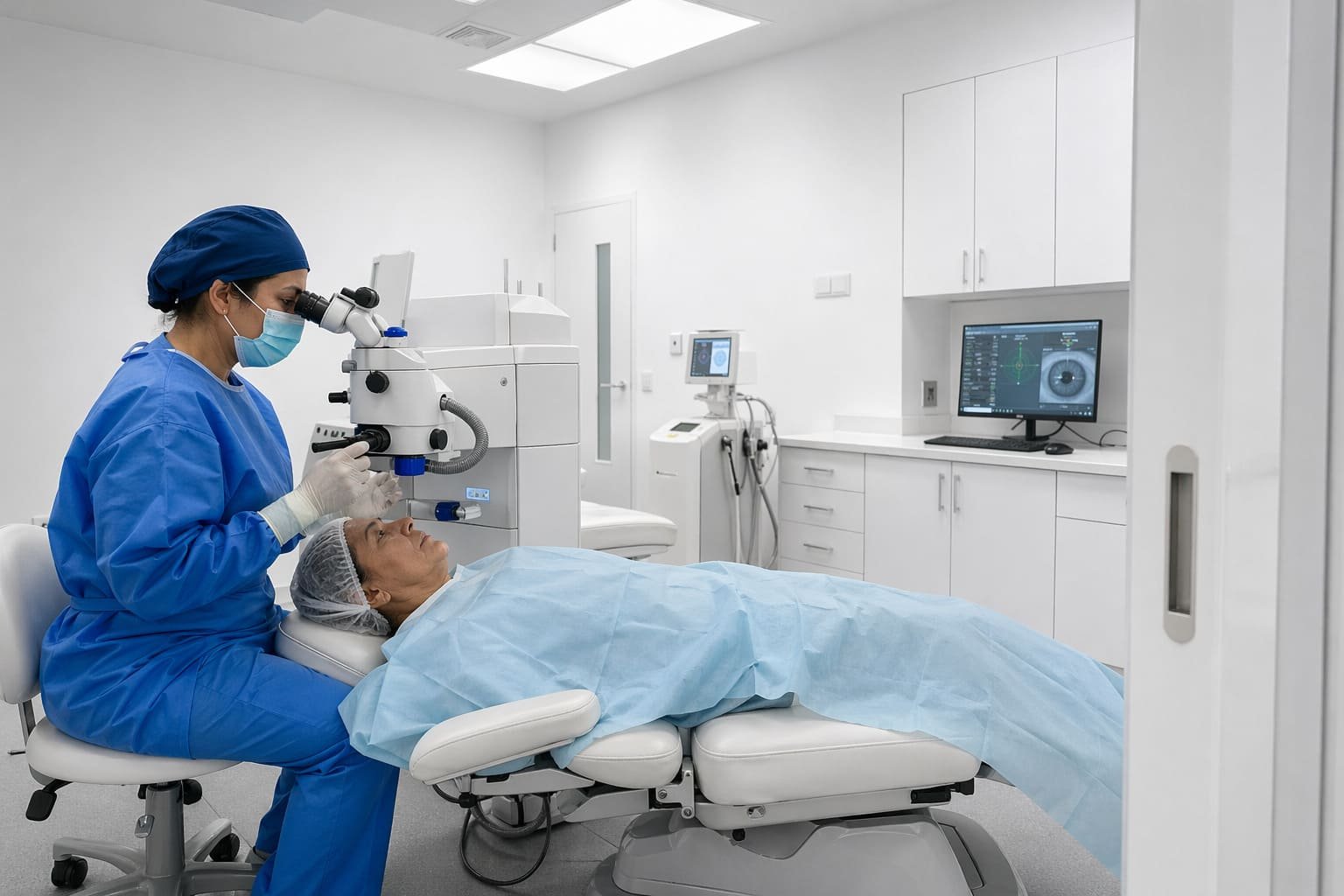
On the day, the eye is prepared before the surgeon starts the inside-eye part of the procedure. You are usually awake, the eye is numbed with anaesthetic drops, and the theatre team controls the practical details that people most worry about.
Awake does not mean unprotected or uncontrolled. A spring clip holds the eyelids apart, so you do not have to keep your eye open by effort and you can blink safely. If your eye needs to look in a certain direction, the surgeon talks you through it.
Many patients feel little or no discomfort, but experience varies. You should expect bright light, blurred vision and movement rather than a clear view of what is happening. Sedation through a hand injection can be used if required, although it is not needed for everyone.
The Royal College of Ophthalmologists says RLE surgery typically takes about 20 minutes per eye, and most patients go home the same day. You should arrange for someone to drive you home because your vision will not be ready for driving immediately after surgery.
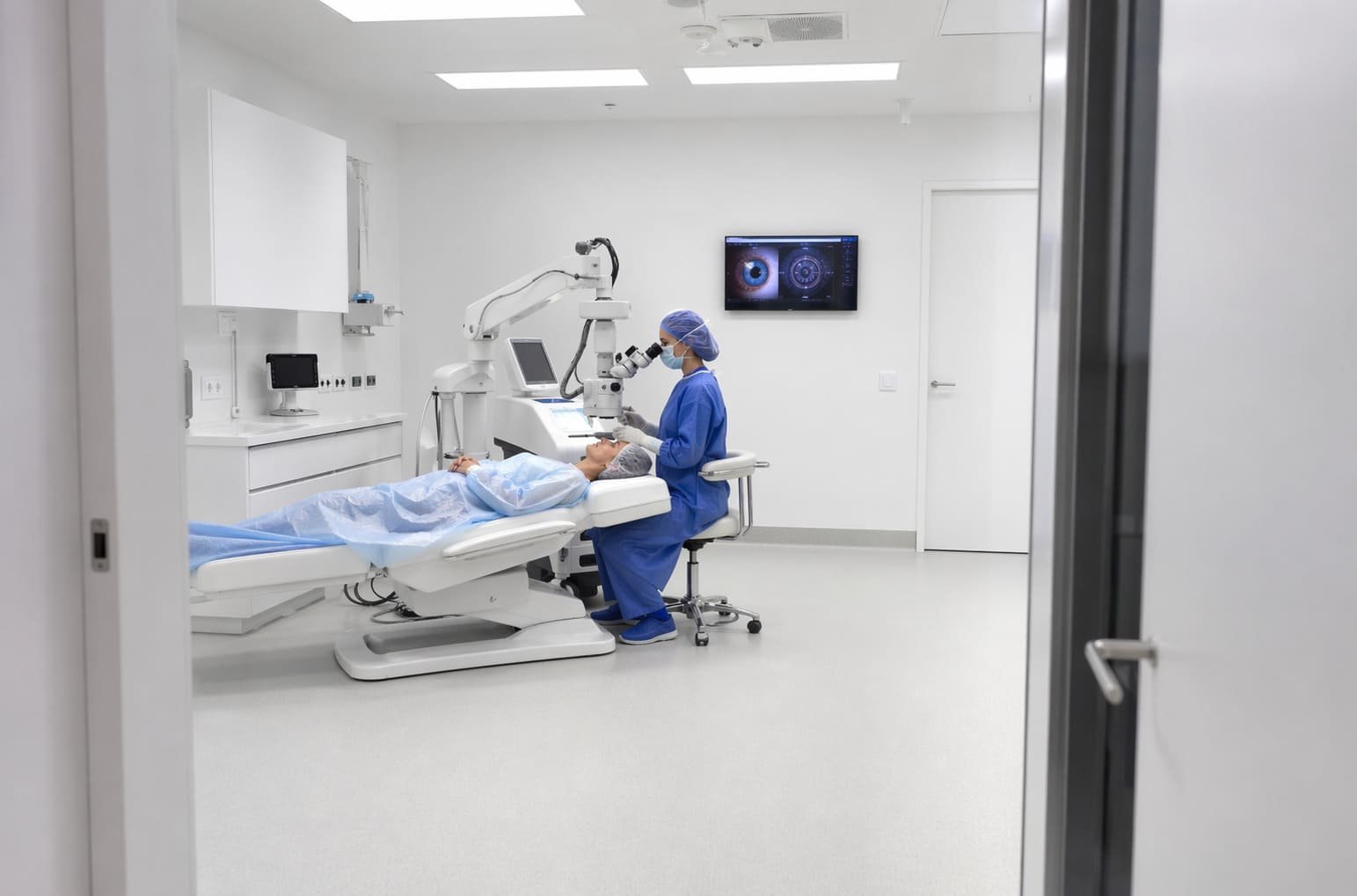
What are the surgical steps inside the eye?
The theatre sequence follows a set order. We use the clinical terms where they help, then translate them into plain language.
- The eye is cleaned and covered. The area around the eye is prepared in a sterile way, and a drape helps keep the operating field controlled. The lid clip remains in place so blinking is managed.
- The surgeon works through tiny self-sealing entry points. These small openings allow the surgical instruments to enter the eye. They are made to seal without stitches in routine cases.
- A capsulotomy is made. Capsulotomy means making a small opening in the front of the thin natural bag that holds the lens. That bag is called the lens capsule, and it later supports the new intraocular lens.
- The natural lens is removed by phacoemulsification. Phacoemulsification means softening and removing the natural lens using a high-frequency vibrating probe, fluid washing and vacuum. The word sounds technical, but the purpose is simple: remove the natural lens while preserving the capsule that will hold the implant.
- The intraocular lens is inserted. The IOL is placed into the lens capsule. Once it is in position, it becomes the new focusing lens inside the eye.
- The eye is washed, refilled and protected. Fluid is used to wash the eye and leave it at the right pressure, and antibiotics are used as part of the end of the operation. A protective shield is then placed over the eye.
Some clinics use a femtosecond laser as a preparatory stage before the theatre part of RLE. The Royal College of Ophthalmologists says this laser stage has no proven benefit for vision after RLE or cataract surgery, so “laser lens replacement” should not be treated as automatically better than standard RLE. The real test is whether the procedure has been planned and performed well.
If early recovery includes blur or mild discomfort, the key is trend over time, because vision often settles over the first days and weeks after surgery.
What happens after surgery and what matters most long term?
Once you leave theatre, the eye is protected and the recovery period begins. You receive aftercare instructions, including how to protect the eye and what to avoid, and your follow-up checks look at how the eye is healing and how vision is settling.
Vision normally recovers substantially within two to three days once the dilating drops have worn off, according to the Royal College of Ophthalmologists. Some variation in vision and comfort during the early weeks is normal, so a slightly uneven recovery at first does not automatically mean something has gone wrong.
Certain symptoms need urgent review. Increasing aching pain, light sensitivity, redness or blur after surgery should be reported without delay to your surgeon or an eye casualty department. That advice is deliberately direct because early review is the safe response to those changes.
Balanced information matters here. RLE has a strong record as a modern lens operation, but it is still intraocular surgery. Recognised risks include glare, halos, infection, retinal problems, posterior capsular rupture, and the possible need for further treatment. The Royal College of Ophthalmologists gives permanent serious loss of vision after RLE as approximately 1 in 500 patients, which is why we do not present the procedure as risk-free.
A later issue called posterior capsule opacification, or PCO, can occur months or years after surgery. PCO means the capsule behind the lens implant becomes cloudy, and it is normally treated with a one-off minor laser procedure called YAG laser capsulotomy.
For patients in Colchester, Essex and Suffolk, the practical value of local consultant-led care is continuity. At The Vision Surgeon, we keep the assessment, surgery and aftercare joined up under the same named consultant pathway, with lens replacement surgery performed locally in Colchester rather than requiring travel to London. The priority is not speed; the priority is a plan made by the person who will operate on your eye, because that is where safer judgement starts.
Get answers to your questions about surgery, aftercare and the benefits of consultant-led treatment.
Message UsQuestions we get asked about refractive lens replacement surgery
Is refractive lens replacement the same as cataract surgery?
Refractive lens replacement is clinically very similar to modern cataract surgery because both replace the natural lens with an intraocular lens. The difference is that RLE is usually done to reduce dependence on glasses or contact lenses, while cataract surgery removes a cloudy lens.
Can both eyes be treated on the same day?
Some centres offer both eyes on the same day, but one-eye-at-a-time surgery is also an option. The right approach depends on your preference, your eye health and your surgeon’s advice.
Will I still need glasses after lens replacement surgery?
Some people need glasses less after RLE, but glasses-free vision cannot be guaranteed. Lens choice, eye measurements and how your eyes heal all affect the final result.
Is laser lens replacement better than standard RLE?
A femtosecond laser can be used as a preparatory stage in some cases, but it has no proven vision benefit after RLE or cataract surgery. The planning, lens choice and surgical judgement matter more than the marketing label.
When can I drive after refractive lens exchange?
You should not drive yourself home after surgery. Driving can resume only when your vision is safe enough and your surgeon has advised you that it is appropriate.
This is general information, not medical advice.