What happens during TransPRK in plain English?
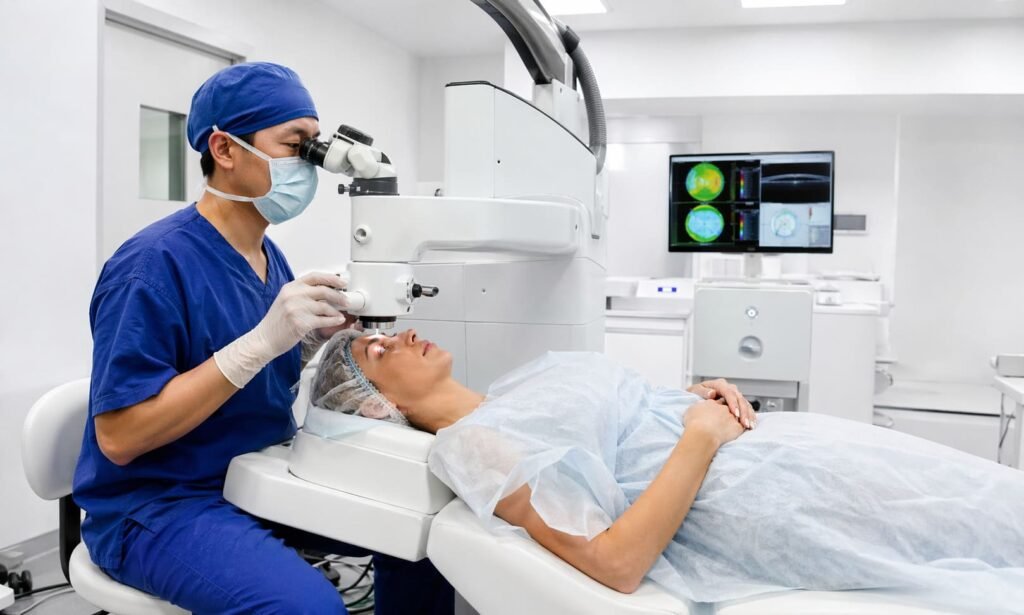
TransPRK uses an excimer laser to remove the eye’s thin surface layer and reshape the cornea in one planned sequence, without making a LASIK-style flap. “No-touch” means no blade, flap or manual scraping during the laser treatment. Your eyelids are held open, and a bandage lens is placed afterwards.
TransPRK is a flapless surface laser procedure
Many people know LASIK by name, which stands for Laser-Assisted In Situ Keratomileusis and uses a thin corneal flap before the laser reshapes the eye. TransPRK, also called transepithelial photorefractive keratectomy, works differently. It is a surface laser treatment based on PRK, which means photorefractive keratectomy.
In plain terms, the laser first removes the corneal epithelium, the very thin clear surface layer of the cornea. The laser then reshapes the corneal stroma, the tissue beneath that surface layer, to correct your prescription. Both parts happen as one computer-guided treatment plan.
“No-touch laser eye surgery” can be a misleading phrase if it is used loosely. No flap or manual scraping does not mean nothing ever touches the eye. We still use numbing drops, position your eye carefully, hold the eyelids open during treatment and place a soft bandage contact lens afterwards to protect the healing surface.
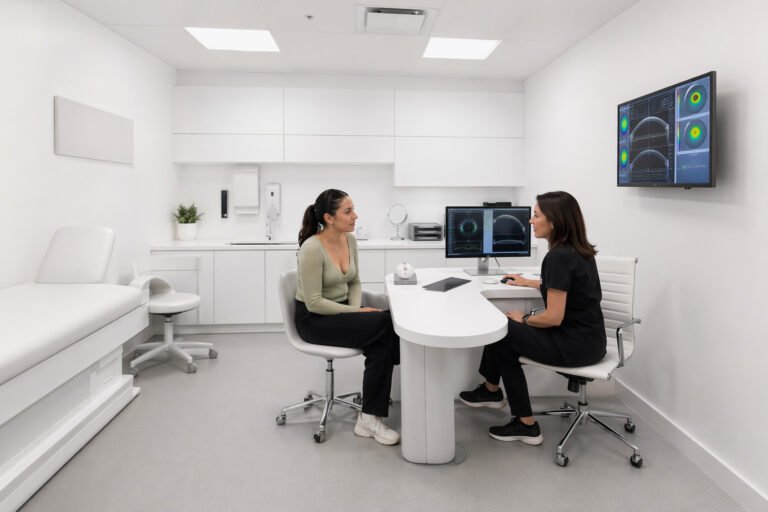
Detailed planning matters as much as the laser stage itself. Your measurements, prescription, eye surface and general eye health all affect whether TransPRK is the right option, so the step-by-step process starts before the day of surgery.
Discuss your vision goals with our experienced consultant and receive a thorough personal assessment.
EnquireThe day of TransPRK follows a controlled sequence
TransPRK surgery is best understood as a series of controlled stages: final checks, numbing, positioning, laser treatment, surface protection and early aftercare. The laser part is brief, but the appointment is built around making sure each part happens in the right order.
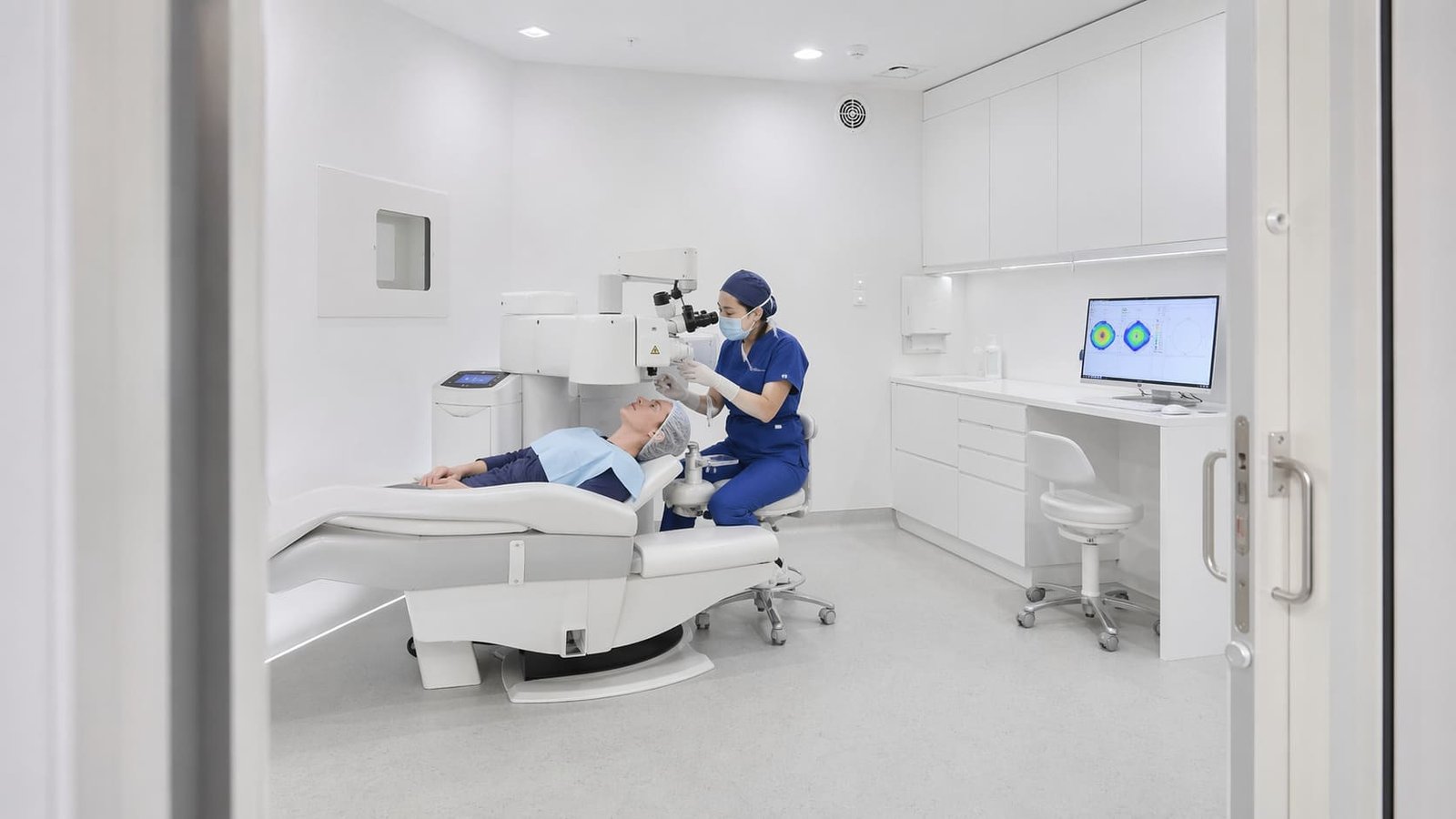
At The Vision Surgeon, our published TransPRK pathway includes anaesthetic drops, a device to hold the eyelids open and positioning under the excimer laser. Preparation takes about 1 to 2 minutes per eye, and active laser time is about 30 to 60 seconds per eye, depending on your prescription.
- Final checks before treatment. We confirm the treatment plan and make sure the eye being treated matches the agreed prescription correction. Consent is not treated as a formality, because proper refractive surgery depends on you understanding the procedure, the alternatives and the likely recovery pattern.
- Numbing drops are placed on the eye. Anaesthetic drops reduce discomfort during the procedure. No injection is needed for this part of the pathway.
- The eyelids are held open. A small lid holder prevents blinking during the laser stage. You do not need to force your eye open by concentration.
- Your eye is positioned under the excimer laser. The surgical team aligns the eye and asks you to look at a fixation target. Your job is simple cooperation, not perfect stillness.
- The laser removes the surface layer and reshapes the cornea. The excimer laser removes the epithelium and treats the corneal tissue beneath in one computer-guided sequence. This is the main difference between TransPRK and older surface laser approaches that involve manual surface removal.
- A soft bandage contact lens is placed on the eye. This lens is not there to correct your vision like a normal contact lens. It protects the surface while the epithelium heals and is removed at a follow-up appointment. Our published pathway states that it stays in place for 5 to 7 days.
- You go home with aftercare instructions. You will need someone else to take you home after surgery. The early period is about using drops as directed, protecting the eye and attending follow-up so healing can be checked.
Colchester patients often ask whether the treatment day feels like a long operation. In practice, the structure is closer to a planned clinical pathway with a short laser stage sitting in the middle of it.
Patients often focus on the laser stage and overlook the early healing period. For TransPRK, the bandage contact lens and aftercare plan are central to comfort and recovery.

Blinking, eye movement and comfort are managed during treatment
Worried about blinking during laser eye surgery? You are not expected to keep your eye open by willpower, because the eyelid holder controls blinking during the treatment.
Numbing drops are used before the laser starts, so the procedure itself is not centred on pain. You will be aware that the team is working around the eye, and you may notice lights, the fixation target and sounds from the equipment. We avoid over-reassuring here, because recovery after surface laser surgery can bring discomfort once the anaesthetic drops wear off.
Eye movement is a common concern, especially for people who know they struggle to stare at one point for long. We do not rely on you keeping perfectly still by force of concentration. The eye is positioned and monitored throughout, and the team gives simple instructions at the time.
A clearer way to think about the “no-touch” point is this: TransPRK avoids a LASIK flap and avoids manual scraping of the surface during laser treatment, yet it still uses normal clinical controls such as the lid holder and the bandage contact lens. That distinction prevents an unpleasant surprise on the day.
TransPRK recovery has a different rhythm from LASIK
TransPRK avoids creating a LASIK-style flap, but early recovery is less immediate because the corneal surface has to heal. The surface can heal over days. Visual clarity can fluctuate and keep improving afterwards.
The practical comparison looks like this:
| Practical point | TransPRK | LASIK |
|---|---|---|
| Corneal flap | No LASIK-style flap is created | A thin corneal flap is created |
| Treatment area | Surface laser treatment | Laser treatment beneath a flap |
| Early recovery | Vision is commonly blurry or variable at first because the surface is healing | Early visual recovery is generally quicker |
| Bandage contact lens | A soft bandage lens is used after treatment and removed at follow-up | A bandage lens is not usually part of the same pathway |
| Procedure choice | Can be considered where surface laser treatment is clinically preferable | Can be suitable where corneal measurements and eye health support it |
| Driving and work | Timing depends on healing, vision and clinical advice | Timing also depends on vision and clinical advice |
Blurry vision after TransPRK does not automatically mean the treatment has failed. The surface layer is healing, the eye is settling, and the bandage lens is doing a protective job during the earliest stage.
Driving is treated with caution. You need to meet the legal vision standard for driving, and Mr Mukherjee will advise based on how your eyes are healing rather than giving you a fixed promise in advance.
Speed alone is a poor way to choose between TransPRK and LASIK. A quicker early recovery is useful, but the better procedure is the one your eye measurements support.
Suitability should be judged from corneal measurements and eye health, as well as prescription. A surface laser procedure can be the right choice in some eyes, while other patients may be better suited to a different option.
Suitability depends on measurements, eye health and aftercare planning
The laser step may be brief, but the decision to proceed with TransPRK sits in the assessment. We look at whether your eyes are suited to surface laser treatment, whether another form of vision correction would make more clinical sense, and whether your recovery needs fit your work and daily routine.
How suitability is assessed
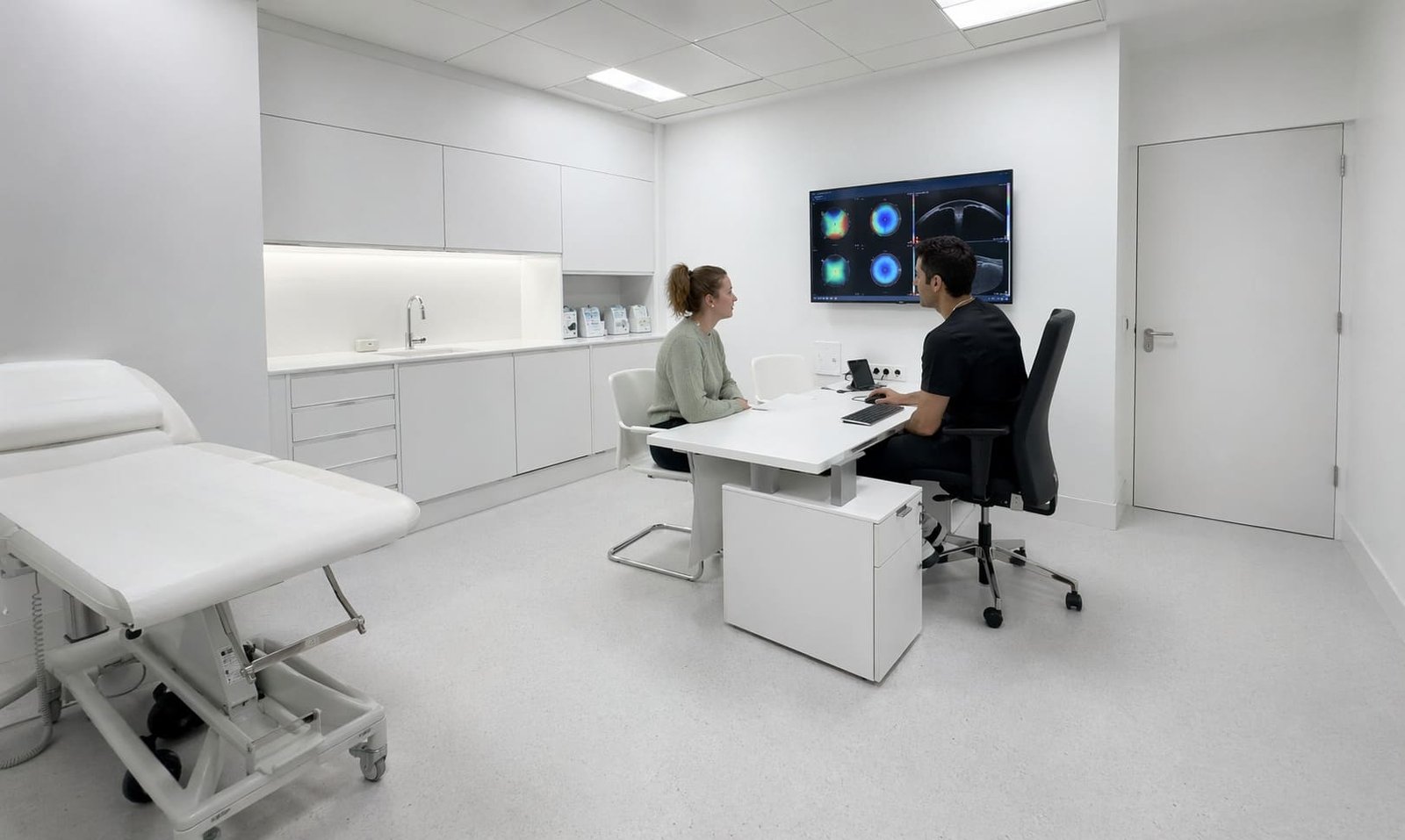
Suitability for TransPRK is based on more than the phrase “thin corneas”. Corneal thickness matters, but so does corneal shape, prescription, dry eye, age, lifestyle and the general health of the eye.
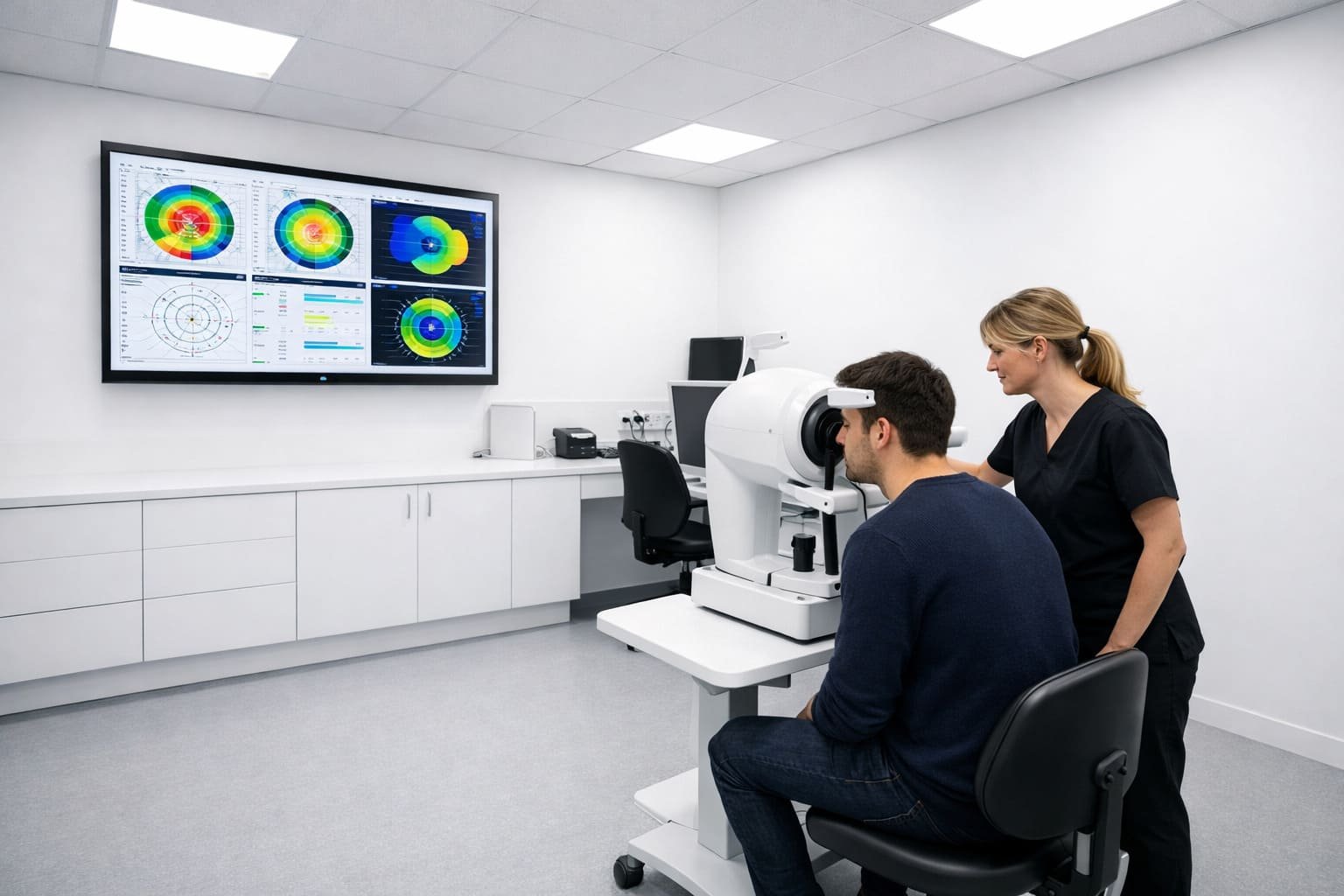
Corneal topography, which maps the shape of the front surface of the eye, helps us check whether the cornea is regular enough for laser treatment. Prescription stability also matters, because laser planning is based on the vision correction you need now.
Some patients are better served by LASIK, implantable contact lens surgery or lens replacement surgery. A proper assessment should leave you clear on why one route has been recommended and what the realistic alternatives are.
How cost should be understood
At The Vision Surgeon, we publish TransPRK pricing in the same range as LASIK, currently £1,400 to £1,800 per eye in 2026. The published pathway includes consultation, procedure, bandage contact lens, prescribed medication and aftercare appointments, with final suitability and quote confirmed after assessment.
Price should never be separated from clinical planning. Refractive surgery is still surgery, so the fee needs to make sense alongside the assessment, the procedure itself and the aftercare built around it.
The Royal College of Ophthalmologists says patients should receive clear information about the procedure, suitability, benefits, risks and alternatives. Its 2024 professional standards also place weight on consent, continuity of care, aftercare, fees and alternative treatment choices. That is the standard we think patients in Essex and Suffolk should expect.
How local continuity changes the pathway
For patients in Colchester, Chelmsford, Ipswich, Witham, Bury St Edmunds and Sudbury, local surgery and follow-up can remove a layer of practical strain. You should know who is assessing you, who is making the recommendation and who is responsible for your aftercare.
At The Vision Surgeon, Mr Hatch Mukherjee leads the pathway personally in Colchester. He is a consultant ophthalmologist with the Royal College of Ophthalmologists Certificate in Laser Refractive Surgery, known as CertLRS, and the practice presents him as triple fellowship-trained. The important point for you is continuity: the recommendation is not separated from the surgeon who performs the procedure.
Refractive surgery is moving in a direction patients can easily compare: clearer consent, named surgeon involvement, published fees and aftercare that is visible before treatment starts. Over the next 12 to 24 months, that transparency will matter more as people weigh local consultant-led care against travelling further for a more fragmented pathway.
Get answers to your questions about surgery, aftercare and the benefits of consultant-led treatment.
Message UsQuestions we get asked about TransPRK
Is TransPRK the same as PRK?
TransPRK is a development of PRK. The main distinction is that TransPRK uses the excimer laser to remove the surface epithelium and reshape the cornea in one planned laser sequence.
Does the bandage contact lens correct my vision?
The bandage contact lens protects the healing surface after TransPRK. It is not used like an ordinary prescription contact lens, and it is removed at a follow-up appointment.
Can I work on a screen after TransPRK?
Screen use depends on comfort, blur and how your eyes are healing. We advise patients individually because early vision can fluctuate after surface laser treatment.
Can TransPRK treat astigmatism?
TransPRK can be planned for prescription correction, but suitability depends on your measurements and clinical assessment. Corneal shape, eye surface health and prescription stability all need to be checked.
Will I need to travel to London for TransPRK?
Patients from Essex and Suffolk can have a consultant-led TransPRK pathway locally in Colchester. Local follow-up matters because surface healing needs to be checked properly after treatment.
This is general information, not medical advice.