How do we decide which eye surgery is right for your eyes?
We start with the diagnosis before we discuss any procedure. We ask what vision problem we are correcting, whether your natural lens is still the right structure to treat, and whether your eye health makes surgery suitable. Those answers decide whether laser treatment, an implantable contact lens, lens replacement, or no surgery belongs in the discussion.
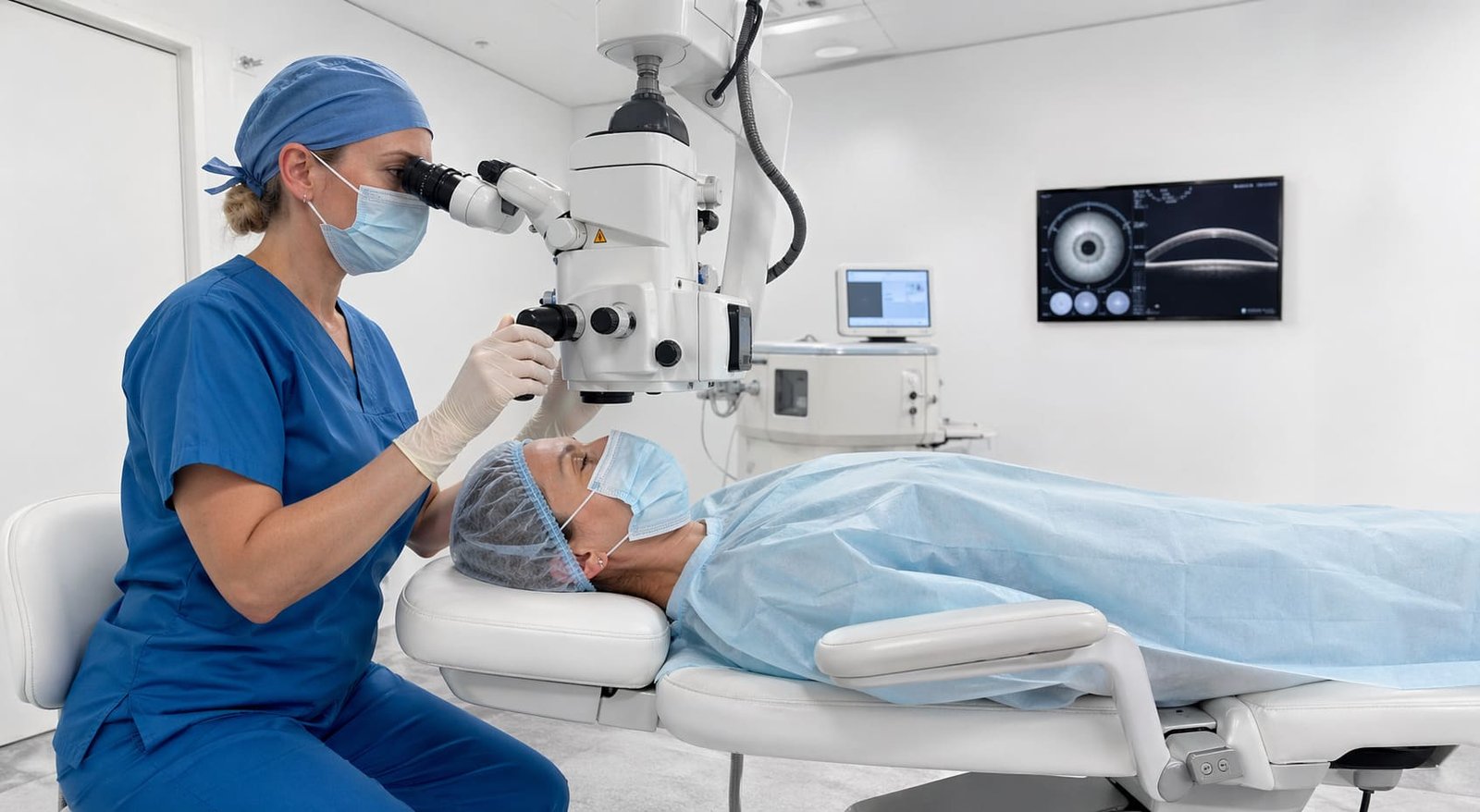
The short answer is that the diagnosis comes before the procedure
Many people arrive asking for LASIK or lens replacement as if they were choosing from a menu. Clinical suitability does not work that way. We first need to know what your eyes are doing and what you want the surgery to achieve.
The NHS describes laser eye surgery and lens surgery as treatments that can correct short-sightedness, long-sightedness and astigmatism, with suitability shaped by age and eye health. That plain point matters because two people with similar glasses prescriptions can need very different advice.
We use three questions before we recommend any vision correction procedure:
- What vision problem are we correcting? Distance blur, astigmatism, reading glasses and changing prescriptions point to different discussions.
- Is the natural lens still the right structure to treat? In midlife and beyond, the lens inside the eye can become part of the problem, especially when near vision or early clouding is involved.
- Is the eye healthy enough for the option being considered? Corneal shape, dryness and wider eye health can rule options in or out.
A proper suitability assessment can end with a recommendation against surgery. That is a responsible outcome when the likely benefit does not justify the risk.
Why age and the natural lens change the laser decision
Laser eye surgery changes the cornea, which is the clear front window of the eye. Lens replacement changes the lens inside the eye. Once the natural lens starts affecting reading vision, prescription stability or clarity, we need to decide whether treating the cornea alone makes sense.
Refractive lens exchange, also known as lens replacement surgery or laser lens replacement, means replacing the natural lens with an artificial intraocular lens. An intraocular lens is a small artificial lens placed inside the eye. Multifocal or trifocal intraocular lenses are designed to give a range of focus, although no lens choice should be described as a guarantee of complete freedom from glasses.
Presbyopia makes near vision part of the decision
Presbyopia is the age-related loss of close focusing. It is the reason many people begin to need reading glasses even if their distance vision has been stable for years.
Laser treatment can address the cornea, but presbyopia involves the eye’s focusing system. For some people, we may discuss laser options that balance distance and near tasks. For others, lens-based surgery gives a more logical discussion because the natural lens is already driving the problem.
Age changes the clinical question. Age alone does not decide the answer.
Early cataract change can move the focus to the lens
A cataract is clouding of the natural lens. Early lens change can make a prescription shift, reduce clarity or make glasses updates less satisfying.
If the lens is already part of the issue, reshaping the cornea may leave the main problem behind. In that situation, private cataract surgery or lens replacement may come into the conversation because both treat the lens itself. We still weigh that against your eye health, your aims and the trade-offs of artificial lens choices.
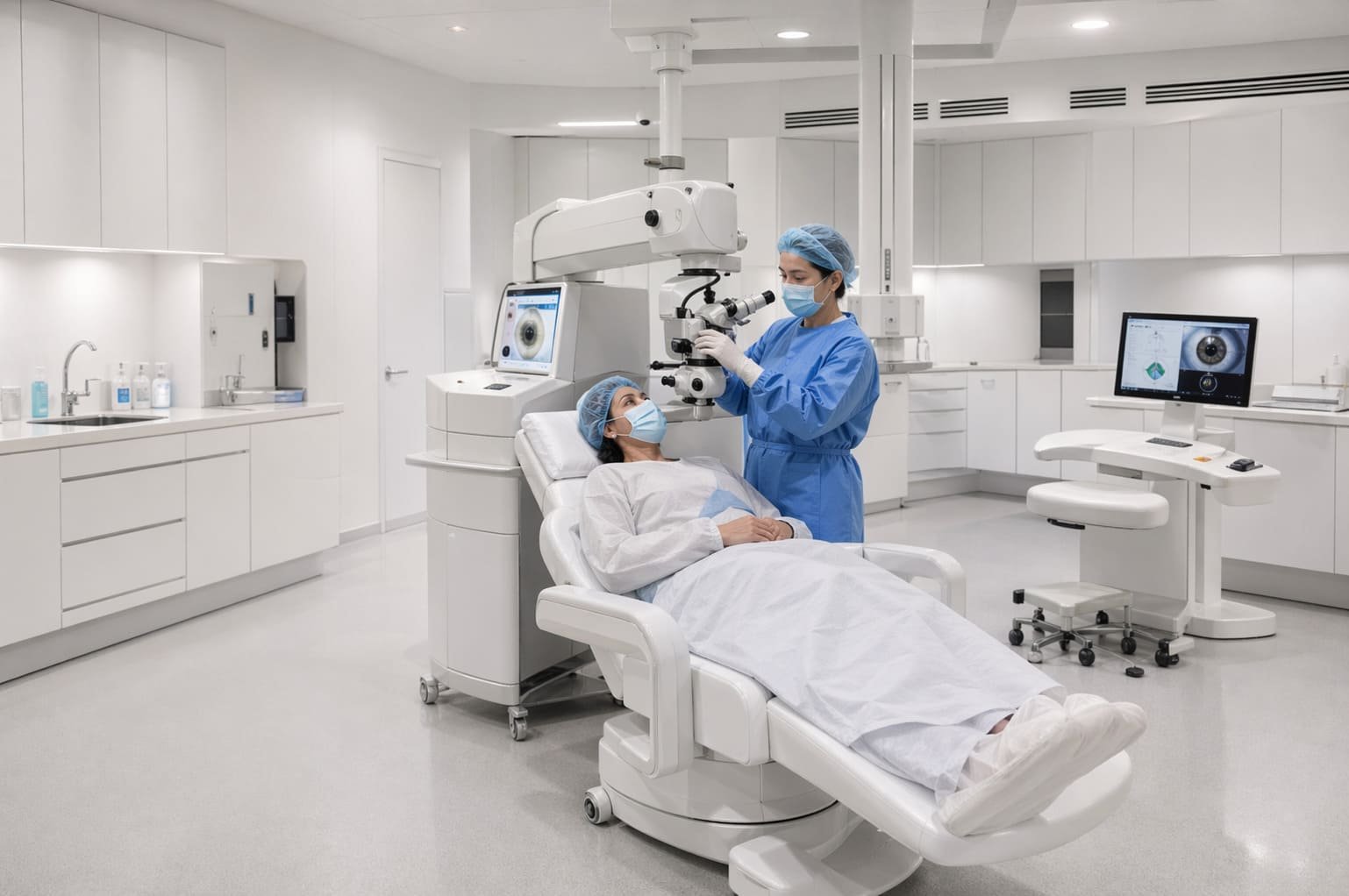
Discuss your vision goals with our experienced consultant and receive a thorough personal assessment.
EnquireThe cornea and eye health narrow the safe options
Wanting a procedure is different from being suitable for it. The measurements taken during assessment can change the recommendation, even when your prescription looks straightforward on paper.
Corneal shape and thickness matter. LASIK, which stands for Laser-Assisted In Situ Keratomileusis, creates a thin flap in the cornea before laser reshaping. TransPRK is a surface laser technique that reshapes the cornea without making a flap, so it may be discussed when the cornea or prescription makes surface treatment a better option.
Eye surface and comfort also count. Dryness can affect both suitability and recovery. We look at the eye surface before recommending laser because a technically possible operation still has to be sensible for the person having it.
Higher prescriptions need a different lens discussion. An implantable contact lens, shortened to ICL, is placed inside the eye to correct vision without removing the natural lens. It can be relevant for some higher prescriptions, but it still needs careful assessment of space inside the eye and the health of the eye overall.
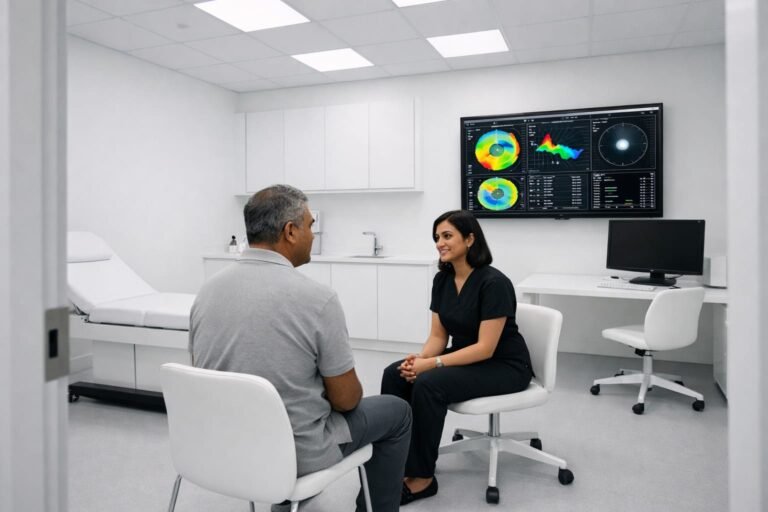
Corneal topography maps the shape of the cornea. Optical coherence tomography imaging, often called OCT imaging, gives detailed scans of eye structures. Biometry measures the eye for lens-based surgery. Those tests are not box-ticking; they decide which options remain reasonable.
When a patient mentions both reading glasses and distance blur, lens replacement often needs to enter the discussion early because the natural lens may already be part of the problem.

The full-range consultation reduces one-size-fits-all advice
Two patients can both want less dependence on glasses and still need different advice. One may have a stable distance prescription and a cornea that suits laser. Another may have early lens change, a higher prescription or eye measurements that make a lens-based route more appropriate.
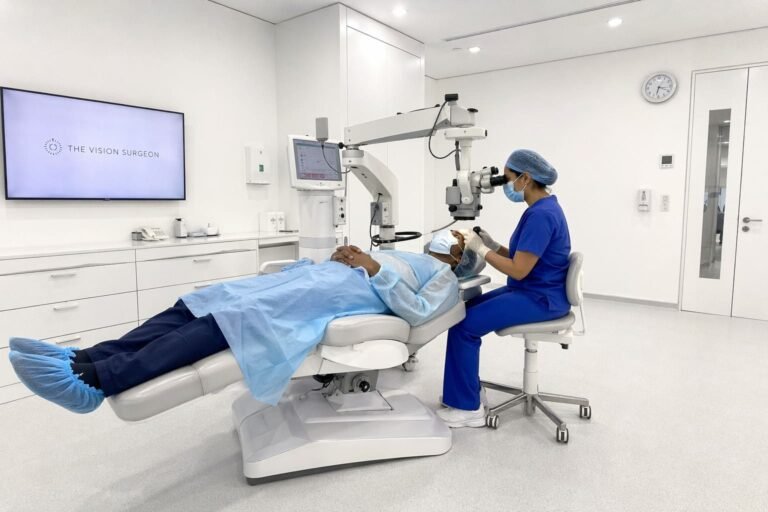
At The Vision Surgeon, we can consider LASIK, TransPRK, implantable contact lens surgery, cataract surgery and refractive lens exchange within the same assessment. Mr Mukherjee is a consultant ophthalmologist in Colchester with fellowship training across laser and refractive surgery, corneal disease and glaucoma, so the discussion is not limited to one procedure.
Here is how findings can shape the conversation:
| What we find | What we may discuss | Why it matters |
|---|---|---|
| Stable distance prescription with suitable corneal measurements | LASIK or TransPRK | Laser may correct the cornea without replacing the lens |
| Thinner cornea or a reason to avoid a flap | TransPRK or another option | Surface laser avoids creating a corneal flap |
| Higher prescription with a clear natural lens | Implantable contact lens surgery | Vision can be corrected inside the eye while keeping the natural lens |
| Early lens change or cataract | Lens replacement or cataract surgery | Treating the cornea may miss the structure causing the problem |
| Goals that surgery is unlikely to meet | No surgery or a different plan | Consent only works when the likely benefit is clear |
The Royal College of Ophthalmologists says the doctor carrying out refractive surgery is responsible for discussing the intervention and seeking consent. Its standards also say the doctor must ask why you want surgery and what outcome you hope for before deciding whether the procedure is appropriate.
That principle matters for patients in Colchester, Essex and Suffolk who want consultant-led advice without assuming they need to travel to London. The examination findings and the consent discussion belong together.
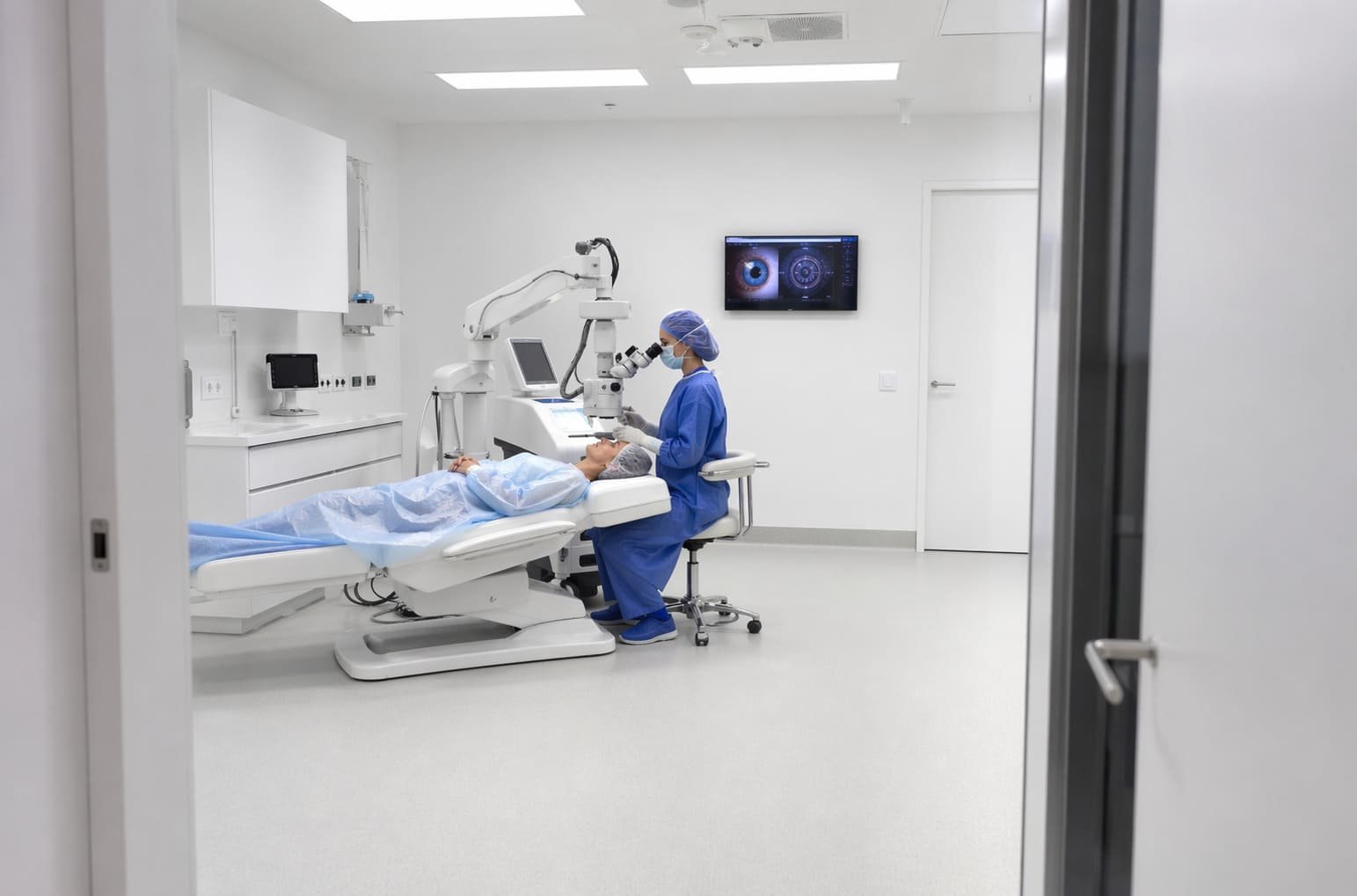
If corneal thickness or dryness is uncertain, a full assessment with topography and biometry can prevent unnecessary focus on LASIK when another option may be more appropriate.
Why realistic expectations are part of the recommendation
Will this operation meet the outcome you want? That question has to be answered before surgery, because a technically possible procedure can still be the wrong fit for your aims.
Limitations need plain discussion. No laser or lens procedure should be framed as a guarantee of perfect vision or complete independence from glasses. Some people still need glasses for certain tasks after surgery, especially for fine print, night driving or specific work demands.
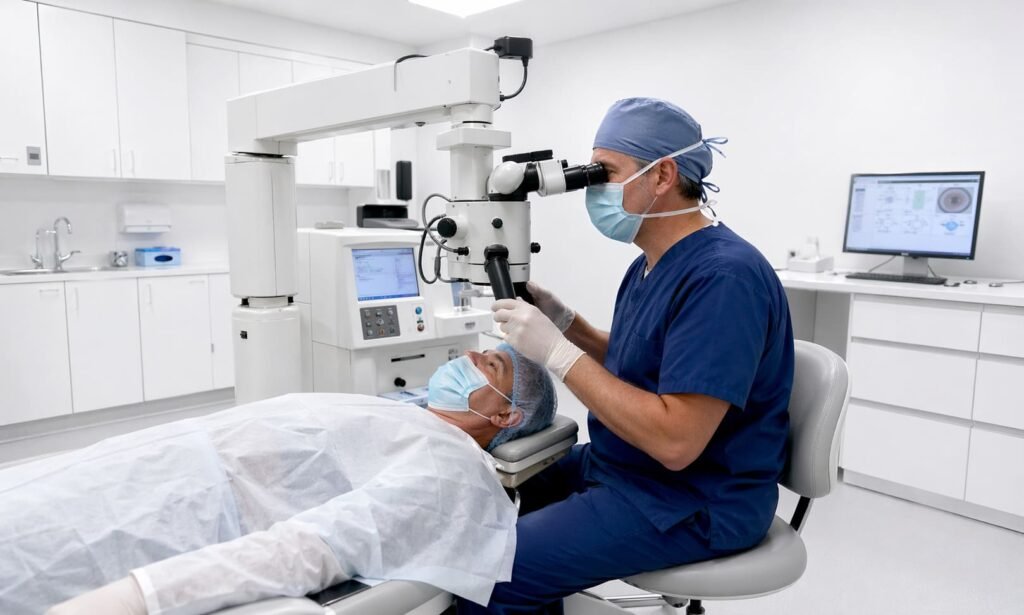
The NHS says laser eye surgery and lens surgery usually take about 20 to 30 minutes and people can usually go home the same day. Recovery still deserves respect. Glare, halos, floaters, starbursts, ghost images, blurred vision, sore eyes and red blotches can occur, and the NHS notes that these normally improve within a few months.
Aftercare is part of the plan. Before surgery, your consultation should cover what happens on the day, what aftercare to expect and what to do if concerns occur. Less common complications vary by procedure, so the consent conversation has to be specific to the operation being discussed.
At The Vision Surgeon, we keep continuity between consultation, surgery and aftercare because suitability does not stop at the recommendation. The same clinical reasoning has to carry through the whole process.
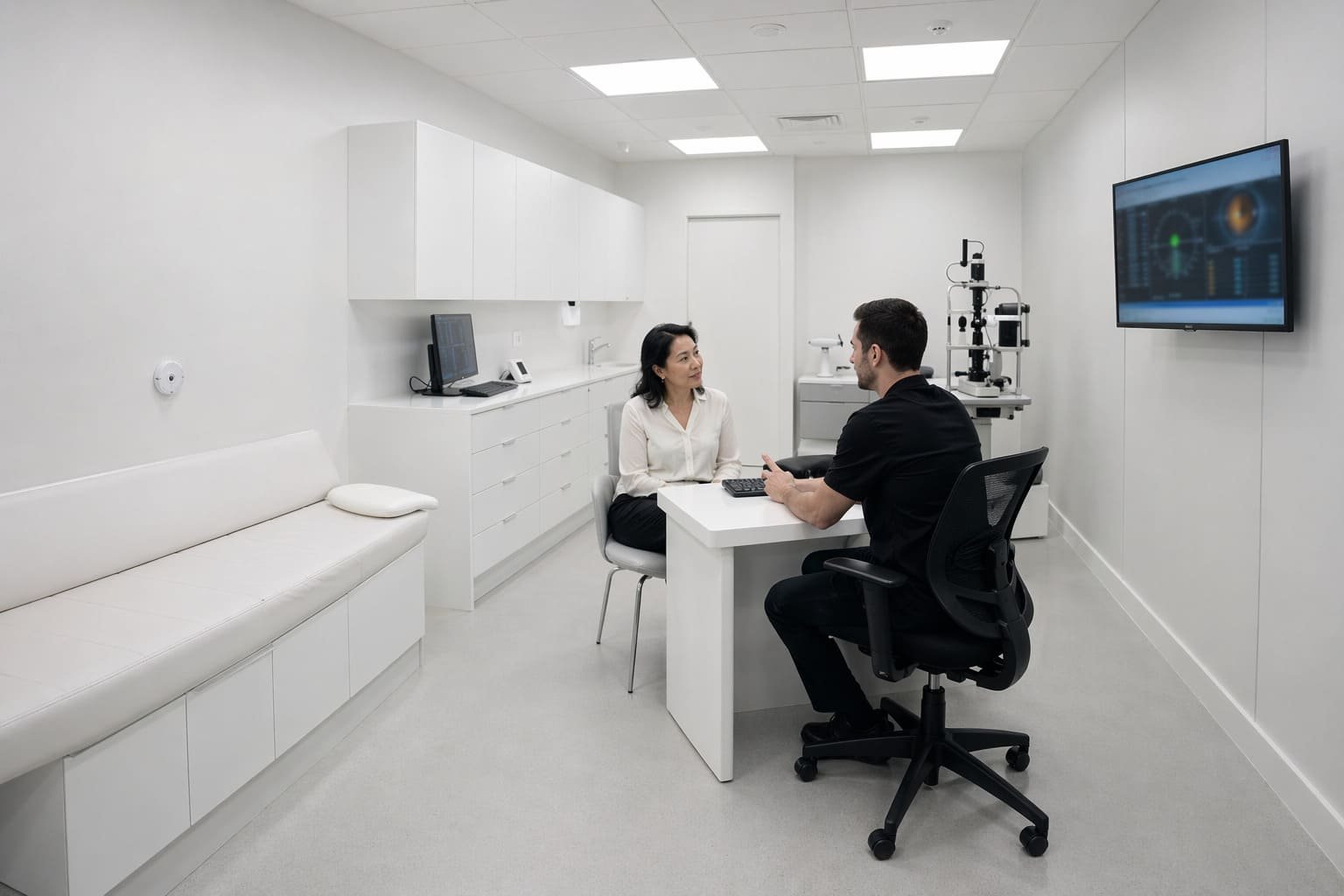
The right procedure is the one your eyes justify
The real question is not which procedure sounds most appealing. The better question is whether the recommendation can be explained by your prescription, your natural lens, your cornea, your eye health and your goals.
Mr Mukherjee holds the Certificate in Laser Refractive Surgery from the Royal College of Ophthalmologists, known as CertLRS, and works across laser, lens, implantable contact lens and cataract procedures in Colchester. That breadth matters because a balanced recommendation needs more than one possible answer on the table.
If surgery is appropriate, the recommendation should make sense when it is explained back to you in plain language. If surgery is not appropriate, that answer should be given just as clearly. The right procedure is the one your eyes justify after proper assessment.
Get answers to your questions about surgery, aftercare and the benefits of consultant-led treatment.
Message UsQuestions we hear about choosing eye surgery
Can laser eye surgery correct astigmatism?
Laser eye surgery can be considered for astigmatism, but suitability depends on the whole eye, not the astigmatism alone. We still need to assess the cornea, prescription stability and eye surface before discussing the right option.
Is implantable contact lens surgery the same as wearing contact lenses?
No. An implantable contact lens is placed inside the eye during surgery, so it is very different from a removable contact lens worn on the eye surface. It is considered for selected patients after detailed measurements.
Will I still need reading glasses after surgery?
Some people still need glasses for certain near tasks after surgery. Reading vision depends on your age, lens behaviour, chosen procedure and the visual target agreed before treatment.
Is private cataract surgery the same as lens replacement surgery?
Both involve replacing the natural lens with an artificial lens. Cataract surgery treats a cloudy lens, while refractive lens exchange is usually done to reduce dependence on glasses when the natural lens is still clear enough but no longer the best structure to leave untreated.
Can a consultation end with no surgery being recommended?
Yes. A no-surgery recommendation is appropriate when the examination, risks or likely outcome do not support an operation. Suitability is a clinical decision, not a promise that treatment will go ahead.
This is general information, not medical advice.