
How can you tell whether your cataracts are bad enough to need surgery?
Cataracts usually need surgery when they start to interfere with everyday life, rather than at a fixed stage on a chart. If blurred vision, glare, poor night driving, fading colours, or frequent prescription changes are making normal tasks difficult, an ophthalmologist can assess whether surgery is likely to improve things. The decision depends on both the eye examination and the effect on your daily routine.

Table of Contents
Understanding cataracts and their impact on vision
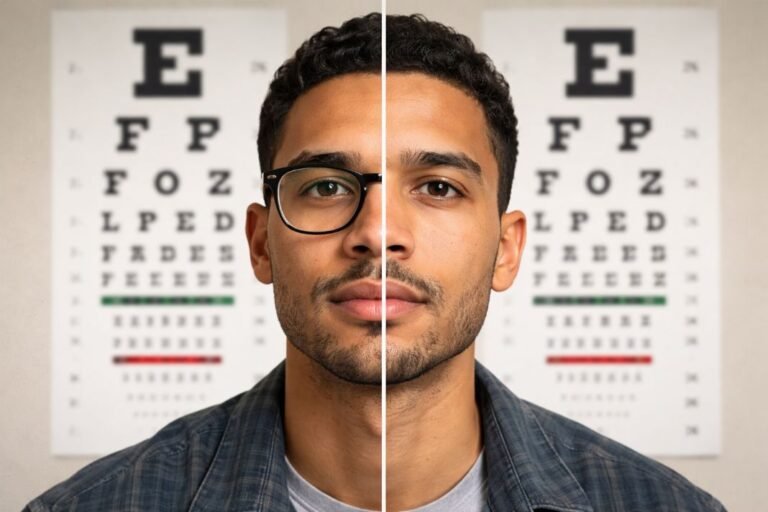
A cataract is a clouding of the eye’s natural lens. Instead of staying clear and helping light focus sharply, the lens becomes less transparent over time. That cloudiness can make vision seem misty, dull, or smeared, much like looking through a window that is no longer clean.
Age is the most common reason cataracts develop, although some people notice them earlier and some later. Progress is often gradual, which means that changes can creep in slowly enough to be missed at first. Many people only realise how much their sight has altered when they compare one eye with the other or struggle with a task that used to feel simple.
Common cataract symptoms include:
- blurred or cloudy vision
- increased glare from headlights or bright sun
- halos around lights
- colours looking less vivid or slightly yellowed
- needing brighter light for reading
- more difficulty seeing at night
- glasses that seem to stop helping for long
Mild cataracts may cause only small changes, such as needing stronger reading glasses or feeling less comfortable in dim light. Moderate cataracts often start to affect reading, television, driving, and recognising faces across a room. Severe cataracts can reduce sight much more noticeably, with stronger glare, poor contrast, and a level of blur that glasses cannot correct well.
Daily life often gives the clearest clues. A person may stop driving after dark because oncoming headlights feel dazzling. Someone else may read messages by holding the phone under a lamp, or feel uncertain on stairs because edges are harder to judge. Those practical changes matter just as much as the wording on an eye test report.
Other eye problems can also cause blurred vision, including dry eye, changes in spectacle prescription, macular disease, or glaucoma. That is why self-assessment is useful as a starting point, but a proper examination remains the safest way to work out whether cataracts are truly driving the problem.
Key signs your cataracts may require surgery
Cataract surgery is usually considered when vision is affecting function, comfort, or safety. A cataract does not need to look dramatic for it to be worth treating.
A useful way to think about it is whether your sight is getting in the way of life you want to lead. The following signs often suggest it is time to discuss surgery seriously:
- reading has become hard even with good lighting and updated glasses
- driving, especially at night, feels uncomfortable or unsafe
- glare and halos from lights are becoming more intrusive
- colours seem faded or less distinct
- faces are harder to recognise clearly
- hobbies such as sewing, golf, cooking, or using a screen feel more difficult
- your glasses prescription keeps changing without giving lasting improvement
- one eye has become much worse than the other
- reduced vision is affecting confidence, independence, or work
Reading difficulty often shows up early in day to day life. Small print may blur, contrast may seem weaker, and brighter lamps may become necessary in rooms that once felt perfectly adequate. Some people notice that supermarket labels and medicine packets become far more frustrating than they used to be.
Night driving trouble deserves particular attention. Cataracts can reduce contrast sensitivity, which is the ability to pick out detail when light is poor or uneven. Road markings, pedestrians, and wet surfaces can all become harder to judge, even if daytime vision still seems acceptable.
Prescription changes that no longer solve the problem are another common signal. An optician may update glasses, only for vision to remain disappointing soon afterwards. In those cases, the issue may no longer be the prescription itself, but the cloudy lens sitting behind it.
Safety and independence also matter. If sight changes are making you avoid stairs, miss steps, withdraw from driving, or rely much more heavily on others, the impact is already significant. Clinical decisions around cataract surgery often rest on this real-world loss of function, not simply on whether a cataract is labelled mild or moderate during an examination.

How cataracts are assessed by an ophthalmologist
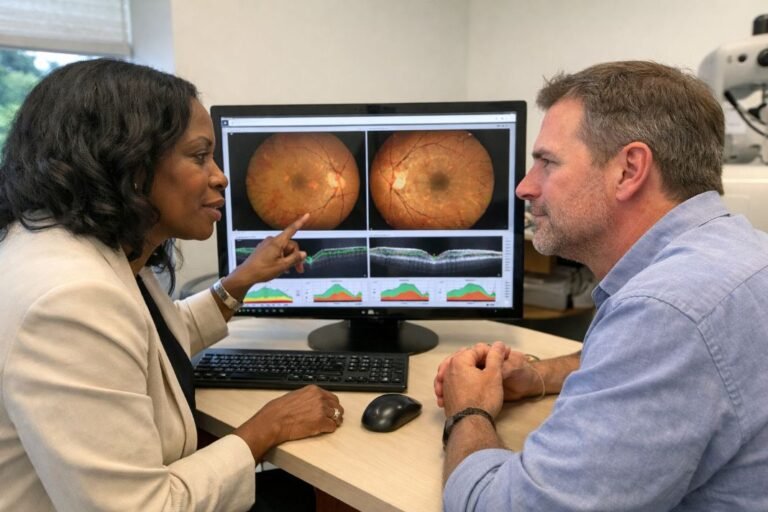
A cataract assessment is usually straightforward and more detailed than a standard sight test. The aim is to work out how much the cataract is affecting your vision, whether anything else is contributing, and whether surgery is likely to help.
During a consultant-led appointment, the discussion usually starts with your symptoms and lifestyle. An ophthalmologist will want to know what has changed, how long it has been happening, and which activities are now difficult. Reading for work, driving at night, caring for a partner, or managing stairs safely can all influence the timing of surgery.
What happens during the assessment
- Your vision is measured with and without current glasses to check visual acuity and the quality of sight each eye can achieve.
- The front of the eye is examined with a slit lamp, which is a microscope with a bright light. This allows the ophthalmologist to look directly at the lens and assess the type and density of cataract.
- The rest of the eye is checked, including the cornea, retina, and optic nerve where possible, because cataracts are not always the only reason vision has changed.
- Your general eye health, medical history, medicines, and visual needs are reviewed before any decision is made.
Many people still hear that a cataract has to be “ripe” before it can be removed. That is an older idea and does not reflect modern practice. In most cases, surgery is considered once the cataract is troublesome enough to justify treatment and the likely benefits outweigh the downsides of waiting.
Lifestyle matters because the same cataract may affect two people very differently. A retired person who rarely drives after dark may choose to monitor symptoms for longer. A working driver or someone caring for grandchildren may reach the point of surgery sooner because the visual demands are higher.
At The Vision Surgeon, patients are assessed by Mr Mukherjee personally, which means that the person advising on timing is also the surgeon who would perform the operation. That continuity can make discussions about suitability, lens choice, and realistic expectations much clearer from the outset.

Alternatives to immediate cataract surgery
Immediate surgery is not always necessary. If the cataract is mild and your daily life is still manageable, monitoring can be a perfectly reasonable plan.
Non-surgical measures may include:
- updating your glasses prescription
- using brighter reading lights at home
- reducing glare with careful lighting and anti-glare lenses
- avoiding night driving if headlights have become uncomfortable
- increasing text size on phones, tablets, and computers
- attending regular reviews to track further change
Watchful waiting is often appropriate when symptoms are present but still limited. Some people are aware of a slight haze or occasional glare, yet can read, drive in daytime, work, and manage safely. In that situation, surgery may offer less immediate value than careful monitoring and practical adjustments.
Waiting too long can sometimes make life harder than it needs to be. The issue is not that delay is automatically dangerous, but that prolonged poor vision may reduce confidence, independence, and safety. Very advanced cataracts can also make surgery technically more difficult in some cases, although many people are treated well before that stage.
One common myth deserves clearing up. Modern cataract surgery does not usually require you to wait until the lens becomes very dense. The right time is based on symptoms, eye health, and personal priorities, together with the ophthalmologist’s assessment of likely benefit.
A balanced decision often sits somewhere between rushing into treatment and putting up with sight that is steadily limiting your life.
What to expect from cataract surgery and recovery
Cataract surgery involves removing the cloudy natural lens and replacing it with a clear artificial lens. It is usually carried out as a day-case procedure, so patients go home the same day.
The operation itself is normally done with local anaesthetic in the form of numbing drops, sometimes with additional support to help you stay comfortable and calm. Most people remain awake, although they do not see the surgery in detail. You may notice light, movement, or water, but pain is not expected during the procedure.
On the day of surgery
- Your eye is prepared and numbed, and the surgical team checks the treatment plan and lens choice.
- A tiny opening is made in the eye so that the cloudy lens can be broken up and removed.
- A clear artificial lens is placed inside the lens capsule to restore focus.
- You rest for a short time afterwards before going home with drops and aftercare instructions.
Recovery is usually measured in days and weeks, not months. Vision may begin to improve quite quickly, although it can be hazy at first while the eye settles. Many people feel comfortable within a day or two, yet the sharpness and stability of sight can continue improving over the following weeks.
After surgery, the eye may feel slightly gritty or watery for a short period. Drops are used to support healing and reduce inflammation. Most people are advised to avoid rubbing the eye, heavy lifting, and swimming for a period recommended by their surgeon.
Benefits can include clearer distance vision, brighter colours, and less glare, although results vary from person to person. The type of lens also matters. Standard monofocal lenses usually give one main point of focus, whereas multifocal lens options may reduce dependence on glasses for both near and distance tasks in suitable patients.
Every operation carries risk, including cataract surgery. Possible complications can include infection, inflammation, swelling, retinal problems, or a need for further treatment, even though serious complications are uncommon. Honest counselling should always include both the likely benefits and the possible downsides.
Private care may differ from the NHS in waiting time, continuity, and lens choice. Some patients also value being seen by the same consultant throughout, without the need to travel elsewhere for surgery, which can make the whole process feel more settled and personal.
Cost considerations and value of private cataract surgery
Private cataract surgery is usually priced per eye, and the final figure depends on the lens chosen and the details of the treatment plan. A common guide is around £2,000 to £4,000 per eye.
Several factors can influence price:
- whether you choose a standard lens or a premium lens
- whether a multifocal lens is suitable for your eyesight and goals
- the challenge of the cataract or any other eye conditions
- what is included in the package, such as aftercare and follow-up appointments
The lowest price does not always reflect the full picture. Lens options, surgeon continuity, pre-operative assessment, aftercare arrangements, and the setting where surgery takes place all affect the overall value. For some patients, having a named consultant perform assessment, surgery, and follow-up that value.
NHS cataract surgery remains an excellent route for many people, particularly where cost is the main deciding factor. Private treatment may appeal to those who want shorter waits, wider lens choice, or a more individualised plan for reducing glasses dependence after surgery.
The long-term financial view can also matter. Ongoing spending on glasses, sunglasses, lens coatings, and prescription changes adds up over time, especially if cataracts are already making those updates less effective. Even so, surgery should be judged first on suitability and expected benefit, not on price alone.
Payment options can vary by provider, and exact costs should always follow an individual assessment. A clear written quotation, with no ambiguity about what is included, is worth looking for before any treatment is booked.

Common misconceptions about cataract surgery timing
A lot of confusion about cataracts comes from outdated advice or second-hand stories. Timing is usually much more personal than many people expect.
Myth: You have to wait until cataracts are “ripe”
Fact: Modern cataract surgery is usually based on symptoms and function, not on waiting for the cataract to reach an old-fashioned stage. If sight is interfering with daily life, assessment is reasonable.
Myth: Surgery is only for older people with very poor vision
Fact: Cataracts are more common with age, but treatment decisions are not based on age alone. A younger person with significant glare or blurred sight may need surgery sooner than an older person with only minor symptoms.
Myth: If glasses still help a little, surgery is too early
Fact: Updated glasses can remain useful for a time, but they do not remove the cataract itself. Once prescriptions stop giving reliable improvement, the balance may start shifting in favour of surgery.
Myth: Cataract surgery is always urgent
Fact: Many cataracts can be monitored safely for a period. The need for surgery depends on symptoms, eye health, and how much vision loss is affecting normal life.
Myth: Cataract surgery is purely optional in every case
Fact: Some people cope well without treatment for quite a while, but others reach a point where driving, reading, work, or safety become too compromised. At that stage, surgery may be the most sensible route.
Myth: The same timing suits everyone
Fact: Personal circumstances matter. Visual needs differ between people, and the right moment for surgery should reflect those differences along with clinical findings.
The clearest way to judge timing is to focus on what your eyes are preventing you from doing now, then match that with a proper ophthalmic assessment. That approach is much more useful than waiting for a dramatic milestone or relying on what was right for somebody else.