
Does cataract surgery improve eyesight, or does it mainly prevent further decline?
Cataract surgery usually does both. It removes the cloudy natural lens that has been blurring and dulling your sight, which can improve visual clarity, and it also removes the cataract itself so that particular cause of worsening vision cannot continue. Many people notice sharper detail, brighter colours, and less haze afterwards, although the exact result depends on the health of the eye and the lens chosen.
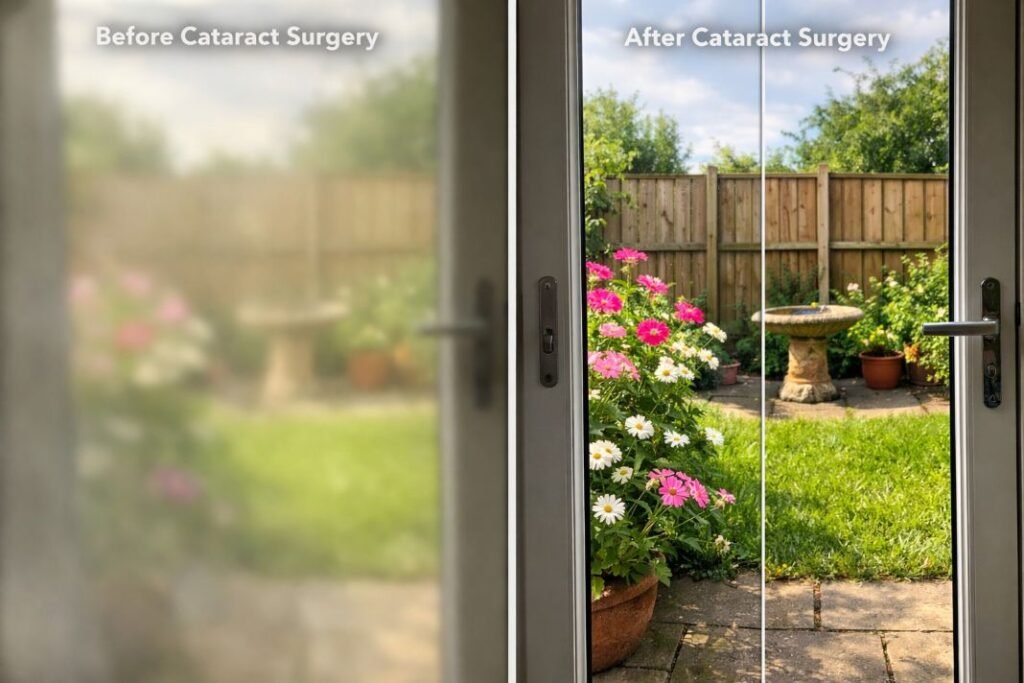
Table of Contents
What Does Cataract Surgery Actually Achieve?
A cataract is a clouding of the eye’s natural lens. Replacing that lens is a bit like replacing a fogged-up windowpane with a clear one. In many cases, vision after cataract surgery is better than it was for months or even years before the operation.
That said, surgery does not promise perfect eyesight. Cataract surgery results depend on more than the cataract alone, including refractive error, the condition of the retina, and any co-existing eye disease. A standard lens may improve distance vision well but still leave you needing reading glasses, whereas a multifocal lens can reduce glasses dependence for some people.
This is why the question is slightly misleading. The operation does not merely stop things getting worse. It often improves visual acuity in a noticeable, practical way, such as making driving, reading, watching television, or recognising faces easier again.
Guidance from bodies such as the Royal College of Ophthalmologists, the GMC, and the CQC supports informed consent and realistic expectations, which means that the aim is clearer vision with a balanced explanation of likely limits.
Who Benefits Most from Cataract Surgery?
Most people who consider cataract surgery are older adults whose sight has gradually become more blurred, dim, or glare-prone. Cataracts are common with age, but age alone does not decide whether surgery is worthwhile. Symptoms and day-to-day impact matter more.
The groups below often see the clearest benefit:
- People whose cataracts are affecting driving, reading, work, or hobbies
- Adults whose glasses no longer seem to give clear vision because the lens itself has become cloudy
- Patients with troublesome glare, halos, faded colours, or poor night vision
- Those with cataracts in one or both eyes that are interfering with independence
Early cataracts can still be very disruptive if they cause glare in bright sunlight or headlights at night. By contrast, a more advanced cataract is not always the only reason to have surgery if everyday tasks are already becoming difficult.
Some people need more careful counselling. Anyone with glaucoma, macular degeneration, diabetic eye disease, or corneal problems may still benefit, but the improvement can be more limited because the cataract is only one part of the picture. Complex prescriptions also change the discussion, especially if reducing glasses use is part of the goal.
At The Vision Surgeon, suitability is assessed on an individual basis, because the best candidates for cataract surgery are not defined by a single age or prescription but by symptoms, eye health, and realistic goals.

How Cataract Surgery Works
Cataract surgery is a form of lens replacement surgery. The cloudy natural lens is removed, and a clear artificial lens is placed inside the eye in its place. That is the reason sight can improve: the clouding has gone, and the new lens can also correct some refractive error.
A straightforward way to think about the cataract operation process is this:
- The eye is measured carefully before surgery so the replacement lens can be selected.
- On the day, anaesthetic drops are used to numb the eye.
- The surgeon makes tiny openings to reach the lens.
- The cloudy lens is broken up and removed.
- A clear artificial lens is inserted into the same position.
- The eye begins to settle over the following days and weeks.
A multifocal lens is an artificial lens designed to help with more than one viewing distance. Some patients choose this to reduce reliance on glasses, although not everyone is suitable, and the trade-off can include more awareness of halos or glare in certain lighting conditions.
Technology can support precision, including the use of a femtosecond laser in selected cases, but the planning and judgement behind the operation remain central. Cataract surgery explained simply is this: remove the clouded lens, replace it with a clear one, and match the lens choice as closely as possible to the person’s visual needs.
What to Expect Before, During, and After Cataract Surgery
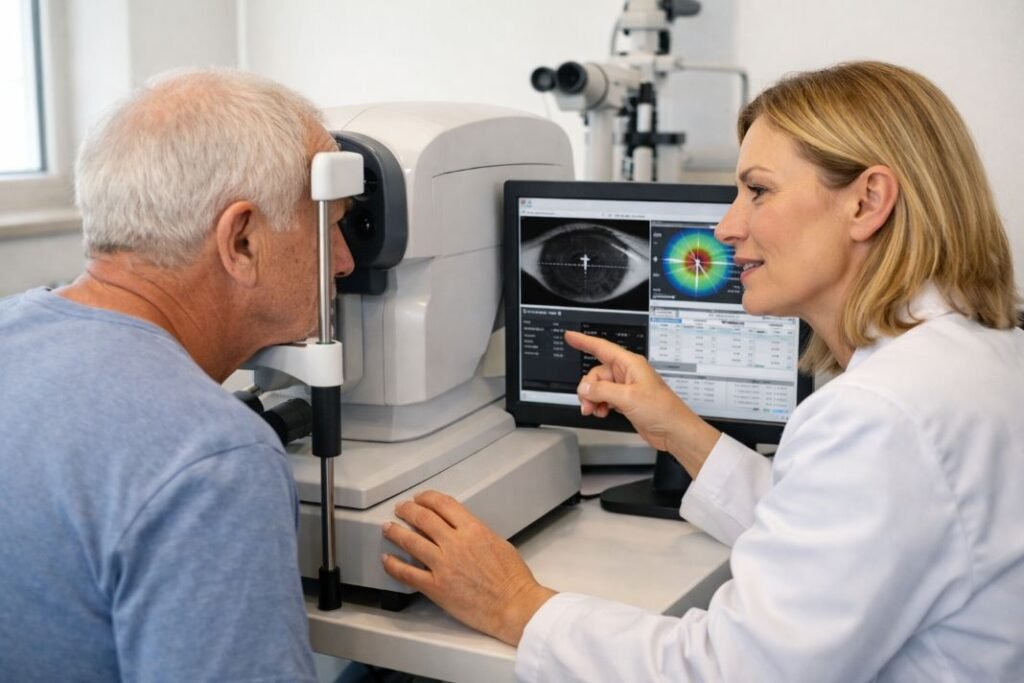
Most cataract surgery journeys begin with assessment rather than treatment. Measurements of the eye, a review of general eye health, and a discussion about lens options all happen before a date is set. This stage matters because it shapes the likely visual outcome and highlights any factors that may affect recovery.
Before surgery
During the consultation, the surgeon checks whether the cataract is the main reason for poor sight and whether anything else may influence the result. Patients are usually advised about medicines, transport home, and the eye drops they may need afterwards.
During surgery
On the day itself, cataract surgery is commonly done as a day case. Anaesthetic drops numb the eye, and the operation itself is usually relatively quick, although patients should allow more time for preparation and immediate recovery at the clinic or hospital.
Many people are aware of light and movement during the procedure, but they should not feel sharp pain. A nurse and surgeon talk patients through what is happening, which can make the experience feel more manageable.
After surgery
Vision can start to improve within days, but the picture is not always instantly perfect. One eye may feel gritty, watery, or slightly light-sensitive at first, and colours can seem unexpectedly bright once the cloudy lens has been removed.
Recovery after cataract surgery usually involves eye drops, avoiding eye rubbing, and following specific post-operative instructions. Some people return to desk-based work quite quickly, while others need a little longer before driving, lifting heavily, or resuming more active routines.
Urgent advice is needed if there is marked pain, a sudden drop in vision, increasing redness, or new flashes and floaters. Those symptoms are not part of the usual settling-in period and need prompt review.
Risks, Limitations, and Realistic Expectations
Cataract surgery has a strong track record, but no operation is free from risk. A balanced discussion includes benefits, side effects, limitations, and the small chance of more serious complications.
Common points covered during informed consent include:
- Temporary blurring as the eye settles
- Dryness, grittiness, or mild discomfort
- Glare or halos, especially in the early period
- A need for glasses after surgery, depending on the lens chosen
- Less common but more serious problems such as infection, bleeding, swelling, retinal detachment, or lens-related complications
Limits matter as much as risks. If the retina or optic nerve has already been damaged, the surgery can remove the cataract but cannot reverse every other cause of poor sight. Someone with macular disease may see a cleaner, brighter image after surgery but still find fine print difficult.
Glasses dependence is another area where expectations need care. Standard monofocal lenses often give good vision at one main distance only. Reading glasses may still be needed, and some people still need spectacles for distance or astigmatism after the eye has healed. Premium lens choices can widen the range of vision, but they also involve trade-offs and are not suitable for everyone.
Standards from the NHS, the Royal College of Ophthalmologists, the GMC, and the CQC all place weight on clear explanation before treatment. That matters because a good result is not just about surgical technique. It also depends on whether the expected outcome matches the patient’s actual needs.
Private vs. NHS Cataract Surgery
Both private and NHS cataract surgery aim to remove the cloudy lens safely and improve vision. The main differences usually relate to waiting times, lens choice, continuity of care, and how personalised the pathway feels.
A simple comparison looks like this:
- NHS care is widely available and clinically appropriate for many patients, but waiting times can vary by area and standard lens choices are more common
- Private care may offer faster access, more time to discuss visual goals, and a wider choice of lens options, including multifocal or other premium lenses
- NHS pathways can involve different clinicians at different stages, whereas consultant-led private care may offer more continuity from assessment through surgery and aftercare
- Private treatment can also be more convenient for patients who want local surgery without travelling further afield
Lens choice is often the biggest practical difference. A standard NHS lens usually focuses on safe, effective cataract removal with good vision at one distance. A private pathway may give more scope to target reduced glasses use, particularly for patients interested in multifocal or other premium lenses.
Local availability also shapes decisions. Some patients prefer care close to home in Colchester or elsewhere in Essex and Suffolk, especially if family members are helping with transport on the day of surgery.

Understanding Costs and Value in Cataract Surgery
Private cataract surgery cost is usually influenced by the type of lens used, the challenge of the case, the hospital setting, and what is included in aftercare. A common guide is around £2,000 to £4,000 per eye, although final pricing depends on individual assessment.
A few factors tend to affect the overall figure:
- Standard monofocal lenses usually cost less than premium or multifocal lens options
- Eyes with additional challenge may need more detailed planning
- Aftercare arrangements and follow-up structure can differ between providers
Looking at value rather than headline price often gives a clearer picture. Some people are mainly seeking shorter waiting times and consultant continuity. Others are weighing the chance to reduce glasses dependence at the same time as treating the cataract.
Ongoing spending on spectacles, prescription sunglasses, and repeated lens changes can add up over time, although surgery should never be framed as a simple financial swap. The better question is whether the expected visual outcome, lens choice, and level of personal care fit your priorities.
The Role of Local Expertise
Cataract surgery is common, but it is still eye surgery, and patients often feel calmer when the same consultant ophthalmologist assesses them, performs the operation, and reviews them afterwards. Continuity can make a real difference to decision-making because the person advising on lens choice is also the person carrying out the treatment.
In a consultant-led setting, discussions are usually more specific to the eye in front of the surgeon. That matters if you have astigmatism, previous eye disease, or questions about whether a premium lens is realistic for your lifestyle.
Mr Mukherjee’s background as an NHS consultant and triple fellowship-trained ophthalmologist adds another layer of reassurance for patients who want experienced local care without the need to travel to London. For many people, convenience also matters in practical ways, including easier follow-up visits and simpler transport arrangements on the day of surgery.
Unlike high-street chain models where patients may meet different clinicians at different stages, surgeon-led care keeps responsibility and communication closely aligned from first assessment to aftercare.
Looking Beyond Surgery
Many patients focus so much on the operation itself that they do not think enough about adaptation afterwards. Once the cloudy lens is gone, the world can look unexpectedly bright, crisp, and colourful, which can take a little getting used to.
A few reflections often come up after cataract surgery:
- Clearer vision does not always mean glasses-free vision.
- The first days of recovery are often a settling period, not the final result.
- One eye may feel very different from the other until both have been treated or updated with a new prescription.
- Ongoing eye checks still matter, because cataract surgery does not prevent unrelated eye conditions.
One common misconception is that cataract surgery gives every patient perfect sight in every setting. Real life is more individual than that. Some people are delighted with distance vision but still need readers, while others value the return of contrast and colour more than any change in their prescription.
The most useful expectation is a practical one. Cataract surgery can improve eyesight significantly for many people, and it can remove a major cause of visual decline, but the best outcomes come when the hoped-for result matches the health of the eye, the lens chosen, and the realities of everyday life.