Can cataract surgery correct your astigmatism?
Yes, cataract surgery can reduce astigmatism when your astigmatism is regular, measurable and planned for before surgery. The usual method is a toric intraocular lens, which is an artificial lens with astigmatism correction built in. A standard cataract lens may clear the cataract but leave astigmatism behind.
Cataract surgery treats clarity and astigmatism separately
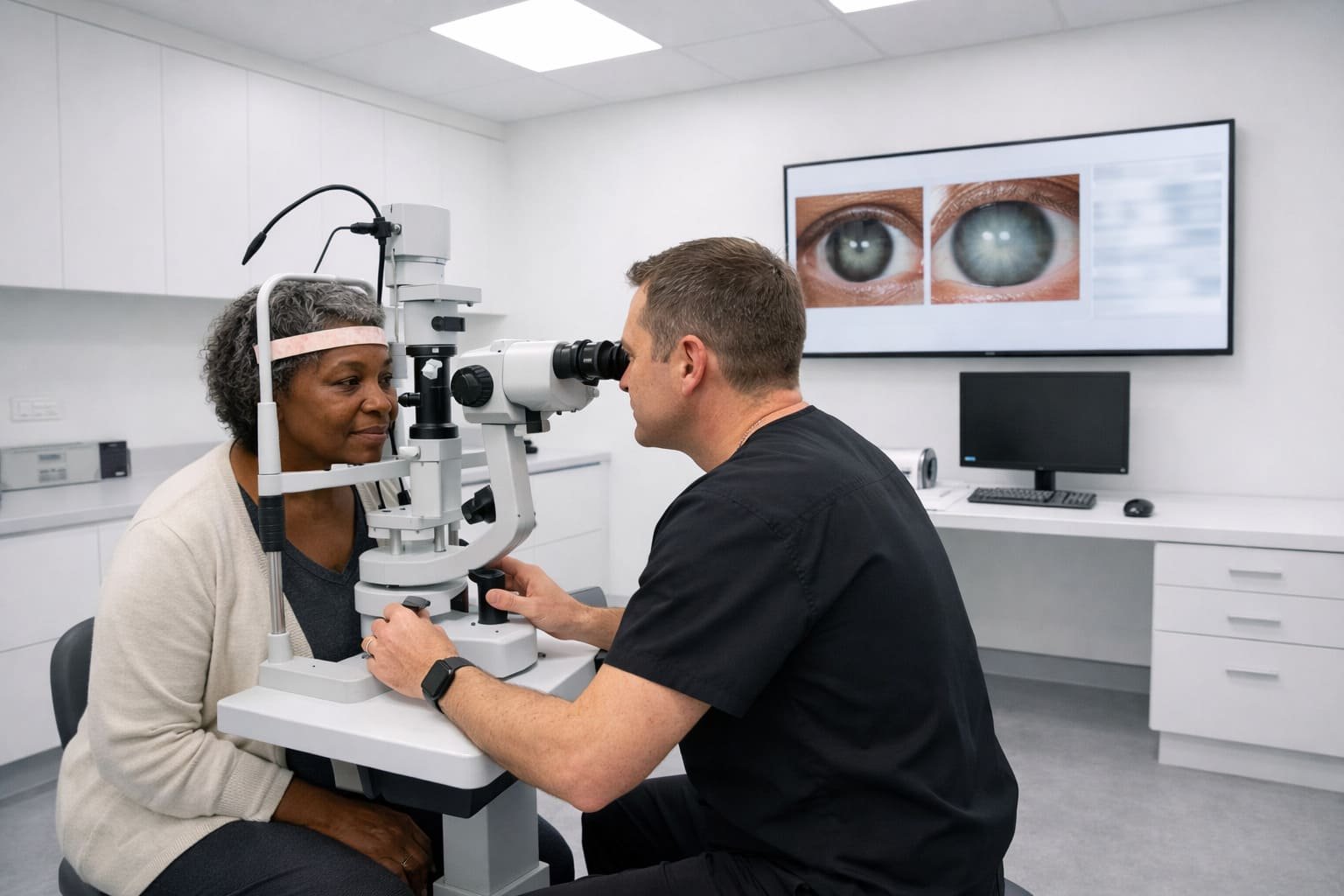
Cataract surgery replaces the cloudy natural lens inside your eye with an artificial intraocular lens. That new lens can be chosen simply to restore clearer vision, or it can be chosen with a more specific glasses prescription target in mind.
A monofocal intraocular lens usually gives one main focus, commonly distance vision. For someone with meaningful astigmatism, that may still leave blur or distortion without glasses because the uneven curve at the front of the eye has not been addressed.
A toric intraocular lens, or toric IOL, is different because it has astigmatism correction built into the replacement lens. In plain terms, it deals with the cataract and aims to reduce corneal astigmatism in the same operation.
The National Institute for Health and Care Excellence, known as NICE, says people being referred for cataract surgery should be told about the likely outcome and the possibility that spectacles may still be needed for some tasks. That point matters because “correcting astigmatism” means reducing it and improving unaided vision, not promising that glasses will disappear completely.
Lens choice sits at the centre of the decision. We look at the cataract, the corneal shape and the kind of vision you want after surgery before we can say whether a toric lens is worth considering.
Toric lenses correct astigmatism through lens shape and alignment
Astigmatism usually means the cornea, the clear front window of the eye, curves more in one direction than another. A toric lens has different lens strength across different directions, so it can balance that uneven curve when placed in the right position.
Different cataract lens options solve different problems, so the name of the lens matters.
| Lens option | Main purpose | Astigmatism role |
|---|---|---|
| Monofocal intraocular lens | Gives one main focus, often distance | Does not usually correct significant corneal astigmatism by itself |
| Toric intraocular lens | Builds astigmatism correction into the cataract lens | Made for regular corneal astigmatism when measurements support it |
| Multifocal or trifocal intraocular lens | Gives more than one focus, such as distance and near | Can be combined with toric correction in suitable eyes |
| Extended depth of focus, called EDOF | Gives a stretched range of focus | Can also have toric correction where the eye is suitable |
At The Vision Surgeon, we offer monofocal, multifocal, trifocal, extended depth of focus and toric lens options for cataract surgery, with the lens recommendation based on your measurements, lifestyle and visual priorities.
Alignment is the part many simple explanations miss. A toric lens must sit on the correct axis, which means the correction has to line up with the direction of your astigmatism. StatPearls notes that each one degree of toric IOL misalignment causes a 3 percent loss of effective astigmatism correction, and a 30 degree misalignment removes the toric effect.
That does not make toric lenses risky by default. It means planning, placement and follow-up matter, especially when the aim is to reduce your need for distance glasses.
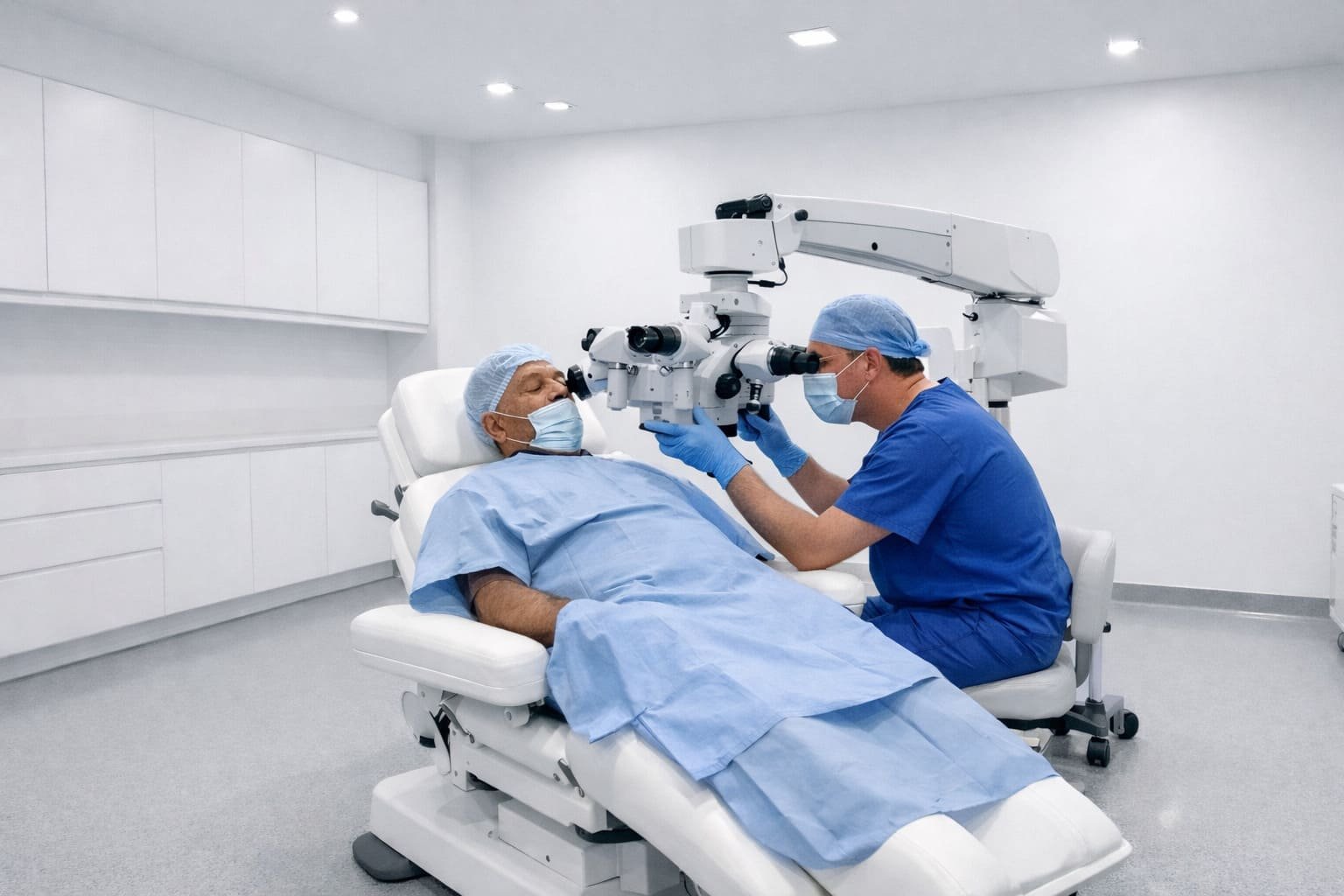
Discuss your vision goals with our experienced consultant and receive a thorough personal assessment.
EnquireSuitability for a toric lens depends on corneal shape
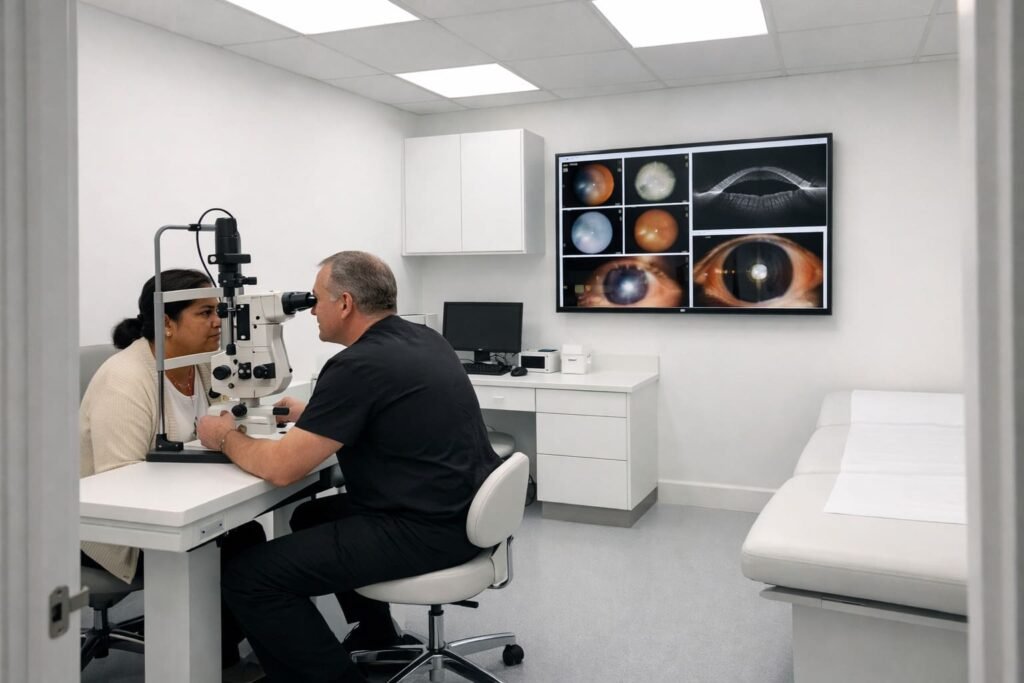
Someone may arrive after an eye test knowing they have astigmatism, but the glasses prescription alone does not decide the cataract lens. We need to know whether the astigmatism is mainly regular, stable and coming from the cornea in a way a toric lens can treat.
Regular corneal astigmatism has a more predictable shape. Irregular astigmatism is less even, and a toric lens may not help it in the same way. That distinction is one of the main reasons a proper cataract assessment matters.
StatPearls gives useful context here: toric intraocular lenses may correct astigmatism as low as 0.75 dioptres, and they are ideal for candidates with pre-existing corneal astigmatism greater than 1 dioptre. A dioptre, abbreviated as D, is the unit used to measure lens strength or focusing error.
Our suitability checks focus on the eye, not on a menu of upgrades:
- The amount of astigmatism. A very small amount may not justify a toric lens, but a measurable amount can affect unaided distance vision.
- Corneal shape needs to be regular enough for the lens calculation to make sense.
- Eye health matters, including the support structures that hold the lens and the condition of the back of the eye.
- Your visual priorities count too, because someone who drives often has different goals from someone mainly concerned about reading and close work.
Mr Mukherjee interprets these factors personally during assessment. That matters because a toric lens is a clinical choice, not a shopping decision with a premium label attached.
Bring your current glasses prescription to the consultation, as it helps the team compare your symptoms with the measurements taken on the day. This makes it easier to judge whether a toric lens is likely to give you a useful improvement.

Measurements decide the lens plan
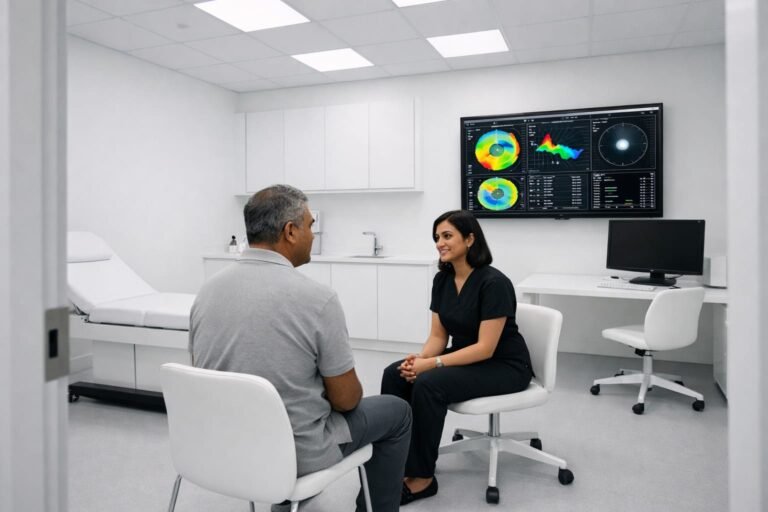
A clearer measurement picture gives us a more precise lens plan. Toric lens planning is not based on guessing from your current glasses. It depends on measuring the eye carefully and interpreting those measurements in context.
The measurements we rely on
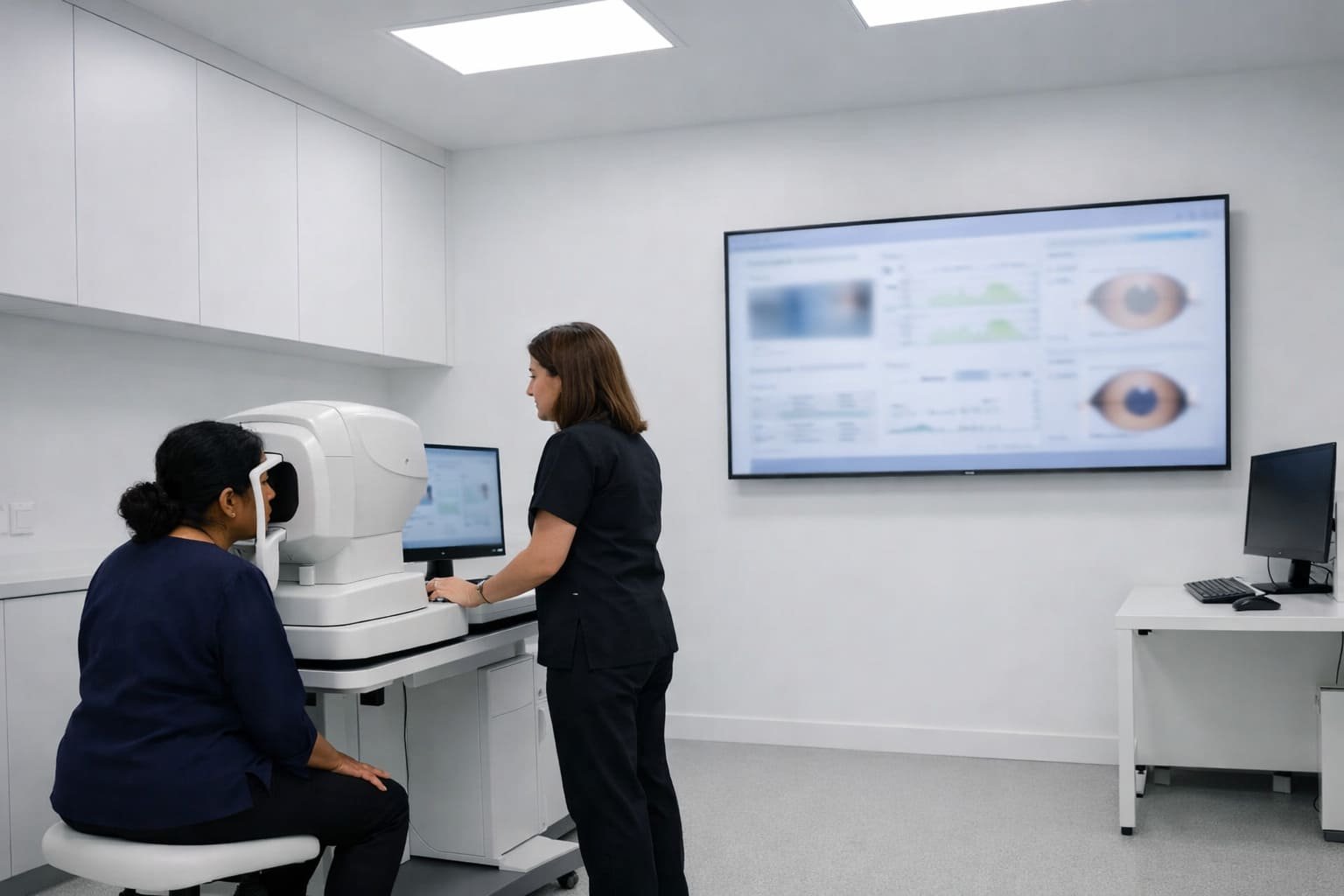
Optical biometry measures the length and shape of the eye so the replacement lens strength can be calculated. Keratometry measures the curve of the cornea, which is central to astigmatism planning. Corneal topography maps the corneal surface in more detail, which is especially useful when the astigmatism looks significant or the cornea has an unusual shape.
NICE guideline NG77 recommends optical biometry to measure the eye before cataract surgery and keratometry to measure corneal curvature. It also says corneal topography should be considered in eyes with significant astigmatism, irregular corneas, very flat or steep corneas, previous corneal laser surgery, or when keratometry cannot give accurate readings.
Those measurements guide both the lens strength and the axis for toric alignment. If the numbers do not agree, the answer is not to ignore them. The answer is to work out why.
The judgement behind the numbers
A scan gives information, but it does not make the decision for you. We still have to connect the measurements with your eye health, your likely glasses prescription after surgery and the visual tasks that matter most to you.
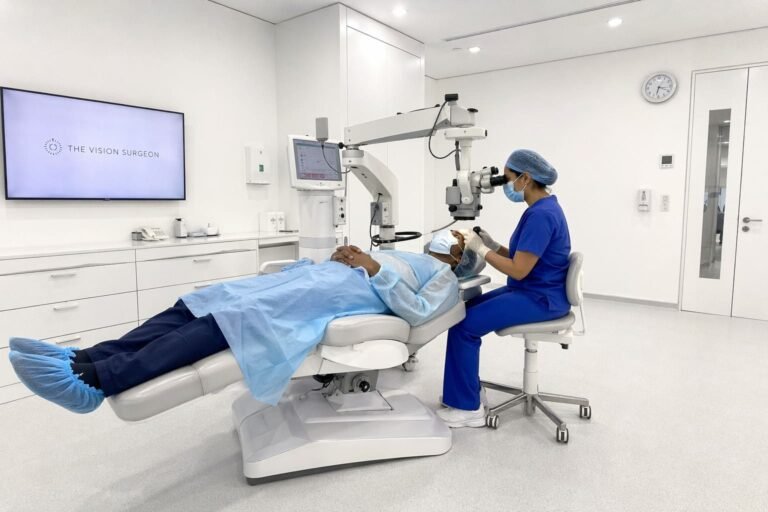
At The Vision Surgeon in Colchester, Mr Mukherjee takes the biometry measurements, performs the surgery and checks recovery at follow-up appointments. For patients from Essex and Suffolk who do not want to travel to London for private cataract planning, that continuity removes a common weak point. The person interpreting the measurements is the same consultant responsible for the operation.
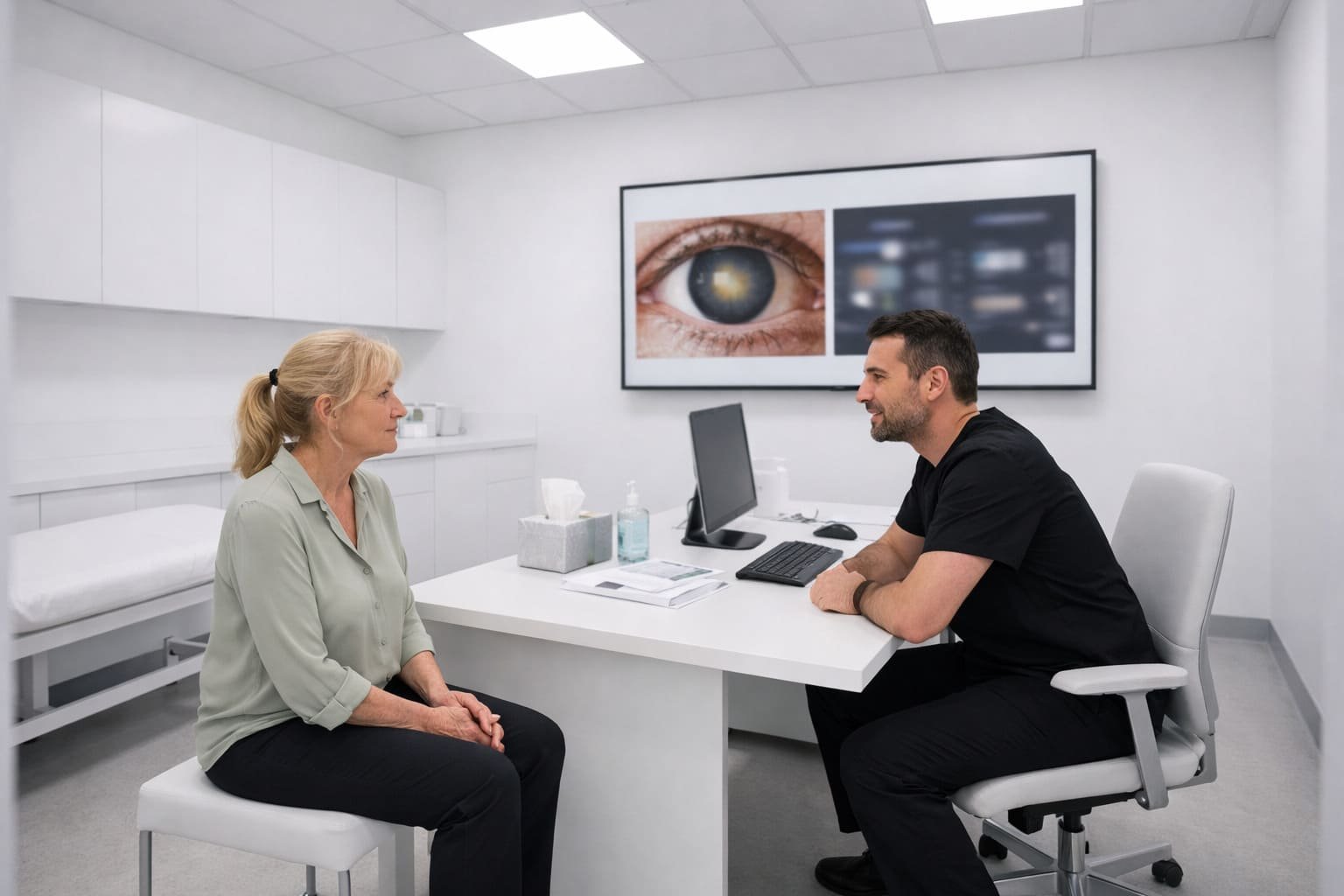
If you drive regularly or read without glasses, mention that early in the assessment. Those daily tasks often shape the lens choice more than the cataract alone.
Realistic outcomes after toric cataract surgery
Toric cataract surgery can reduce dependence on distance glasses when the astigmatism target is suitable. Less dependence on glasses is not the same as no glasses ever, especially for reading, fine close work or specific tasks where a small residual prescription still matters.
Residual astigmatism or a small prescription can remain after well-planned surgery. Eyes heal, lens position matters and the cornea may not behave like a perfect calculation. We explain that plainly because it is far better to aim for the vision your eye can realistically support than to chase an over-neat promise.
Lens rotation is another practical point. Postoperative intraocular lens misalignment is a recognised issue specific to toric lenses, so follow-up is part of the value of the treatment. If vision is not settling as expected, the lens position and the remaining prescription need checking.
Cost also belongs in this discussion because private cataract surgery with astigmatism correction is a planning decision as well as a procedure. At The Vision Surgeon, private cataract surgery costs between £2,000 and £4,000 per eye in 2026, depending mainly on lens type, and includes assessment with Mr Mukherjee, femtosecond laser-assisted surgery, the intraocular lens and aftercare appointments.
A toric lens is worthwhile when the extra planning changes the likely visual result in a way you will use every day.
Personalised lens planning lasts better than a standard assumption
One approach treats the cataract first and leaves astigmatism as a separate glasses problem. Another approach decides the refractive goal before surgery, checks whether the astigmatism can be treated through the cataract lens, and chooses the lens accordingly.
The second approach is stronger over the long term because cataract surgery is already the moment when the natural lens is being replaced. If the astigmatism is regular, measurable and suitable for toric correction, ignoring it during lens planning can mean accepting avoidable dependence on distance glasses afterwards.
Private care has value when it gives proper time to discuss lens options, measurements and trade-offs with the consultant who will operate. For patients in Colchester, Chelmsford, Ipswich, Witham, Bury St Edmunds and Sudbury, consultant-led cataract surgery in Colchester can make that level of planning local rather than something assumed to require London travel.
Toric lenses are not automatically right for every eye. They work best when the eye shape, the measurements and the visual goal all point in the same direction, and that is the difference between buying a lens option and making a lens plan that holds up after surgery.
Get answers to your questions about surgery, aftercare and the benefits of consultant-led treatment.
Message UsQuestions we get asked about toric lenses and cataract surgery
Can a toric lens correct astigmatism in both eyes?
Yes, a toric lens can be considered for each eye if each eye has suitable corneal astigmatism and cataract surgery is appropriate. We assess each eye separately because the astigmatism, lens choice and visual target can differ.
Is a toric lens the same as a multifocal lens?
No. A toric lens corrects astigmatism, while a multifocal lens aims to give more than one focus, such as distance and near. Some lens designs can combine both features in suitable eyes.
Can irregular astigmatism be corrected with a toric lens?
Irregular astigmatism may not respond well to a toric lens because the corneal shape is less predictable. We assess the cornea first and discuss a different plan if toric correction is unlikely to give a reliable result.
How long does vision take to settle after toric lens cataract surgery?
Vision can change during recovery, and follow-up checks are used to confirm healing, lens position and any remaining prescription. Your own recovery pattern depends on your eye and the lens plan used.
Can astigmatism get worse after cataract surgery?
Astigmatism can change after eye surgery, although careful planning aims to reduce that risk. If your vision changes after surgery, the cause needs checking rather than assuming the astigmatism has simply returned.
This is general information, not medical advice.