Do you need a GP or optician referral before booking a private eye surgery consultation?
In most cases, no. Most people can book a private eye surgery consultation directly without a GP referral or an optician referral, because private ophthalmology practices usually accept self-referral. A referral can still be useful in some situations, especially if you have a diagnosed eye condition or recent test results, but it is usually not the thing that determines whether you can start the process.

What is the real barrier to booking private eye surgery?
Most patients do not need a referral to access private eye surgery. That surprises people because many are used to the NHS route, where a GP or optician often acts as the gateway to specialist care.
Private care works differently. Instead of entering a public waiting list through a referral pathway, you usually book an assessment directly with a consultant ophthalmologist or private clinic, and the suitability checks happen at that first appointment.
That assumption about paperwork often comes from mixing up public and private systems. In the NHS, referrals help organise access and prioritise demand. In private practice, the starting point is usually a direct booking followed by an eligibility assessment, which means that the real first step is clinical assessment, not administrative permission.
A few situations can still sit outside that usual pattern:
- A clinic may want supporting information if you have a complex eye history, such as glaucoma, keratoconus, previous corneal surgery, or retinal treatment.
- Insured patients may need authorisation depending on their policy terms.
- Some medical eye problems may need referral into a specific hospital service rather than a routine vision correction pathway.
Who actually needs a referral and who doesn’t?
Will you be turned away if you book without paperwork? Usually, no. Patients seeking routine vision correction, such as LASIK, TransPRK, lens replacement surgery, or implantable contact lens surgery, can often self-refer and begin with a private assessment.
The position changes slightly if your case is more medical than refractive. A practice may ask for a referral letter, clinic notes, or recent optometrist findings if you have an established diagnosis, unusual symptoms, previous eye surgery, or treatment from another ophthalmologist. That request is about safe decision-making and proper context, not gatekeeping.
Optician or GP input can be helpful in certain cases, including:
- a recent diagnosis of cataract, glaucoma, keratoconus, or another eye condition
- new symptoms such as sudden blur, flashes, floaters, or eye pain
- recent scans, prescriptions, visual field results, or hospital letters that add useful background
Anyone who arrives without documents can still usually be assessed. The consultation team can take a history, carry out vision tests, and decide what further information is needed before any treatment is discussed in detail. For a person considering straightforward laser vision correction, that first visit often begins perfectly well with no referral letter at all.
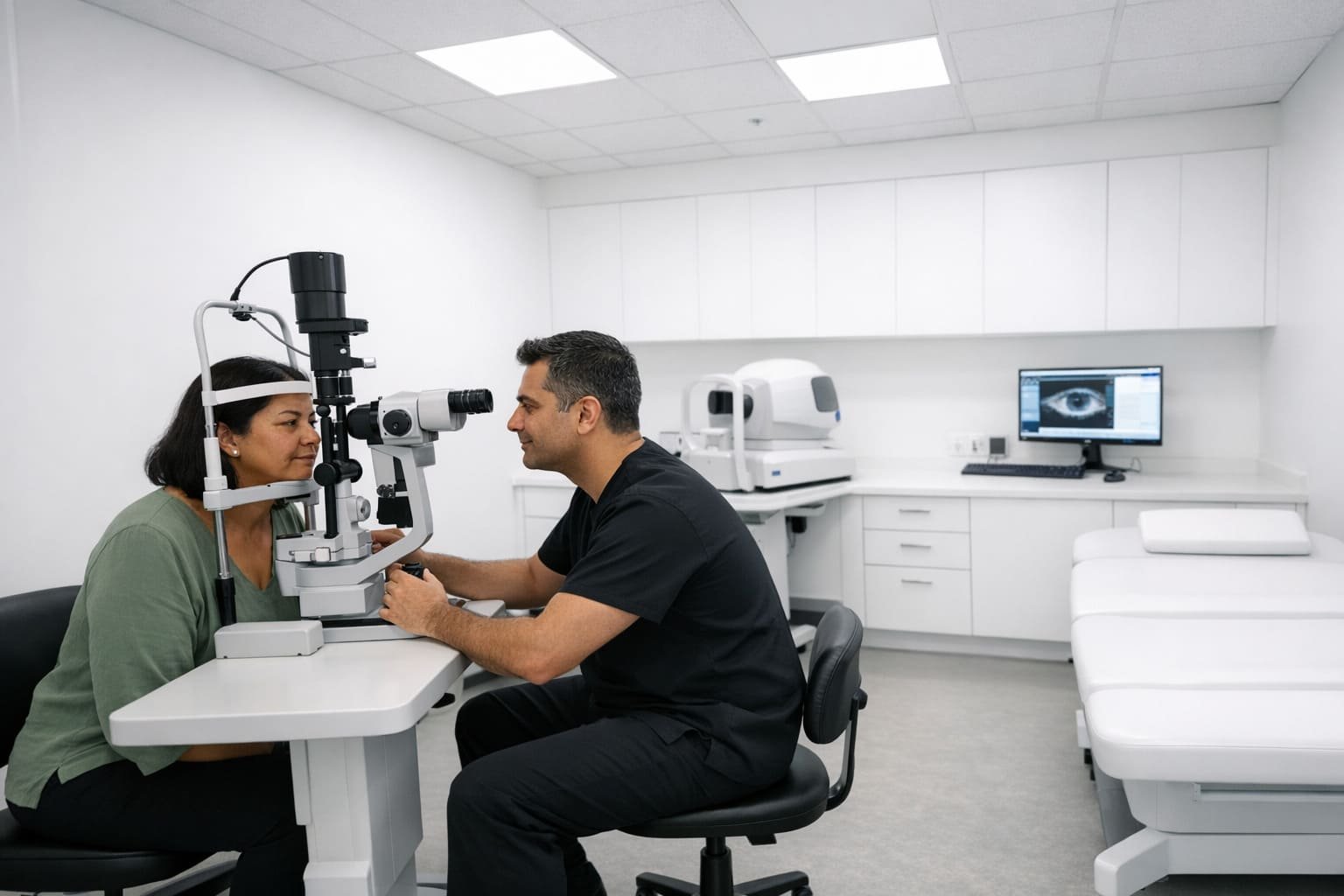
Take the first step towards clearer vision by scheduling your private assessment with an expert ophthalmologist today.
Book ConsultationWhat actually happens at your first private eye surgery consultation?
Direct booking does not mean direct surgery. A proper private eye surgery consultation is a pre-operative assessment, not a shortcut around one.
At the start, you are usually asked about your prescription history, contact lens use, general health, medicines, and any previous eye problems. That medical history matters because eye surgery suitability depends on more than how strong your glasses are.
Next comes testing. A private ophthalmologist appointment commonly includes checks on vision, refraction, the shape and thickness of the cornea, eye pressure, pupil behaviour, and the health of the lens and retina. For lens replacement or cataract surgery, measurements of the eye are also used to plan lens choice.
After the tests, the consultant reviews the findings and explains which options may suit you. If laser eye surgery is appropriate, the discussion may cover LASIK or TransPRK. If your age, prescription pattern, lens changes, or visual goals point in another direction, lens replacement surgery or implantable contact lens surgery may make more sense.
Risk discussion forms part of the appointment as well. A responsible consultation includes likely benefits, realistic limits, possible side effects, and reasons a surgeon may advise against treatment. The General Medical Council expects informed consent, and that process starts before any procedure date is offered.
In a consultant-led setting, the person interpreting those findings and advising on surgery is the same ophthalmologist responsible for clinical decisions. At The Vision Surgeon, that continuity matters because Mr Mukherjee assesses suitability himself rather than handing the decision to a separate screening team.
How do private clinics balance safety and convenience without referrals?
The common worry is simple: if no referral is needed, does that mean less scrutiny? In practice, no referral and lower standards are not the same thing.
Private eye surgery in the UK still sits within professional and regulatory frameworks. Ophthalmologists remain accountable to the GMC. Services are subject to CQC regulation where applicable. Clinical decisions are still governed by accepted standards of assessment, consent, record-keeping, and patient safety.
Convenience changes the route into care. It does not remove the checks that decide whether surgery should happen. A self-referred patient still needs medical history review, examination, suitability testing, discussion of risks, and a clear recommendation based on findings.
Consultant-led care adds another layer of reassurance because the decision is anchored in a specialist opinion from the outset. Qualifications and specialist training matter here, especially for refractive procedures that rely on precise judgement about corneal health, lens status, and long-term visual goals. Credentials such as CertLRS from the Royal College of Ophthalmologists indicate formal refractive training, and wider surgical experience can be especially relevant if a patient falls outside a straightforward category.
A referral, then, is not the safety mechanism. The safety mechanism is the assessment itself, the governance around it, and the quality of the clinical judgement behind the recommendation.

What changes if you arrive with a referral from your GP or optician?
A referral letter can be useful, but it does not replace the private assessment. It gives context.
An optometrist’s note may include a recent prescription, cataract findings, corneal measurements, or comments about ocular surface health. A GP letter may set out medical conditions, medication history, or the reason specialist review was advised. That information can help the consultation start with a fuller picture, particularly if your symptoms or diagnosis are already known.
Without a referral, the clinic gathers the same broad picture from your history, examination, and testing. With a referral, some of that background arrives in advance. The difference is often practical rather than decisive.
Previous paperwork may be especially worth bringing if you have had changing prescriptions, hospital eye appointments, corneal scans, glaucoma monitoring, or advice from another specialist. A referral can support care coordination, but it does not dictate treatment or guarantee that surgery is suitable. The private ophthalmologist still has to make an independent judgement based on current findings in front of them.
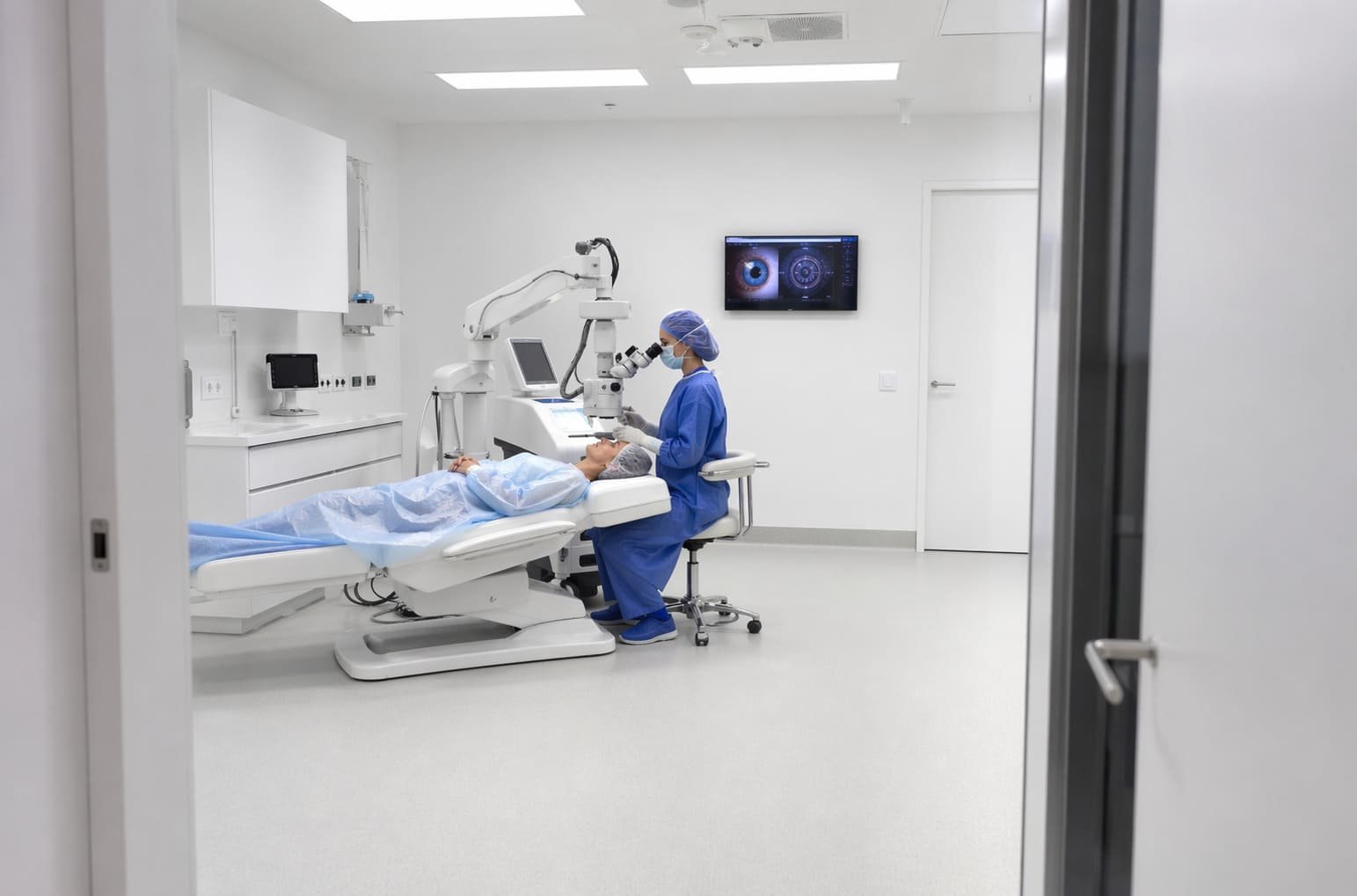
How does the cost and value of private eye surgery relate to the referral process?
Some people assume a referral unlocks better access, lower prices, or more treatment choices. It usually does not. Whether you self-refer or arrive with a letter, private eye surgery pricing is generally based on the treatment itself, the challenge of the case, and, for lens procedures, the type of lens selected.
Indicative private costs often fall within these broad ranges:
- LASIK: about £1,400 to £1,800 per eye
- TransPRK: often in a similar range to LASIK
- Lens replacement or cataract surgery: about £2,000 to £4,000 per eye, depending on lens choice
- Implantable contact lens surgery: about £3,000 per eye
Those figures are usually shaped by clinical factors, not by the referral route. Premium or multifocal lenses, additional diagnostics, and the nature of your prescription can all influence the final recommendation and cost.
Value sits elsewhere. Direct access can mean seeing the surgeon sooner, discussing the full range of options at the start, and avoiding a fragmented pathway in which consultation and surgery happen in different places. In Colchester, that local consultant-led model also means patients do not need to travel to London for treatment simply because they want private care.
Have questions about your suitability for private eye surgery or the referral process? Arrange a call for tailored guidance.
Request a CallWhat is the real question behind referrals for private eye surgery?
The referral question is often standing in for a different concern. Most people are really asking whether they can trust the path into surgery if they begin it themselves.
Paperwork matters far less than continuity, judgement, and access to proper expertise. A referral can be useful background, but it does not make a clinic safer, a surgeon more skilled, or a recommendation more appropriate. Those things come from the standard of assessment and from who is actually leading your care.
Seen that way, self-referral is not a loophole in the system. It is a reminder that private eye surgery is less about permission to enter and more about whether the right specialist is assessing you, in the right setting, for the right treatment.