Can laser eye surgery correct your long sightedness?
Yes, laser eye surgery can correct selected plus prescriptions caused by hyperopia. Reading difficulty may also come from presbyopia, the age-related loss of near focus. Laser reshapes the cornea, so the right option depends on your prescription, cornea and natural lens.
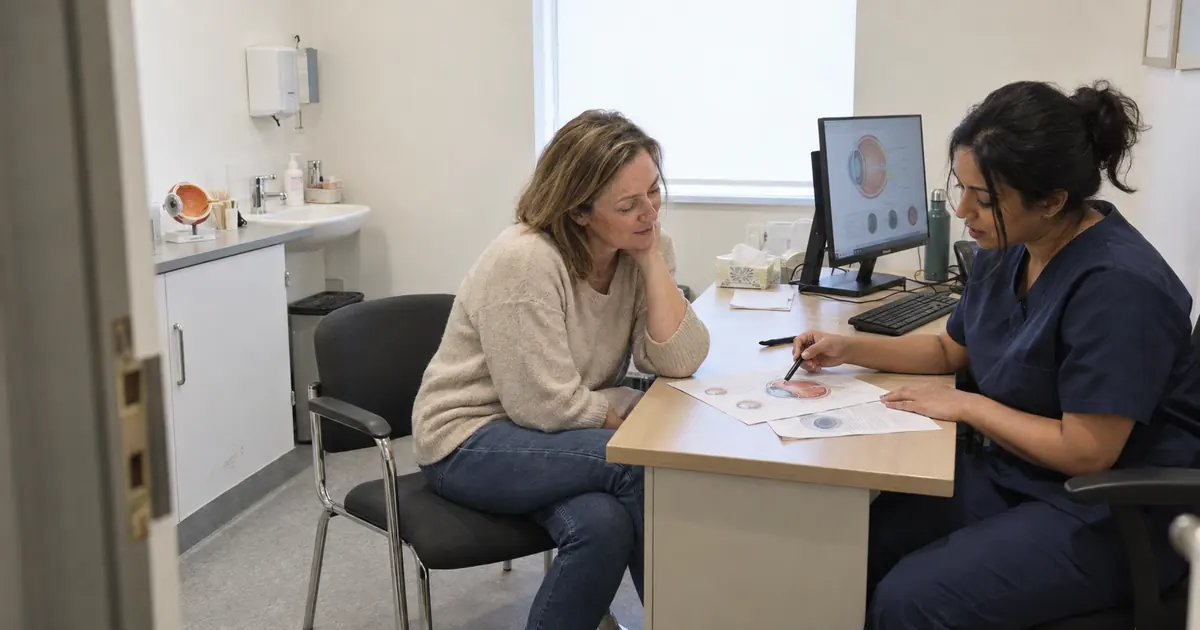
Hyperopia and presbyopia need different treatment aims
Hyperopia is a focusing error that gives you a positive spectacle prescription. You may see distance reasonably well when you are younger because your natural lens can adjust its shape to bring images into focus.
Presbyopia develops as the natural lens stiffens with age. It reduces clear near and intermediate vision, so reading, using a phone or working at a computer becomes harder. Many people describe both problems as long sightedness, particularly once they need reading glasses or varifocals.
Accommodation is the natural lens’s ability to alter its shape for close work. Laser treatment reshapes the cornea, which is the clear front surface of the eye. Your natural lens continues to provide accommodation, so presbyopia remains relevant when planning treatment.
Laser eye surgery for hyperopia can reduce your reliance on glasses for the prescription treated. Presbyopia requires a separate discussion about the range of vision you want for distance, screen use and reading.
Discuss your vision goals with our experienced consultant and receive a thorough personal assessment.
EnquireYour cornea and natural lens define suitability
Clinicians assess suitability based on the condition of your eyes, your prescription and the clarity and flexibility of your natural lens. A particular birthday or spectacle number gives only part of the picture.
The Royal College of Ophthalmologists advises that laser treatment is most likely to suit adults whose prescription has varied by no more than 0.50 dioptres during the previous two years. It also advises that their hyperopic prescription should be up to about +4.00 dioptres. A dioptre is the unit used to measure spectacle strength. Clinicians use these figures to guide assessment. They do not decide suitability on their own.
Clinicians examine several areas:
- Prescription stability. Laser treatment is planned around the correction your eyes need now, so a stable prescription gives a firmer basis for treatment.
- Corneal topography. This scan maps the curve of your cornea and shows whether its shape supports laser treatment.
- Corneal thickness and eye-surface health. Dry-eye symptoms and the condition of the corneal surface affect comfort, healing and visual quality.
- Natural-lens clarity. Reduced flexibility or early cataract can make lens replacement a stronger option.
Higher hyperopic corrections need careful judgement because the final result can be less predictable and regression can occur. Regression means part of the original prescription returns after treatment.
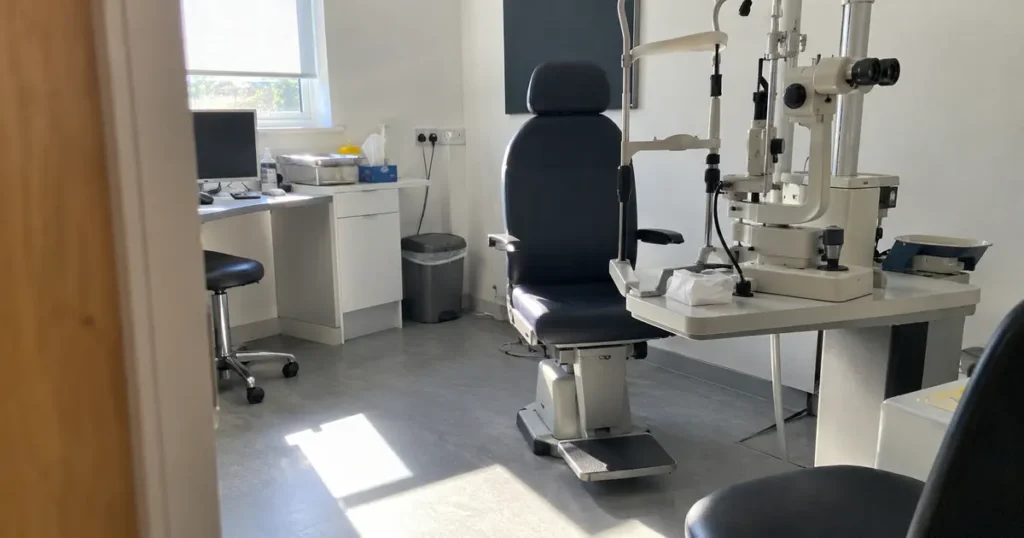
A private assessment in Colchester can compare laser and lens-based options before treatment is chosen. A clinician considers your cornea, prescription and natural lens together when recommending a procedure.
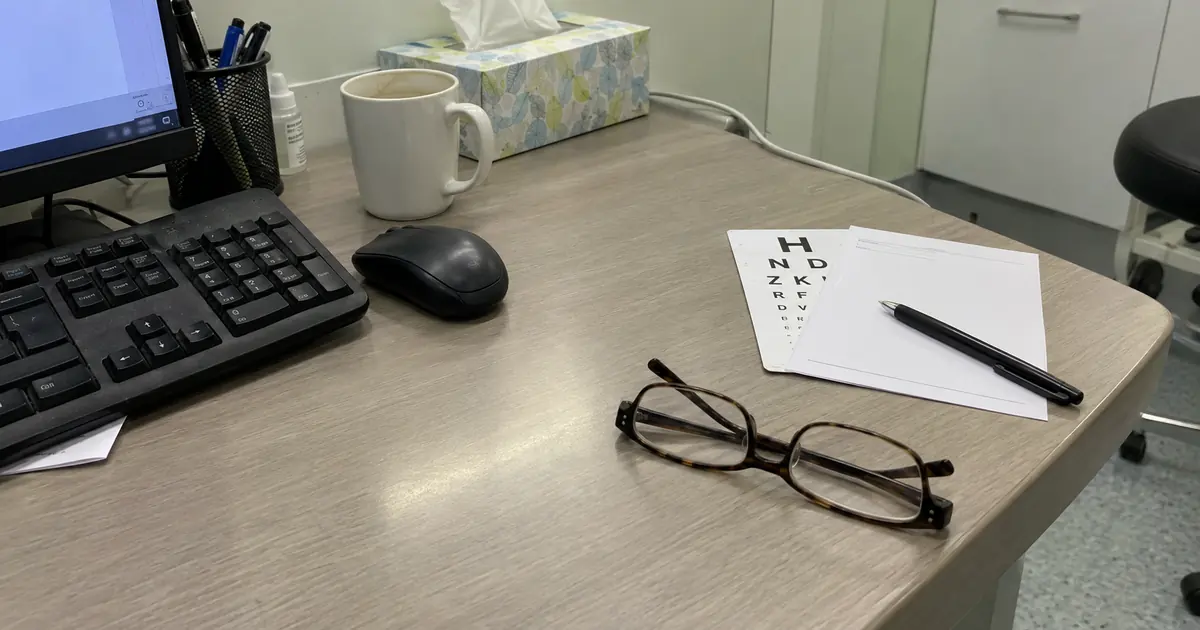
Take your current glasses prescription and any previous eye test results to your assessment. Prescription stability helps the clinician judge whether laser treatment is appropriate.

Laser correction and lens replacement act on different structures
Laser-assisted in situ keratomileusis, known as LASIK, reshapes the cornea through a thin corneal flap. TransPRK is a surface laser treatment that reshapes the cornea without creating a flap. Both procedures leave your natural lens in place.
Refractive lens exchange, also called lens replacement surgery, removes the natural lens and replaces it with an artificial intraocular lens. This route becomes more relevant when the natural lens has lost flexibility or clarity.
The table shows how each procedure works, which eyes it may suit and how it can provide a range of focus.
| Corneal laser treatment | Refractive lens exchange |
|---|---|
| Reshapes the cornea to alter how light focuses. | Replaces the natural lens with an artificial intraocular lens. |
| Keeps the natural lens in place. | Removes the natural lens, including a lens affected by reduced flexibility or early clouding. |
| Suits selected hyperopic prescriptions where corneal measurements and lens health support treatment. | Becomes more suitable when lens flexibility, lens clarity or prescription pattern makes a lens-based solution preferable. |
| Blended vision, also called micromonovision, may extend the combined range of vision by targeting each eye differently. | Lens designs offer different ranges of focus, with multifocal lenses carrying a greater chance of optical side effects. |
Many people over 50 with lower prescriptions and a clear, flexible natural lens remain suitable for laser treatment.
LASIK and TransPRK can provide similar later visual results. Their early recovery differs. People who have LASIK often return to work the day after surgery, whereas surface laser treatment may require a week or longer after surgery before you reach the driving standard.
Your eye’s current condition defines the route. Age alone does not determine it.
Mention difficulty with reading, phone use or computer work during your consultation. These symptoms can indicate presbyopia and may affect the choice between laser treatment and lens replacement.
Glasses dependence needs realistic expectations
Laser surgery aims to reduce dependence on glasses for the correction treated. Your expectations need to match the way your eyes work now and the way the natural lens will age.
Early recovery can include variable blur, dry-eye symptoms, glare, halos, starbursts and ghost images. These effects usually settle over several months, although lasting symptoms can occur. NICE, which covers England, considers photorefractive laser surgery safe and effective for appropriately selected patients. The guidance says clinicians should clearly explain expected vision and potential risks.
Some people need further treatment to achieve the best result. The Royal College of Ophthalmologists reports that up to 1 in 10 people need some form of additional surgery after laser vision correction. This general figure covers laser vision correction overall and does not predict your individual outcome.
Presbyopia continues as the natural lens becomes less flexible. Blended vision can extend your useful range of focus for some people, yet glasses may still have a role for detailed near work.
Your plus prescription and age-related near-vision loss call for different solutions. The common misconception is that laser surgery makes reading glasses and future lens ageing irrelevant. Laser corrects the focusing power of the cornea, whereas presbyopia arises from the natural lens.

Get answers to your questions about surgery, aftercare and the benefits of consultant-led treatment.
Message UsCommon questions about long sighted laser eye surgery
Can LASIK correct a plus prescription?
Yes, selected hyperopic prescriptions can suit LASIK. Your corneal measurements, prescription stability, eye-surface health and natural lens guide the decision.
Will I still need reading glasses after laser eye surgery?
Possibly. Presbyopia affects near focus as the natural lens stiffens, so reading glasses may remain useful for some tasks after laser treatment.
Can I have laser eye surgery after 50?
Yes. Many people over 50 remain suitable for laser correction when they have a lower prescription and a clear, flexible natural lens.
How does TransPRK differ from LASIK?
TransPRK is a surface laser treatment without a corneal flap. LASIK has a faster early recovery for many people, whereas TransPRK can take a week or longer after surgery before you reach the driving standard.
Can laser treatment require further surgery?
Yes. Further treatment can help refine the result when part of the prescription returns or the first treatment leaves residual correction.
This is general information, not medical advice.
Reviewed by Mr Hatch Mukherjee, Consultant Ophthalmologist, FRCOphth, CertLRS, FWCRS, NHS Consultant and Clinical Lead at Colchester Eye Centre, East Suffolk and North Essex NHS Foundation Trust.