How soon can you drive and fly after cataract surgery?
You cannot drive yourself home after cataract surgery. We usually separate driving from flying: driving resumes only when your sight meets the legal standard, your vision feels reliable and your surgeon agrees; flying as a passenger is usually possible sooner after uncomplicated surgery, with planned travel checked in advance.
| Driving | Flying |
|---|---|
| You must not drive yourself home on surgery day. | Passenger flying is a separate decision from driving. |
| Return depends on legal eyesight standards, visual comfort and surgeon advice. | UK Civil Aviation Authority passenger guidance gives 24 hours as an adequate gap after simple cataract surgery, provided your surgeon is happy. |
| The next day is not automatic clearance. | Complex eye surgery, new symptoms or missed follow-up can change the advice. |
Generic timing helps with planning transport, work and holidays, but it does not clear you personally. Your own vision after surgery, your follow-up plan and your surgeon’s judgement matter more than a fixed number of hours.
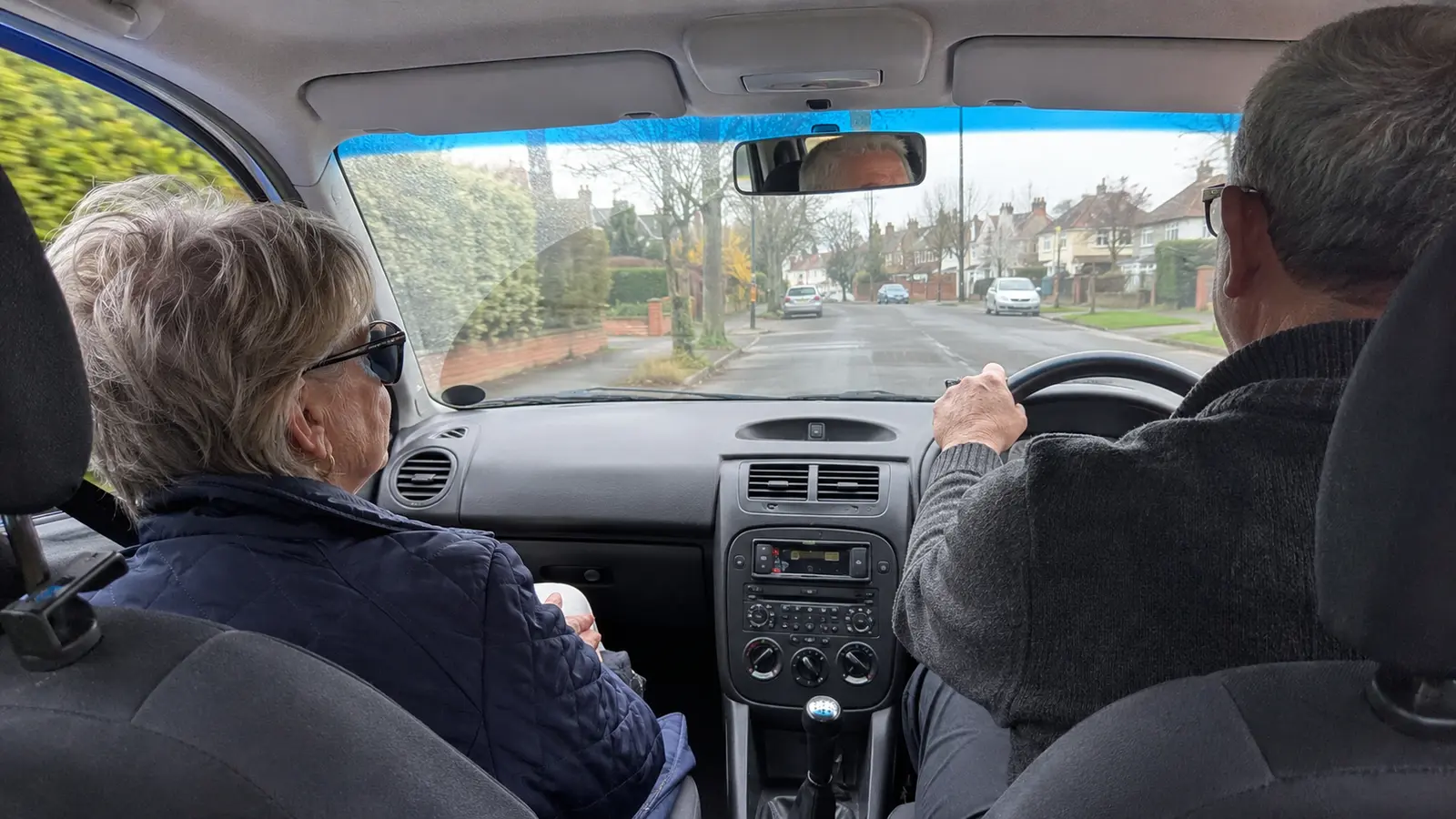
Driving the next day is not the real test
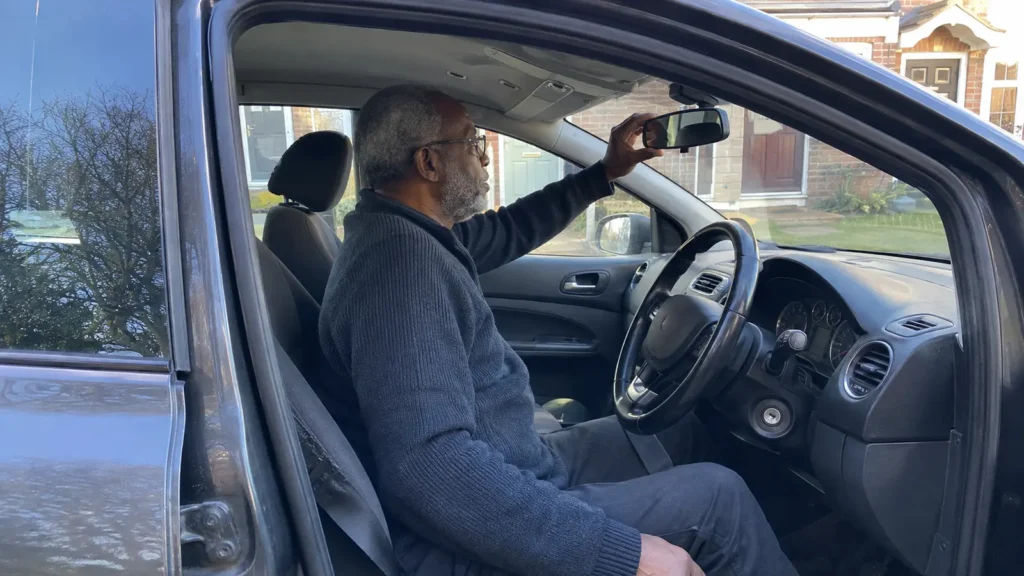
“The day after” is a poor rule for driving after cataract surgery. We want you to pass two separate gates: the legal eyesight standard and the practical test of whether your vision is steady enough for real driving.
The DVLA standard is broader than a number plate
For car and motorcycle drivers, the Driver and Vehicle Licensing Agency, DVLA, standard is not just a quick glance at a number plate. GOV.UK fitness to drive guidance includes being able to read a current-format registration mark in good daylight from 20 metres, and having visual acuity of at least Snellen 6/12 with both eyes open, or in the only seeing eye if you have vision in one eye only.
Snellen visual acuity is the chart-based measure of how sharp your sight is. The DVLA picture also includes your field of vision, meaning how much you can see around the centre of your gaze. Where a formal field check is needed, an Esterman field test may be used.
A driver who cannot meet the minimum eyesight standards must not drive and must tell the DVLA. Cataract itself may not need notification for a Group 1 licence, meaning cars and motorcycles, if the standards are met, but glare can still stop you passing the number plate test in daylight. That is why a casual “I can see better than yesterday” is not enough.
Comfortable vision still matters after the legal test
Legal clearance and sensible driving do not always land on the same day. Blurry vision, glare, halos, light sensitivity, double vision or an awkward gap between your two eyes can make driving unwise even after straightforward surgery.
Old glasses can also become the nuisance nobody planned for. If one lens in your glasses is now wrong after the first eye has been treated, your vision can feel off balance. Night driving needs particular care because glare and contrast matter more when light is poor.
We would also treat work driving differently from a short, familiar trip. A longer commute, regular rural driving across Essex or Suffolk, or driving as part of caring duties puts more demand on your sight than moving the car on the driveway. The calendar does not clear you to drive; your vision does.
Discuss your vision goals with our experienced consultant and receive a thorough personal assessment.
EnquireOne operated eye can delay driving
You might read your phone indoors after surgery and still struggle with headlights, road signs or old spectacles. Seeing better is not always the same as being ready to drive.
One-eye cataract surgery can leave your two eyes temporarily out of step. The treated eye may be clearer, but the other eye may still have a cataract, and the brain has to deal with the difference between them. Depth judgement, glare control and general confidence can all be affected during that in-between period.
At The Vision Surgeon, we look closely at how both eyes work together before giving practical recovery advice. That matters for patients planning transport around Colchester, Essex and Suffolk, especially if they rely on driving for work, caring or independence.
Bus and lorry drivers need stricter consideration because Group 2 licences have higher visual standards than ordinary car and motorcycle licences. If driving is part of your job, your return should be planned around proper visual function, not the first morning that the eye feels settled.
Arrange transport home before surgery day and keep your first post-operative appointment in the diary before booking any driving or flight plans.

Flying is usually simpler, but travel plans still need checking
Flying as a passenger after uncomplicated cataract surgery is usually a different decision from returning to driving. A passenger flight does not test your legal driving vision, but travel still needs to fit your follow-up, drops and recovery.
At The Vision Surgeon, we prefer planned flights to be raised before surgery, not left until the packing stage. That gives us a chance to factor in your eye health, the timing of your review and whether the operation is expected to be routine.
Before you travel soon after a cataract operation, we would want the basics covered:
- Your follow-up date fits around the trip, so your eye can be checked at the right time.
- Eye drops can be taken and used correctly while you are away.
- New pain, redness or a sudden vision change would pause travel plans until assessed.
- Travel insurance has been considered for your own circumstances.
- Complex eye surgery needs separate airline advice, and the airline medical adviser may need details.
The UK Civil Aviation Authority, CAA, treats simple cataract or corneal laser surgery differently from more complex eye operations. Its passenger guidance gives 24 hours as an adequate gap after simple cataract surgery, but more complex surgery can need a longer delay and medical discussion with the airline.
Pilot duties sit in a different category from passenger travel. If your question is about professional flying, that needs the proper aviation medical route rather than ordinary passenger guidance.
Keep your old glasses until Mr Mukherjee confirms that your vision is steady enough for real-world driving, especially at night or on longer journeys.
Recovery advice beats recovery folklore
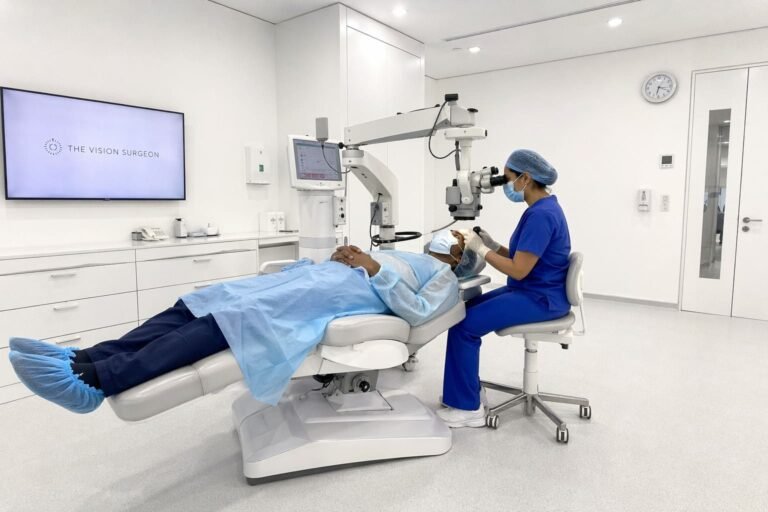
Cataract surgery itself is usually a short operation under local anaesthetic, with the cloudy natural lens replaced by a clear plastic lens. NHS England describes the operation as taking around 30 minutes. Recovery decisions should not be judged by how short the procedure was.
Vision can stay blurry for a period after surgery, and healing continues beyond the first day. NHS England notes that blurry vision may last up to 4 weeks and that healing usually takes 4 to 6 weeks, which is why a fixed 24-hour rule is too crude for driving.
Personalised aftercare gives you a cleaner answer because it looks at the eye in front of us. In our Colchester practice, Mr Mukherjee gives recovery advice as the consultant who assesses, operates and follows up, so driving and travel decisions are tied to your own vision rather than a generic script.
Fastest is the wrong target. The priority is the right return for your eye, your legal duties and the real tasks you need your vision to handle.
Get answers to your questions about surgery, aftercare and the benefits of consultant-led treatment.
Message UsQuestions we get asked about driving and flying after cataract surgery
Do I need to tell the Driver and Vehicle Licensing Agency after cataract surgery?
You must tell the Driver and Vehicle Licensing Agency, DVLA, if you cannot meet the minimum eyesight standards. For ordinary car and motorcycle drivers, cataract may not need notification if the standards are met, but individual advice matters if your vision is affected.
Can I drive at night after cataract surgery?
Night driving should wait until your vision feels reliable in low light and glare is not causing a problem. We advise more caution with night driving because headlights and contrast can expose issues that are less obvious in daytime.
What if my vision is still blurry after cataract surgery?
Blurry vision means you should not drive until your sight is good enough and your surgeon is happy. If blurring worsens, or comes with pain, redness or a sudden change in vision, you should seek clinical advice promptly.
Can I go on holiday soon after cataract surgery?
A holiday may be possible after uncomplicated cataract surgery, but the timing should fit your follow-up and recovery plan. Flights, drops, symptoms and travel insurance all need to be considered before you rely on the trip.
Can I drive between first-eye and second-eye cataract surgery?
Some people can drive between operations if both eyes together meet the legal standard and vision feels safe. Others need to wait because the untreated eye, old glasses or glare makes real driving unreliable.
This is general information, not medical advice.