Am I Too Old for Laser Eye Surgery?
If you have worn glasses for years and are now reaching for reading glasses, age alone does not usually rule out laser eye surgery. We decide by prescription stability, corneal health, lens clarity, dry eye and reading vision. You may still have options, although the right answer may be lens-based surgery instead of LASIK.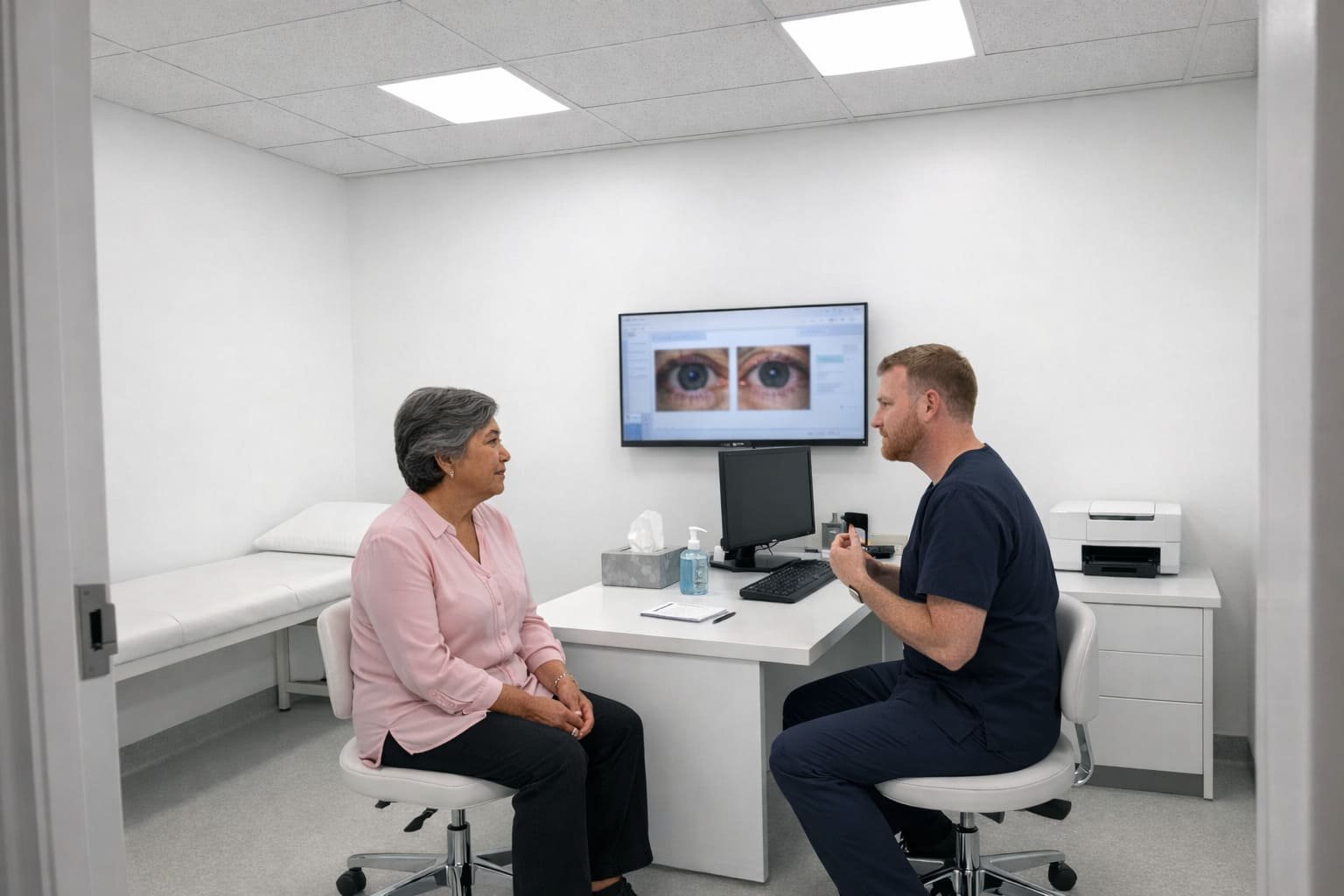
Age changes the procedure, not just your eligibility
A birthday does not tell us enough. Your eyes at 45, 55 or 65 can be very different because the cornea, natural lens and reading vision all change at different speeds. Laser-Assisted In Situ Keratomileusis, known as LASIK, reshapes the clear front window of the eye to correct focus. TransPRK is a surface laser treatment that also reshapes the cornea, without creating a flap. Both can work well when the cornea is suitable and the main problem is the glasses prescription. The decision becomes more interesting from the mid-40s onwards, when presbyopia starts to matter. Presbyopia means the natural lens inside the eye loses flexibility, so near vision becomes harder. Laser can improve distance vision, but it does not stop that age-related reading change. This comparison shows why “am I too old for laser eye surgery” is the wrong end of the question. The better question is which procedure fits the eye you have now.| Procedure | What it changes | Often considered when | Main trade-off |
|---|---|---|---|
| LASIK | Reshapes the cornea using a flap | The prescription is stable and the cornea is suitable | Recovery is often quick, but reading glasses may still be needed later |
| TransPRK | Reshapes the cornea from the surface | A flap-free laser option is preferred or the cornea suits surface treatment better | Recovery takes longer than LASIK |
| Refractive lens exchange, also called lens replacement surgery | Replaces the natural lens with an artificial lens implant | Lens ageing, early cataract or reading vision are driving the problem | Surgery is inside the eye, so the risk profile differs from corneal laser |
| Cataract surgery | Replaces a cloudy natural lens | Cataract is affecting vision or lens clarity | Lens choice becomes a key part of the visual result |
| Implantable Contact Lens, known as ICL | Places a lens inside the eye without removing the natural lens | A high prescription sits outside the usual laser range, especially in younger eyes | It is an internal lens procedure and needs the right eye measurements |
Book a Consultation
Discuss your vision goals with our experienced consultant and receive a thorough personal assessment.
EnquireProper testing gives the answer age cannot give
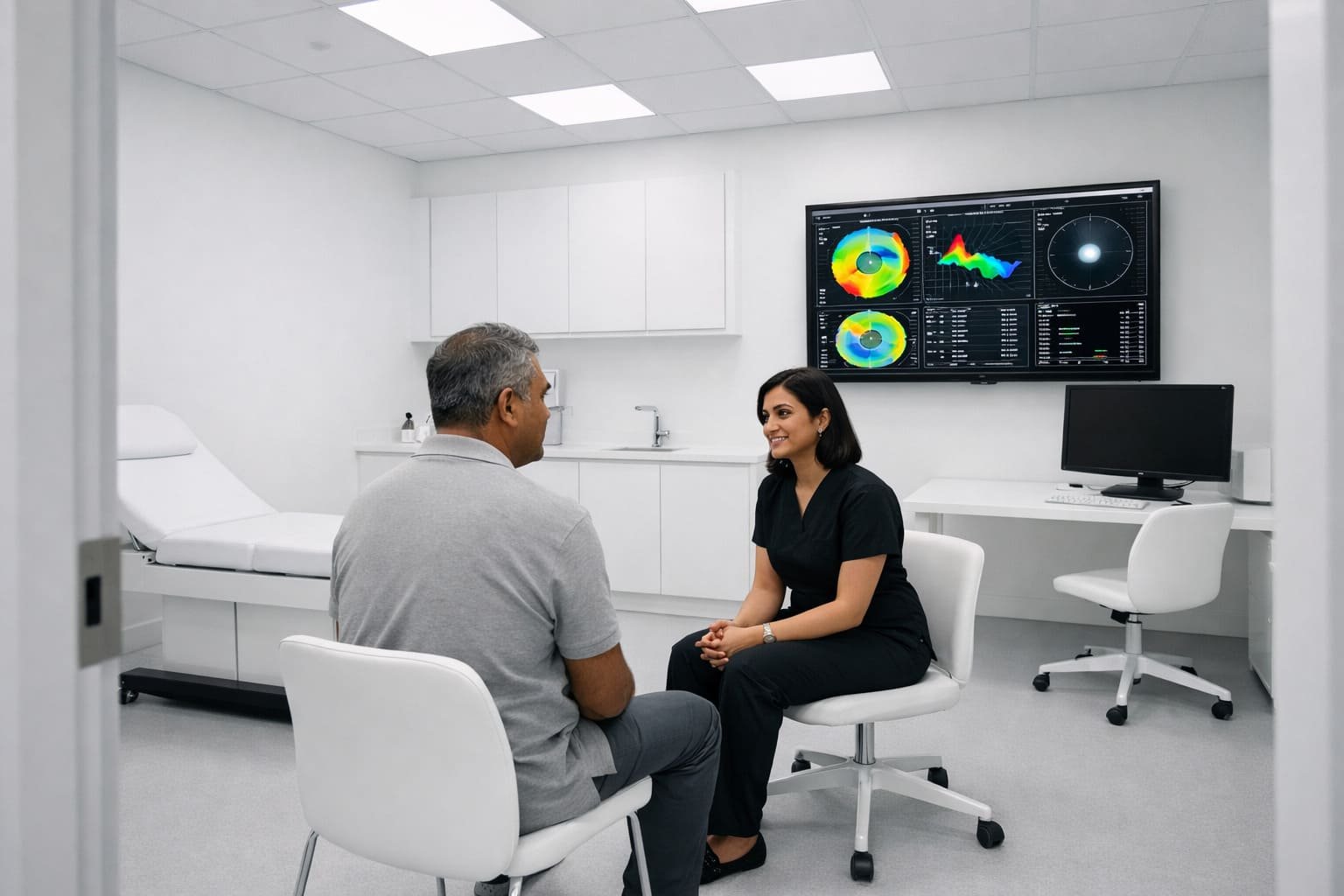
A laser eye surgery suitability test should check whether your eye is safe for laser and whether laser is the best use of surgery for your stage of life. We look at the part of the eye being treated, then the parts that could make a different procedure wiser. The Royal College of Ophthalmologists defines a stable glasses prescription as no change greater than 0.5 dioptres in the last two years. That matters because a moving prescription can make any refractive plan less reliable. During assessment, the checks that carry most weight are usually these:- Prescription stability. We need to know whether your glasses strength has settled or whether it is still changing.
- Corneal shape and thickness. Corneal tomography is a scan that maps the cornea in detail, and keratoconus screening looks for thinning or bulging that would make laser unsafe or unwise.
- Eye surface health. Dry eye and related surface problems can affect comfort, healing and laser suitability.
- Lens clarity. Early cataract or lens ageing can shift the discussion from LASIK or TransPRK to lens replacement or cataract surgery.
- Reading vision needs. Your work, driving, screen use and close-up tasks affect whether a distance-only plan would leave you frustrated.
If reading vision is already changing, ask for a discussion that includes lens replacement as well as laser. That single question can prevent choosing a procedure that only solves part of the problem.

Recovery, risks and reading glasses need separate answers
When we talk about whether surgery is worthwhile, recovery is only one part of the decision. LASIK patients are often able to return to work the day after surgery, while surface laser treatments such as PRK, LASEK and TransPRK may need a week or longer before reaching the driving standard. Laser vision correction is usually done with eye-drop anaesthetic, and you normally go home the same day. The operation itself is not the whole recovery, though. Your aftercare matters because dryness, glare, halos and visual settling need proper monitoring. Reading glasses deserve a plain answer. If you are already noticing presbyopia, laser can reduce your dependence on distance glasses or contact lenses, but older patients may still need glasses for some tasks, especially reading. That point is worth settling before surgery, because it changes whether a distance plan, blended vision, lens replacement or cataract-style lens surgery fits you best. Risk is part of normal consent. Serious permanent vision loss after laser vision correction is rare, but extra surgery to refine the result is more common and should be discussed before you decide. Long-term contact lens wear also carries risk, so the fair comparison is between real options, not surgery against a risk-free alternative. Good planning does not remove every risk. It makes the risk discussion specific to your eyes.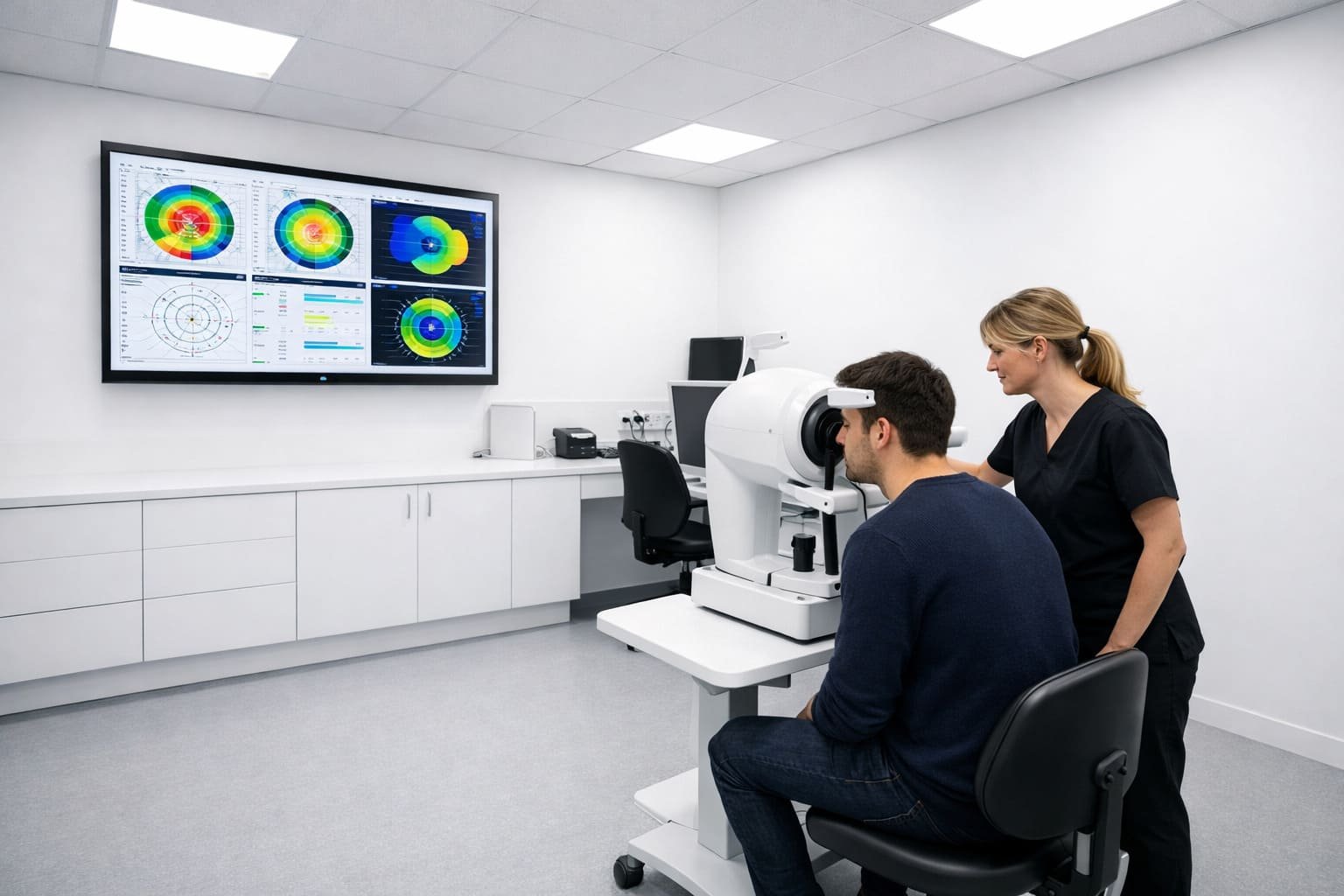
If you have a stable prescription but still feel unsure, ask for a face to face assessment with the operating surgeon. The details of corneal shape, dryness and lens clarity often matter more than age on its own.
Cost and local care in Colchester depend on the procedure
Price starts to make sense only after the clinical recommendation is clear. A laser procedure and lens replacement solve different problems, so comparing headline fees before assessment can push you toward the wrong question. As a guide, our current pricing information places LASIK at £1,400 to £1,800 per eye. TransPRK sits in a similar range, subject to assessment. Cataract surgery or lens replacement is generally £2,000 to £4,000 per eye depending on lens choice, and ICL is approximately £3,000 per eye. Laser lens replacement information for The Vision Surgeon also states pricing from £2,200 per eye. Final pricing depends on your assessment and the procedure that fits your eyes. For patients across Essex and Suffolk, the local element matters more than many people expect. If you live in Colchester, Chelmsford, Ipswich, Witham, Bury St Edmunds or Sudbury, travelling into London is not the only route to consultant-led vision correction. We provide care in Colchester through local hospital and eye centre settings, with the same surgeon assessing, operating and overseeing aftercare. That continuity is particularly useful when age has made the decision less simple. One person is weighing your laser suitability, lens health, cataract status and alternatives together, rather than treating your age question as a quick eligibility screen. Over the next 12 to 24 months, changing reading vision or a fresh comment about early cataract can alter which procedure gives the better long-term fit. Age is a prompt for precision, not a reason to assume the window has closed.
Arrange a Call with Our Team
Get answers to your questions about surgery, aftercare and the benefits of consultant-led treatment.
Message Us