Can Suffolk residents have private cataract surgery locally?
Yes, many Suffolk residents can access private cataract surgery without going to a large city hospital. In practice, the right location depends on where the consultant operates, what type of care you want, and whether your eyes need any extra assessment, but local and near-local options do exist.
A common assumption is that advanced eye surgery only happens in London or in major regional hospitals. That is not always true. Private cataract treatment is often available through local private hospitals and consultant ophthalmologists working within easy reach of Suffolk, including nearby centres such as Colchester.
The difference between NHS and private care often shapes the travel question. NHS cataract pathways are tied to local commissioning and hospital services, so patients may be sent where capacity exists. Private care works differently, which means that patients can usually choose a consultant and location that suit them better, provided the clinic is appropriately regulated and the surgeon is suitably qualified.
For many people, the real choice is not Suffolk versus a city hospital. The more useful comparison is between a local consultant-led service and a larger volume-based model where appointments, surgery, and aftercare may happen in different places.
Who is private cataract surgery in Suffolk for?
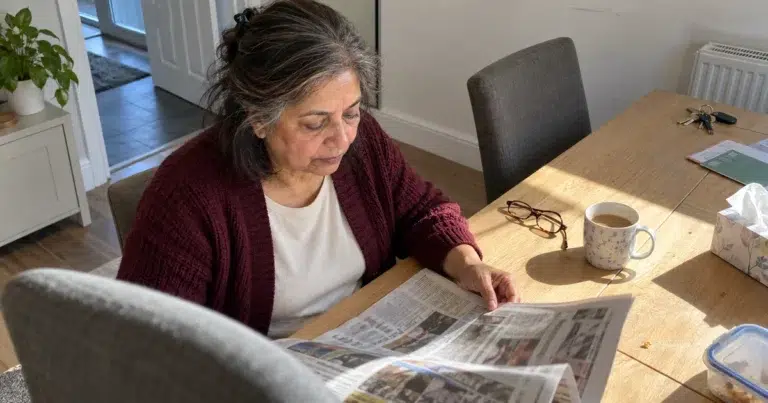
Private cataract surgery can suit people, but it tends to appeal most to those who want more control over timing, surgeon choice, lens options, and follow-up care. Some are referred by an optometrist or GP, while others start looking because driving, reading, or glare at night has become harder.
Typical groups include:
- People whose cataracts are affecting daily tasks such as reading, driving, working on screens, or recognising faces clearly
- Patients who want surgery sooner than the NHS pathway may allow
- Those interested in lens choices beyond a standard monofocal lens, including multifocal or other premium options
- People with a more complex prescription who want a detailed conversation about what surgery may and may not improve
Age alone does not decide suitability. Cataracts are more common later in life, but the decision to proceed usually depends on symptoms, eye health, and what the person wants from surgery.
Some patients also assume they need to travel because their prescription is unusual or because they have been told they have astigmatism. In many cases, that does not automatically mean a city hospital is necessary. A local assessment by a consultant ophthalmologist can clarify whether routine cataract surgery is appropriate or whether a more specialist setting would be sensible.
How private cataract surgery works: the local patient process
Private cataract surgery usually follows a clear pathway, and local care often feels more straightforward than people expect. The process starts with assessment, moves to surgery planning, and continues with nearby aftercare.
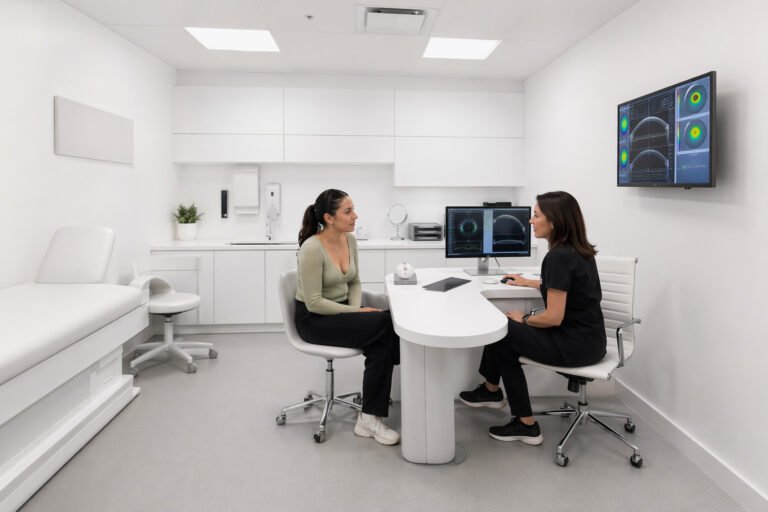
- You attend an initial consultation and eye examination. This visit usually covers your symptoms, medical history, current glasses prescription, and scans or measurements of the eye. Lens choice is often discussed here, especially if you hope to reduce your need for glasses after surgery.
- If surgery is suitable, the consultant explains the benefits, possible risks, and the likely result for your vision. You should also be told what the procedure can correct and what it may not correct fully.
- On the day of surgery, the cloudy natural lens is removed and replaced with a clear artificial lens. Cataract surgery is commonly done under local anaesthetic, and many patients go home the same day.
- Aftercare includes eye drops, review appointments, and guidance on recovery. Follow-up is usually local if your surgery is arranged through a nearby private hospital or eye clinic.
A city hospital pathway can feel less personal for some patients, particularly if the consultation and operation happen in different places or with different clinicians. By contrast, a consultant-led local route often gives more continuity, especially where the same surgeon assesses the eye, performs the operation, and reviews the result.
Recovery is usually measured in days and weeks, not months. Vision may improve quite quickly, although fine visual settling can take a little longer, and the final need for glasses depends on the lens selected and the health of the eye before surgery.
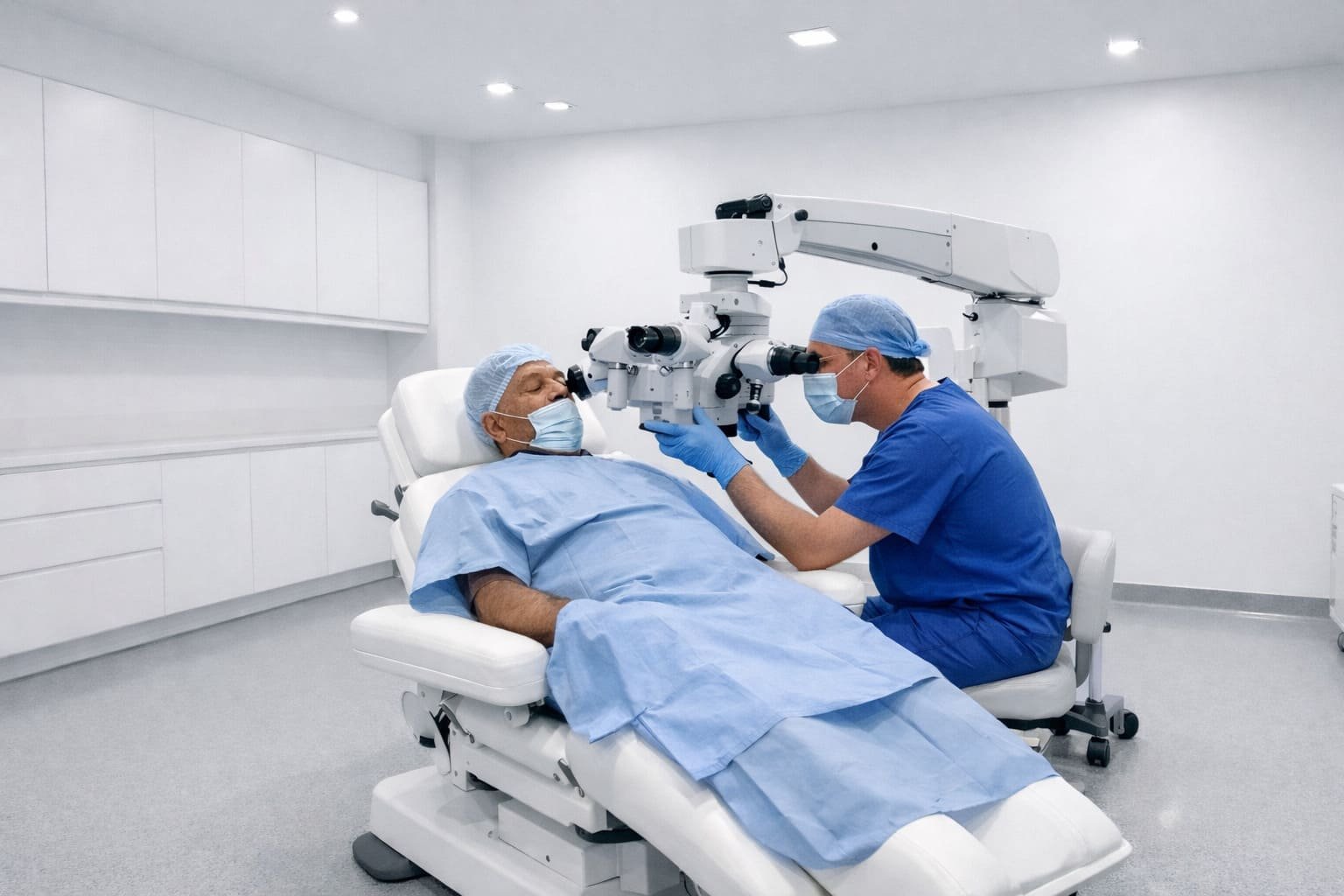
Discuss your vision goals with our experienced consultant and receive a thorough personal assessment.
EnquireAm I suitable for private cataract surgery in Suffolk?
Suitability is decided case by case, but most people seeking private cataract surgery are assessed using familiar clinical factors. A local consultation is usually the point where uncertainty becomes much clearer.
Common points your assessment will cover include:
- Whether a cataract is actually present and whether it explains your symptoms
- How much your vision is affected in daily life
- The general health of your eyes, including the cornea, retina, and optic nerve
- Other conditions such as glaucoma, macular disease, or previous eye surgery
- Your expectations about glasses after the operation
If you have been told that you have dry eye, diabetes, a retinal condition, or a past eye problem, that does not always rule surgery out. It may mean that extra tests are needed or that the surgeon gives more guarded advice about the likely outcome.
Equally, some people are surprised to learn that the cataract itself is mild and that another eye issue may be causing the blur. A careful assessment matters because cataract surgery works best when the source of the visual problem has been identified properly. In a strong consultation, you should come away knowing whether surgery is appropriate now, later, or only after another condition has been dealt with first.
Ask your surgeon to explain both standard and premium lens choices using examples relevant to your daily activities and vision goals.

Risks, benefits, and realistic expectations
Any eye surgery needs balanced information, and cataract surgery is no exception. Private care should still follow the same principles of informed consent expected by the GMC, CQC, and the Royal College of Ophthalmologists.
Benefits can include clearer vision, less glare, better contrast, and an opportunity to reduce dependence on glasses, depending on lens choice and the condition of the eye. Many patients also value the chance to discuss visual priorities in more detail, such as reading, driving, or intermediate screen use.
Risks and side effects need equal attention. These may include infection, inflammation, swelling, dry eye symptoms, light phenomena such as halos, a difference between expected and actual glasses prescription, or the need for further treatment. Serious complications are uncommon, but they are part of the consent discussion because uncommon does not mean impossible.
Expectation setting is especially important with premium lenses. A multifocal lens may reduce glasses use for some tasks, but it may also involve trade-offs such as glare or reduced contrast in certain lighting conditions. A standard monofocal lens is simpler in some cases, although reading glasses are often still needed afterwards.
A good result is therefore not measured only by whether the cataract has been removed. It is measured by whether the chosen plan matched the patient’s eye health, lifestyle, and tolerance for visual compromises.
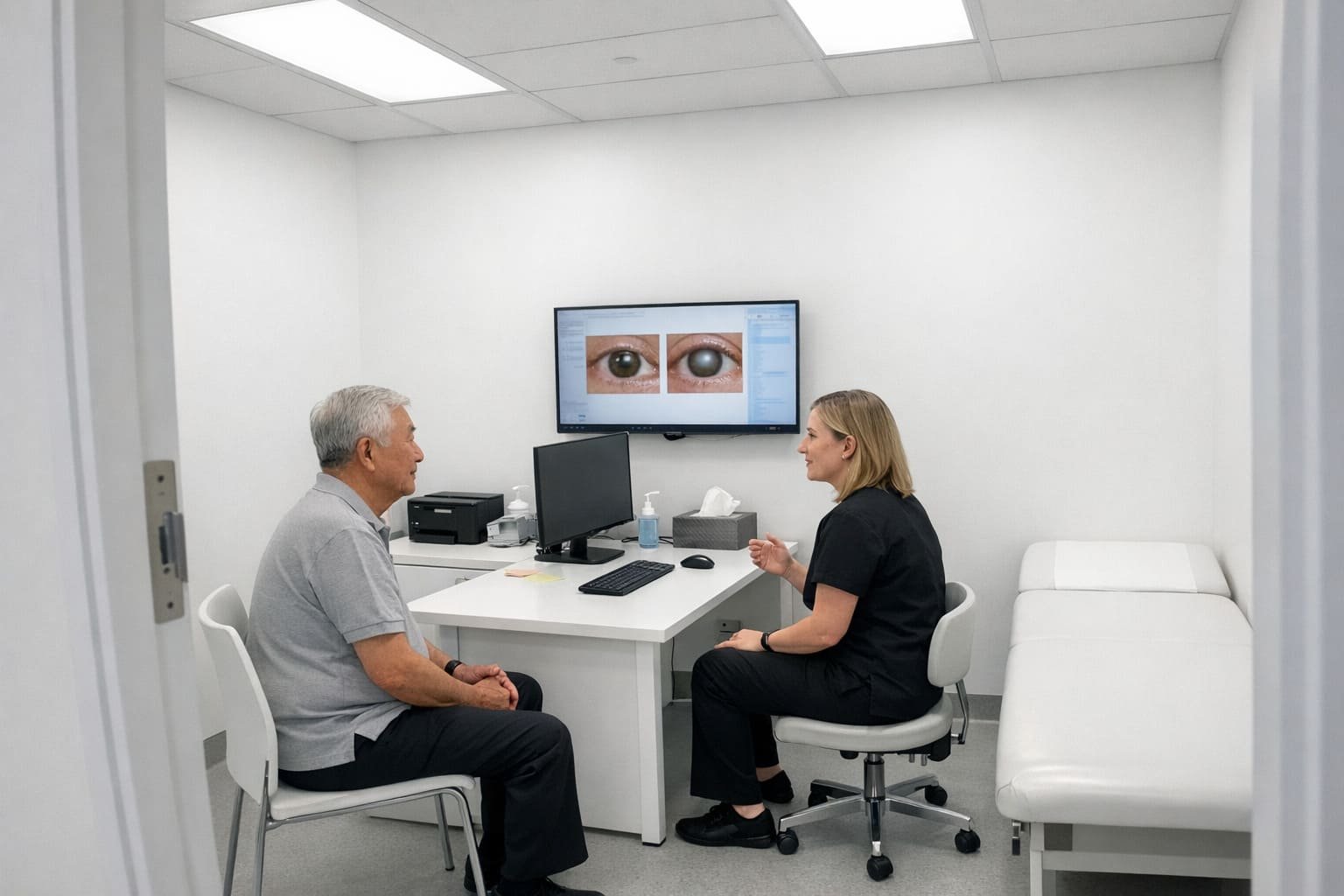
Bring a list of questions and your current glasses prescription to your first consultation to make the most of your assessment.
Private cataract surgery costs and value in Suffolk
Private cataract surgery in and around Suffolk is usually priced per eye, and the final figure depends on the lens used, the challenge of the case, and what is included in the package. As a broad guide, private cataract surgery or lens replacement often falls within the region of £2,000 to £4,000 per eye.
Cost differences usually come down to a few practical factors:
- Standard or premium lens choice
- The level of pre-operative testing needed
- Whether astigmatism correction is included
- The scope of aftercare and follow-up
Price matters, but value often matters more. Some patients are comfortable with a standard lens and simply want the cataract removed safely by an experienced surgeon. Others place more weight on surgeon continuity, appointment availability, or the chance to address distance and near vision in one plan.
For readers comparing private treatment with the long-term cost of glasses and contact lenses, the arithmetic is personal. Cataract surgery is not purchased in the same way as spectacles, yet many people do factor in years of changing prescriptions, coatings, sunglasses, reading glasses, and lens wear when deciding what feels worthwhile.
At The Vision Surgeon, pricing discussions are based on individual assessment rather than broad promises, because lens selection and eye health can alter what is appropriate and what represents fair value.
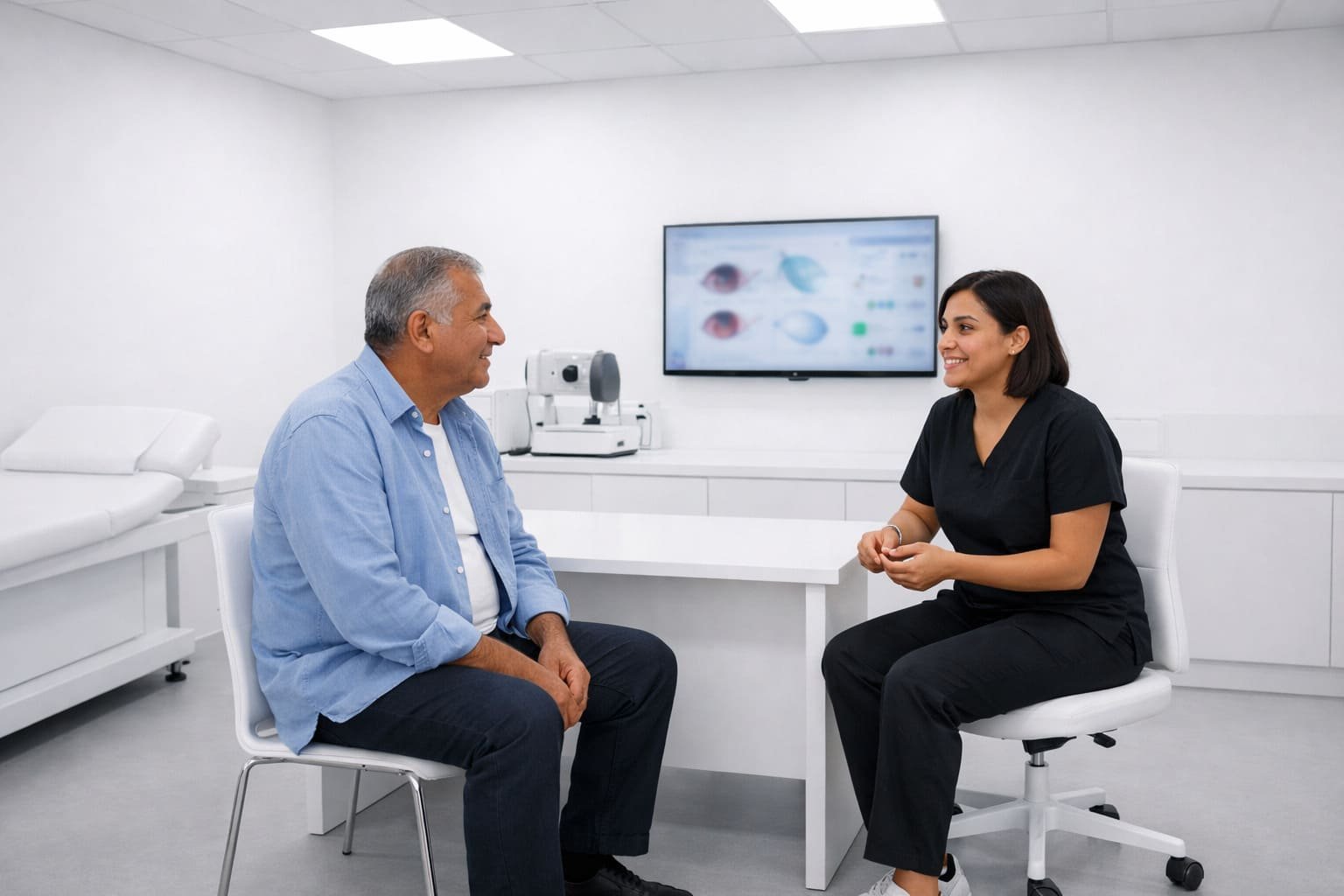
Why choose a consultant-led practice in Colchester for Suffolk patients?
For someone living in Suffolk, a consultant-led service in nearby Colchester can be a practical alternative to travelling farther afield. Distance matters, but continuity of care often matters more once surgery is actually being planned.
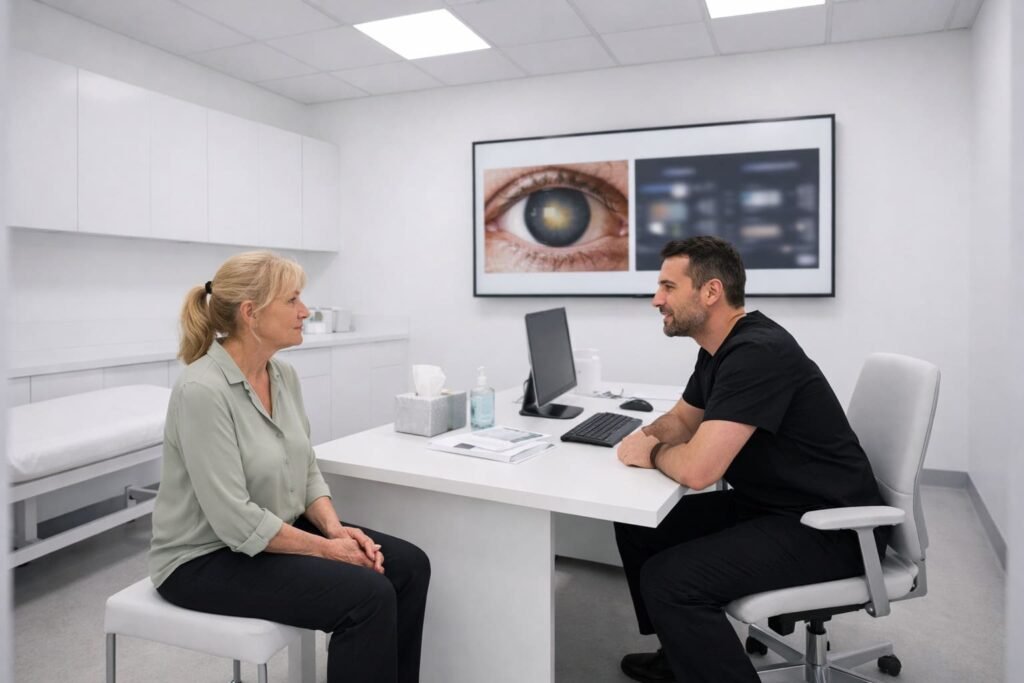
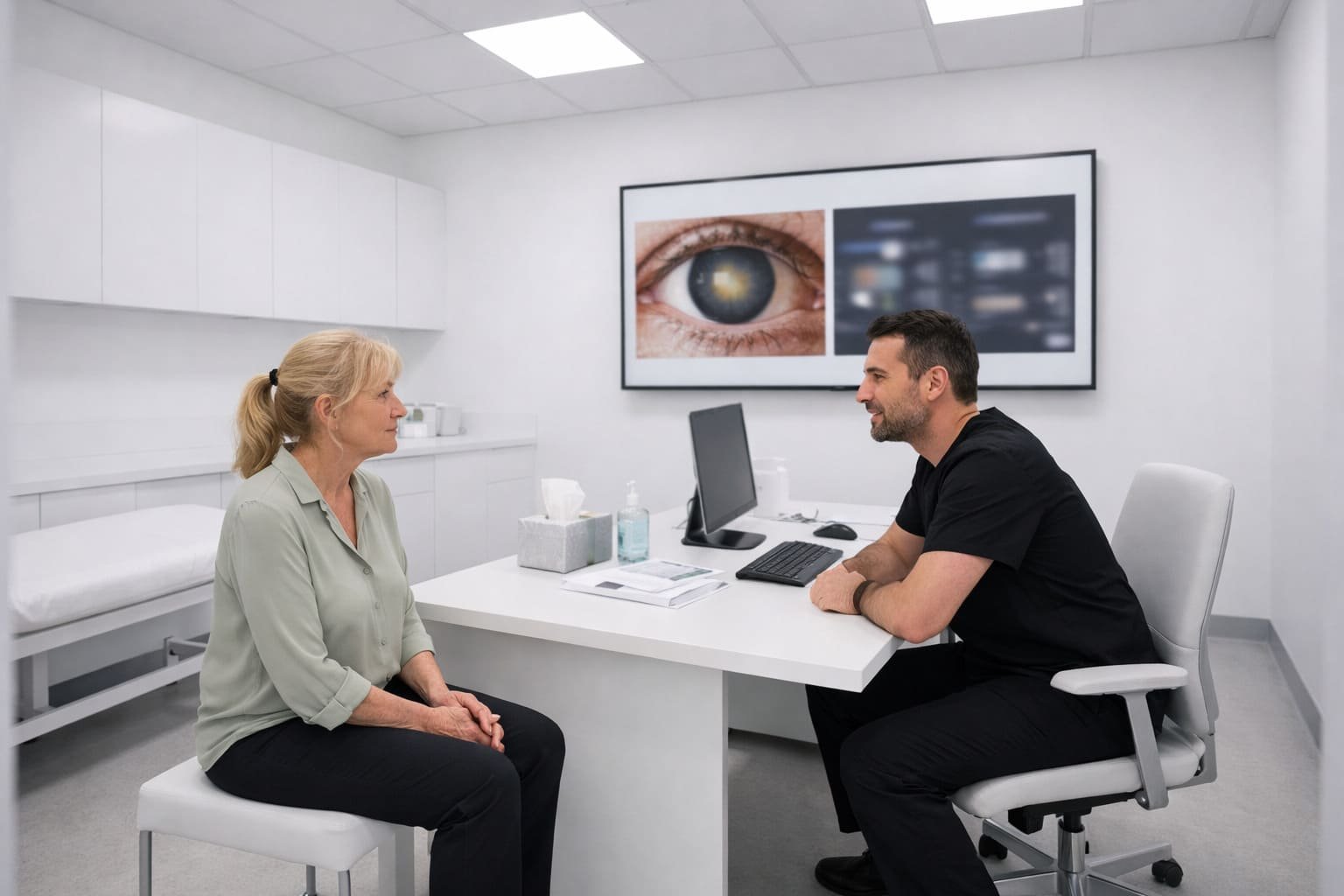
In a consultant-led model, the same ophthalmic surgeon may assess you, recommend the lens, perform the operation, and oversee follow-up. That arrangement can feel very different from a pathway where consultations are handled in one setting and surgery takes place somewhere else with a different clinician on the day.
Several features tend to stand out:
- A named surgeon with direct responsibility for decision-making
- Consistency between the advice given before surgery and the procedure performed
- Easier local access for reviews and aftercare
- Less need for repeated travel into a city centre
Suffolk patients often focus first on where the building is located. Once they have spoken to a surgeon, they tend to focus more on who is actually doing the operation and whether they will see that same person again afterwards.
Mr Mukherjee’s practice reflects that consultant-led approach. For readers comparing options, the practical point is simple: nearby care can still offer specialist oversight, local access, and a more personal patient process without sending you into a large city hospital system.
Get answers to your questions about surgery, aftercare and the benefits of consultant-led treatment.
Message UsThe changing landscape of cataract surgery access in Suffolk
Access to eye surgery has shifted over time, and old assumptions do not always match current reality. High-quality cataract care is no longer seen only in major city hospitals, particularly for straightforward private treatment and planned consultant-led surgery close to home.
Several changes have shaped that picture:
- More patients now expect to choose their surgeon, not just accept the next available slot.
- Lens technology and diagnostic equipment are available in a wider range of local settings.
- Aftercare is increasingly recognised as part of the treatment experience, not a minor detail after the operation.
That shift does not mean every case should stay local. Some eyes need highly specialised hospital input, and some patients will still prefer a larger centre. What has changed is that Suffolk residents have more realistic local and near-local choices than many people assume.
The most useful starting point is therefore not the old idea that city hospitals are automatically better. A better starting point is to ask whether the surgeon, setting, and follow-up plan fit your eyes and your life.