

Why can two eye clinics look at the same eyes and recommend different things?
Two clinics can give different advice because every recommendation is shaped by the people, equipment, protocols, and care model inside that clinic. A difference in advice does not automatically mean one clinic is wrong. It often means each team is working within its own limits, experience, and preferred treatment pathways.

Most ‘Expert’ Opinions Are Shaped by Hidden Constraints
You attend one appointment and hear that LASIK is the obvious choice. A week later, another clinic says laser is unsuitable and suggests lens surgery instead. Same eyes, same prescription, two very different answers.
Most patients assume one of those opinions must be mistaken. In practice, advice is usually formed inside a structure. Clinic protocols, technology availability, surgeon experience, and commercial setup all influence what is routinely recommended. The science matters, but the setting matters too.
A clinic that mainly offers one type of laser treatment will naturally view suitability through that lens. A service built around high patient volume may favour standard pathways that keep decisions quick and consistent. A consultant with broader surgical training may see more than one safe route and explain why one option fits your age, prescription, corneal shape, or visual priorities better than another.
That does not mean standards disappear. The GMC, the CQC, and the Royal College of Ophthalmologists all set expectations around patient safety, consent, and professional conduct. Yet compliance does not erase variation. Two regulated clinics can still interpret the same case differently because resource-driven decisions sit quietly behind many clinic recommendations.
Protocols Trump Personalisation in Most Clinics
Many eye clinics rely on fixed assessment pathways. Those systems can keep care orderly, but they can also flatten detail.
A standardised assessment often works by moving patients through suitability checklists. Prescription range, corneal thickness, dry eye symptoms, age, and medical history are filtered against pre-set thresholds. That approach may be efficient, although efficiency can leave less room for consultant judgement in the grey areas.
Imagine a patient in their late forties with early reading vision changes, mild dryness, and a long-standing wish to reduce dependence on glasses. One clinic may focus on whether they technically qualify for laser treatment that day. Another may step back and ask a broader question about how long that result is likely to suit them, whether lens replacement would match their visual goals better, and how age-related changes may alter the picture within a few years.
That is the difference between being processed and being assessed.
Consultant-led care tends to leave more space for nuance because the decision is not being passed along a rigid pathway. A surgeon with specific refractive qualifications, including CertLRS from the Royal College of Ophthalmologists, and broader surgical perspective through bodies such as the World College of Refractive Surgery, may be more willing to depart from a checklist when the patient in front of them does not fit neatly into one category. In those moments, the better answer is often less tidy than the protocol.
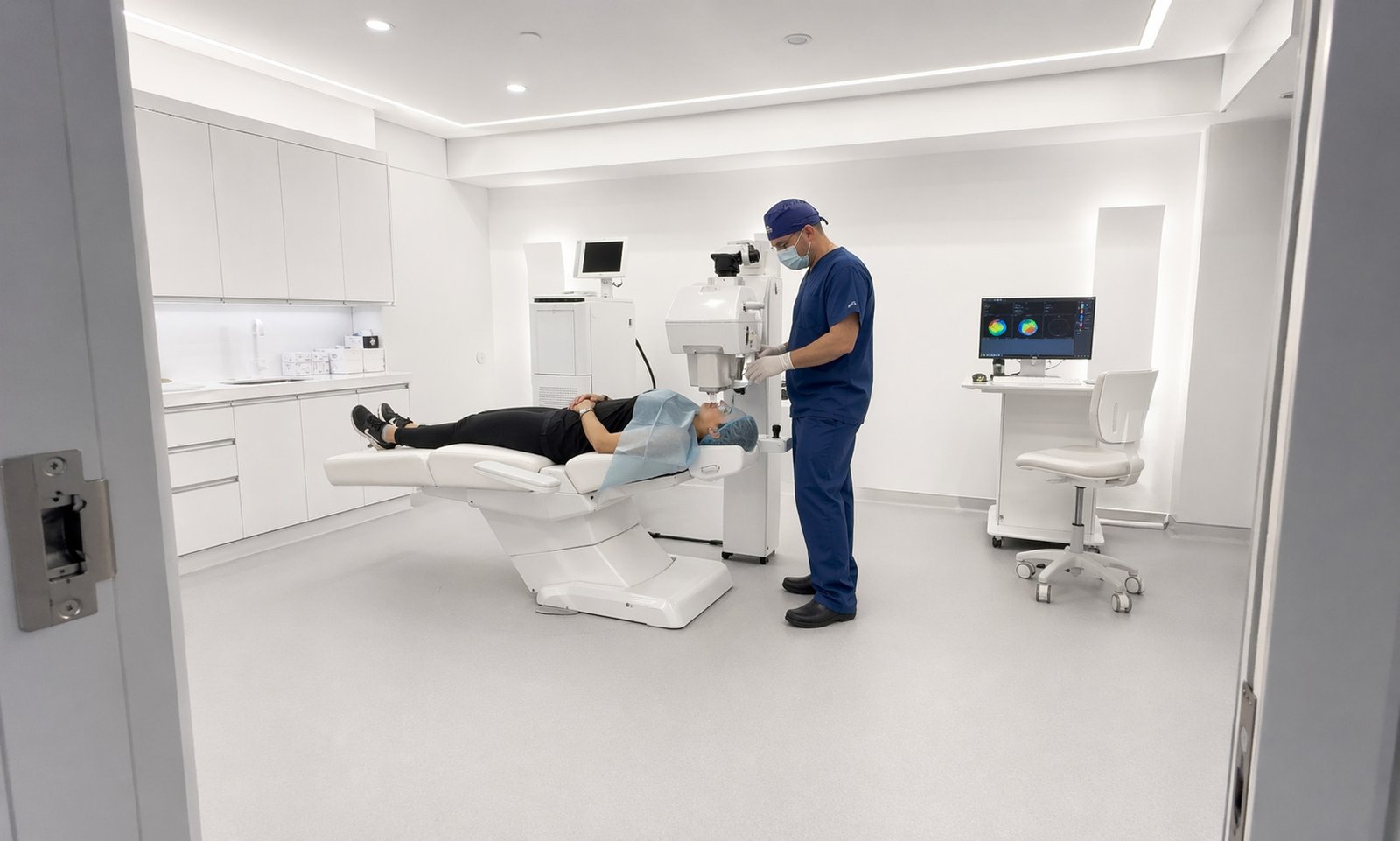
Receive a thorough, consultant-led evaluation to determine the best vision correction options for your unique needs.
Schedule Your AssessmentCredentials Are Not All Equal, Depth Matters More Than Titles
Clinical titles can sound similar even when training backgrounds are very different. A patient comparing websites may see the same broad language repeated across several practices and assume the field is level. It often is not.
Fellowship training means additional specialist training after standard ophthalmology training. That matters because eye surgery is not one discipline in the everyday sense. Corneal surgery, laser vision correction, lens surgery, and glaucoma work all demand different judgement, different technical habits, and different thresholds for risk. A surgeon with more detailed exposure across these areas may spot options or concerns that a narrower background does not bring forward as readily.
CertLRS is a qualification from the Royal College of Ophthalmologists focused on laser refractive surgery. That tells you the surgeon has pursued formal recognition in a specific area, not simply added laser treatment to a broader practice. NHS consultant status also carries weight because it usually reflects senior responsibility, regular governance, and day-to-day clinical leadership within a regulated hospital setting.
At The Vision Surgeon, Mr Mukherjee’s triple fellowship background in laser and refractive surgery, corneal surgery, and glaucoma changes the context of advice because it widens the frame around what is possible. A surgeon with that level of training is less likely to see one procedure as the answer to every question. Sometimes the most useful expertise shows itself by ruling a treatment out for a very particular reason.
Ask your clinician to explain not only why a treatment is preferred but also which alternatives were considered and ruled out.

Technology Gaps Dictate What Gets Recommended
A patient may be told they are unsuitable for one procedure at one clinic and an excellent candidate at another. That can sound baffling until you look at the equipment behind the consultation.
Technology platforms set the treatment menu. If a clinic offers LASIK but not TransPRK, advice may lean toward flap-based laser treatment for patients who fall within its parameters. If another clinic can offer both, the discussion changes because thinner corneas, certain lifestyles, or a preference to avoid a corneal flap may point in a different direction. The same principle applies to ICL, which stands for implantable contact lens, and to lens replacement surgery for older patients whose visual needs extend beyond straightforward distance correction.
Equipment also shapes subtle points that patients may never be told directly. A femtosecond laser may support certain surgical steps with a level of precision that changes how a surgeon approaches suitability. Lens choice in cataract or refractive lens exchange can vary widely from one provider to another. Some services can offer a broader range of premium or multifocal lenses. Others may have a much narrower set of options, which means that the recommended solution may really be the best available there, rather than the best possible in a wider sense.
NHS and private settings can differ here as well, simply because equipment investment and procedure availability follow different service priorities. Once you see that, conflicting advice stops looking mysterious and starts looking operational.
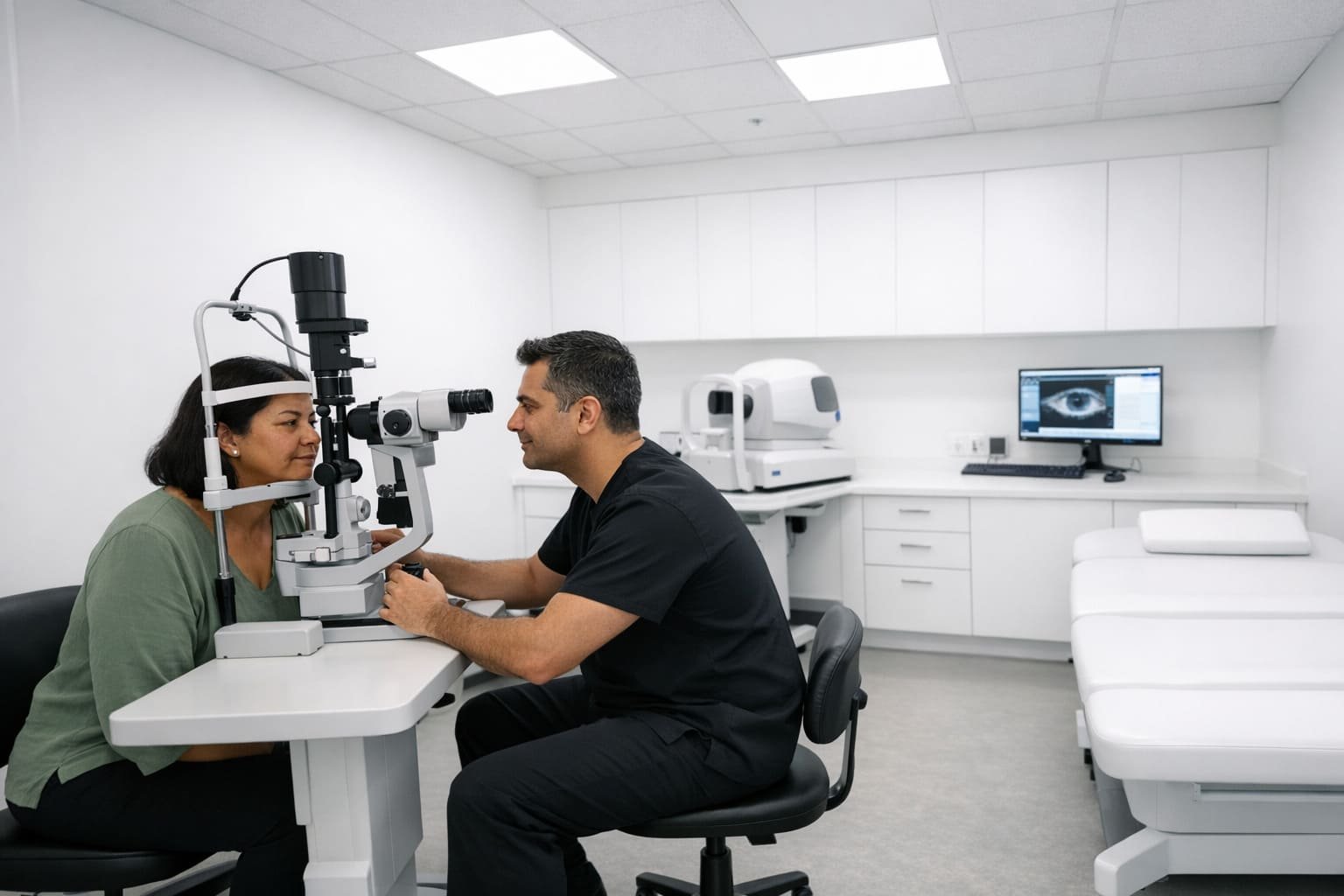
Price Differences Reflect More Than Just Cost
Two quotes for eye surgery can look far apart before you know what sits inside them. One figure may cover the procedure alone. Another may include consultant-led assessment, surgeon-delivered treatment, follow-up visits, aftercare, and a different level of lens or laser technology.
Price is shaped by the clinic model as much as by the treatment itself. High-volume private clinics may be structured to spread costs across a large number of patients. Consultant-led practices tend to build in more direct surgeon time, which changes what you are paying for. That difference becomes especially relevant if the same named consultant assesses you, operates on you, and reviews you afterwards, instead of handing parts of the process to different clinicians.
Indicative pricing can help place this in context. LASIK often falls around £1,400 to £1,800 per eye. Lens replacement or cataract surgery may range from about £2,000 to £4,000 per eye depending on lens choice. ICL is often around £3,000 per eye. Those figures are guides rather than fixed promises, and the final amount depends on what your eyes actually need.
Long-term value also matters. Someone who spends year after year on glasses, contact lenses, solutions, repairs, and prescription sunglasses may see the financial question differently from someone looking only at the initial bill. In eye surgery, the lower quote is not always the simpler answer. Sometimes it is just a narrower one.

Risks and Outcomes Are Framed to Fit the Clinic’s Comfort Zone
Risk discussions are supposed to support informed consent, yet the tone and emphasis can vary sharply from one clinic to another. One appointment may sound almost breezy. Another may feel unusually cautious.
That gap often reflects the clinic’s comfort zone. A team that performs a high volume of one procedure may speak about it with greater ease and may naturally focus on the risks they manage routinely. A surgeon with broader experience across several procedures may spend more time explaining trade-offs because they are comparing genuine alternatives rather than presenting one familiar pathway.
Advertising and consent standards from the ASA/CAP framework, the GMC, the CQC, and the Royal College of Ophthalmologists all point in the same direction. Patients should receive balanced information about benefits, limitations, and possible complications. Even so, framing still matters. A clinic can underplay dry eye concerns after laser treatment by treating them as minor and temporary in most cases. Another can dwell on them because the surgeon sees many referred patients with pre-existing surface problems. Neither discussion is entirely detached from the patient mix that clinic usually sees.
Outcome language can bend in the same way. Some providers talk in broad terms about success without spelling out what success means for a person who wants sharp night driving vision, freedom from reading glasses, or help with very high prescriptions. Honest advice usually sounds less polished because it acknowledges that a technically successful procedure may still involve compromises that matter to a specific patient. Reassurance has value, but clarity has more.
Understand your options at a glance with our free guide covering the key differences between major treatments and clinic approaches.
Get the GuideThe Real Question Isn’t “Who Is Right?” It’s “What’s Right for You?”
The search for one correct answer is often the wrong starting point.
Conflicting advice does not always signal poor medicine. Very often, it reveals different contexts, different tools, and different assumptions about what matters most. One clinic may be optimising for speed and standardisation. Another may be weighing longevity, lens choices, recovery time, or the fine detail of your cornea and prescription. None of that becomes useful until you decide what outcome actually matters to you.
The real task is to stop treating agreement as proof. Clear thinking begins when you ask which recommendation fits your eyes, your age, your tolerance for risk, your budget, and the kind of visual life you want to live afterwards.