
What is a multifocal lens and could it reduce your need for glasses after cataract surgery?
A multifocal lens is an artificial lens placed inside the eye during cataract surgery or lens replacement surgery. It is designed to provide focus at more than one distance, which can reduce the need for glasses for many day-to-day tasks. Some people manage well without glasses most of the time, but results vary and a small amount of spectacle use can still be needed for certain activities.
What is a multifocal lens?
A multifocal lens, also called a multifocal intraocular lens or multifocal IOL, is an artificial lens for cataract surgery that aims to improve distance, intermediate, and near vision. In simple terms, it works a little like varifocal glasses, except the lens implant sits inside the eye after the cloudy natural lens has been removed.
Cataracts cloud the eye’s natural lens. Cataract surgery replaces that lens with a clear intraocular lens. A standard monofocal lens usually gives one main point of focus, often distance, which means reading glasses are commonly still needed afterwards. A multifocal lens is a premium lens option that tries to spread focus across more than one range.
That does not mean perfect vision at every distance in every light condition. Presbyopia, which is the age-related loss of near focusing, can be reduced by the lens design, but vision after surgery still depends on the health of the eye and the accuracy of the measurements taken before treatment.
Here is the simplest way to compare common lens types:
- Monofocal lens: one main focus, usually distance or near
- Toric lens: one main focus plus correction for astigmatism
- Multifocal lens: more than one focus, with the aim of reducing dependence on glasses
Guidance from bodies such as the Royal College of Ophthalmologists and the General Medical Council supports clear, balanced counselling on lens choices. That matters because a multifocal IOL can be an excellent option for some people, yet it is never the right lens for everyone.
Who might benefit from a multifocal lens after cataract surgery?
Many people start thinking about multifocal lenses when they are tired of switching between distance glasses and reading glasses. Active adults over 50 often ask about them, especially if they drive, use screens, read regularly, and want greater freedom in daily life after cataract surgery.
Suitable candidates often share a few broad features:
- They want less reliance on glasses after surgery
- They have realistic expectations about what the lens can and cannot do
- Their eyes are otherwise reasonably healthy
- Their day-to-day visual needs include a mix of distance, computer, and near tasks
Someone who enjoys golf, driving, socialising, cooking, and using a phone or tablet may value a broader range of vision. A person who strongly dislikes reading glasses may also be interested. In private cataract surgery, lens choice can be more flexible than on a standard NHS pathway, which is one reason multifocal options are discussed more often in that setting.
Eligibility still comes down to individual assessment. Astigmatism, previous eye surgery, dry eye, glaucoma, retinal conditions, or corneal irregularities can affect whether a multifocal lens is sensible. Some patients do better with a monofocal or toric lens because visual quality matters more to them than reducing glasses use.
At The Vision Surgeon, Mr Mukherjee assesses suitability personally, which means that the recommendation is based on the eye in front of him rather than a one-size-fits-all package. A careful consultation often matters most in the patients who seem suitable at first glance but have subtle reasons to choose a different lens.
Discuss your vision goals with our experienced consultant and receive a thorough personal assessment.
EnquireHow do multifocal lenses work during cataract surgery?
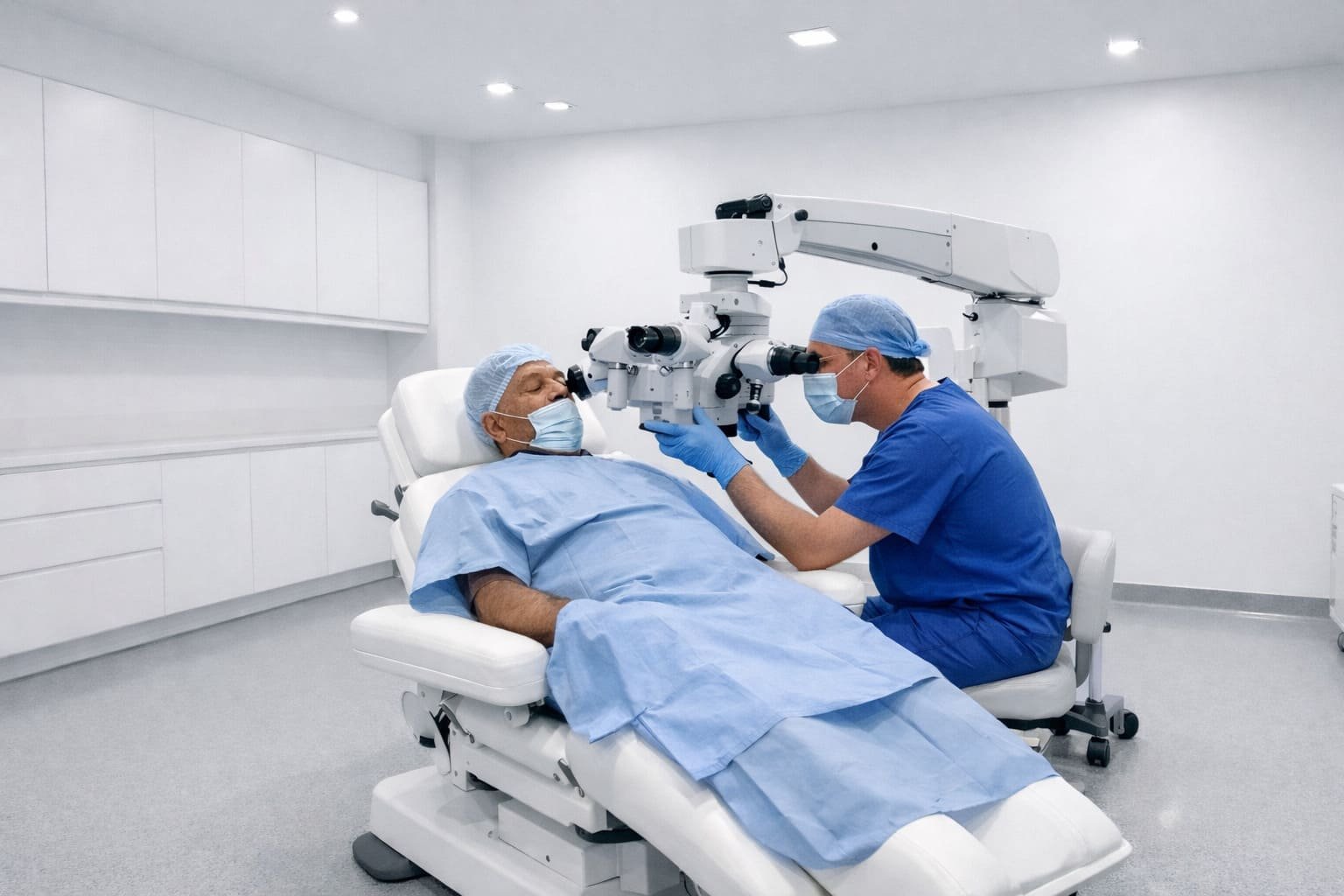
The lens is implanted during the same cataract operation used for a standard lens. The difference lies mainly in the planning and in the choice of implant, not in a dramatically different experience on the day.
Before surgery, the eye is measured in detail. Those measurements help the surgeon choose the lens strength and decide whether a multifocal design is appropriate. If surgery takes place at a setting such as Colchester Eye Centre or Oaks Hospital, patients can usually expect a planned, consultant-led process with pre-operative checks, the procedure itself, and follow-up aftercare.
The surgery process is usually as follows:
- The eye is numbed with drops, and patients remain awake but comfortable.
- A tiny opening is made in the eye so the cloudy natural lens can be removed.
- The cataract is broken up and removed using delicate surgical instruments, sometimes with technology that may include a femtosecond laser in selected cases.
- The folded multifocal lens implant is inserted into the natural lens capsule.
- The new lens opens into position inside the eye, where it stays permanently unless there is a specific reason to remove it.
Most cataract surgery is completed within a short period, and people generally go home the same day. Vision can seem hazy at first, then sharpen over the following days and weeks. Near vision and distance vision may continue to settle as the brain adapts to the way a multifocal IOL splits light.
Aftercare usually includes antibiotic and anti-inflammatory eye drops for a short period. Many people return to light activities quite quickly, although driving, work, and exercise should follow the advice given for their own situation. That early recovery period often feels less dramatic than patients feared before surgery.
Ask detailed questions during your consultation about both the benefits and limitations of multifocal lenses to ensure they match your lifestyle.

Could a multifocal lens mean no more glasses after cataract surgery?
In many cases, yes, a multifocal lens can reduce glasses dependence significantly. Some patients manage most daily activities without spectacles after surgery, including walking about, shopping, using a phone, and seeing a menu in good light.
Full spectacle independence is possible for some people, but it should never be assumed. Reading tiny print, working for long periods in dim lighting, or doing detailed close work can still require glasses even after a well-planned result. A small residual prescription can also affect how much freedom from glasses a person achieves.
Several factors influence the outcome. The overall health of the cornea and retina matters. The amount of pre-existing astigmatism matters. Dry eye can matter more than people expect. Precise pre-operative measurements matter as well, because even a small residual refractive error can change how crisp vision feels.
A useful way to think about it is this:
Myth: A multifocal lens guarantees perfect vision at all distances. Reality: A multifocal lens can improve range of vision, but outcomes vary and trade-offs exist.
Myth: Nobody needs glasses after a multifocal lens. Reality: Some people still use glasses for fine print, prolonged reading, or certain hobbies.
Myth: Every cataract patient is a good candidate. Reality: Suitability depends on the eye, the prescription, and the person’s priorities.
Professional standards set by organisations such as the Royal College of Ophthalmologists and the General Medical Council place strong emphasis on informed consent and realistic expectations. That is particularly important here, because satisfaction often depends as much on choosing the right lens for the right person as it does on the surgery itself.
Risks, limitations, and considerations with multifocal lenses
Multifocal lenses have genuine benefits, but they also come with limitations that need plain discussion. The aim is to improve range of vision, yet that can involve compromises that some patients notice more than others.
Common considerations include:
- Halos or glare around lights, especially at night
- Reduced contrast sensitivity, which can make vision feel less crisp in low light
- A period of adaptation as the brain adjusts to the new optical system
- Ongoing need for glasses for certain close tasks in some patients
Night driving deserves a specific mention. Some people adapt very well to multifocal optics, whereas others remain aware of rings or flare around headlights. Anyone whose work depends on highly precise night vision should discuss that in detail before surgery.
Certain eye conditions may make a multifocal lens less suitable. Problems affecting the cornea, macula, optic nerve, or tear film can reduce the quality of vision achieved. In those cases, a monofocal lens may give clearer and more predictable vision overall, even if glasses are still needed afterwards.
Good counselling matters because lens choice is partly about personality and tolerance, not just measurements. A person who notices tiny visual changes and wants the sharpest possible single-focus image may prefer a different implant from someone who is happy to accept mild optical side effects in exchange for less spectacle use.
If a multifocal lens is poorly tolerated, further assessment is needed to work out why. Sometimes the issue relates to dry eye, residual prescription, or a treatable eye surface problem. In a smaller number of cases, lens exchange may be considered, although that is a more involved discussion and depends on the individual clinical picture and timing after surgery.
Plan early for aftercare by arranging support and transportation for your surgery day, as vision may be temporarily hazy afterwards.
Cost guidance and value of multifocal lenses in private cataract surgery
Private cataract surgery in the UK often falls within a broad range of about £2,000 to £4,000 per eye, depending on the lens chosen and the detail of the treatment plan. Multifocal lens options usually sit at the higher end because the implant itself is more specialised and the planning can be more detailed.
Cost usually reflects several elements, including the consultation, pre-operative measurements, surgery, the lens implant, and aftercare. Exact pricing varies between practices and between patients, particularly if astigmatism correction or other factors need to be considered.
A standard NHS cataract pathway usually does not include the same breadth of premium lens choice available in private practice. For that reason, patients who want a multifocal intraocular lens often compare the extra upfront cost with the long-term cost of varifocal glasses, prescription sunglasses, lens changes, and contact lenses over many years.
The value question is personal rather than purely financial. One patient may care most about reading a phone without searching for glasses. Another may place greater value on crisp single-distance vision and choose a simpler lens. The right decision sits where budget, lifestyle, and visual priorities meet, not where one lens sounds more impressive on paper.
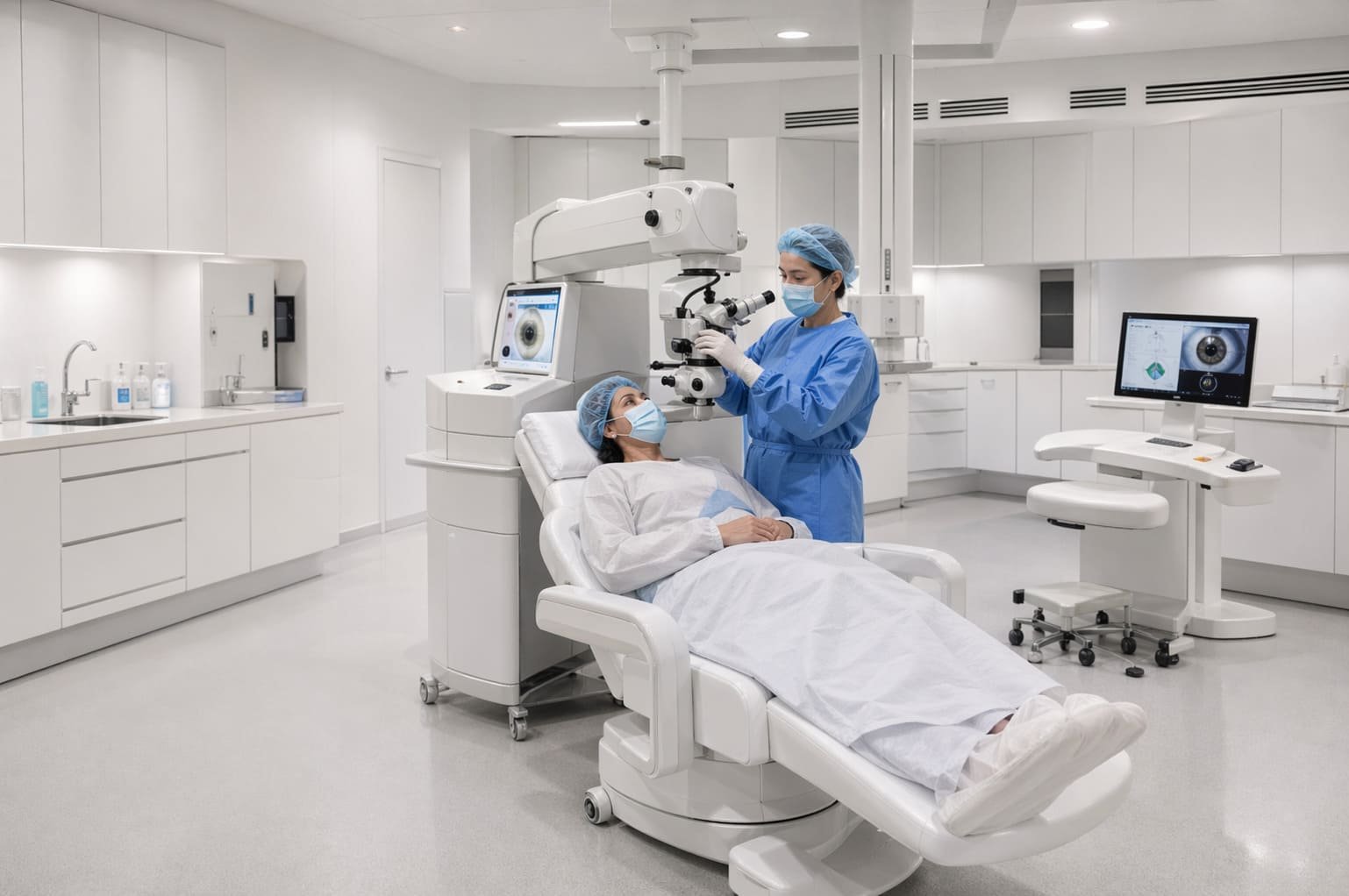
Local expertise: why choose a consultant-led approach in Colchester?
For cataract surgery, continuity matters. Seeing the same consultant from assessment through surgery and aftercare allows lens choice to be discussed in context, especially when the decision involves trade-offs such as spectacle freedom versus night vision quality.
Mr Mukherjee is a consultant ophthalmologist based in Colchester, and his background includes triple fellowship training in laser and refractive surgery, corneal surgery, and glaucoma. He also leads an NHS ophthalmology unit, which gives additional depth to his assessment of both routine and more complex eyes.
Patients in Essex and Suffolk often assume they need to travel for specialist eye surgery. In practice, local treatment at Colchester Eye Centre or Oaks Hospital can offer convenience without the disruption of longer journeys for consultations, surgery, and follow-up appointments. Free parking and easier access may sound like practical details, yet they often matter a great deal on treatment day and at review visits.
A consultant-led model also changes the tone of the experience. Rather than being assessed in one place and operated on elsewhere by someone different, patients can have their suitability, lens plan, surgery, and aftercare handled by the same named surgeon. That consistency is particularly valuable when discussing premium lens options, where subtle differences in expectation can shape the final recommendation.
Get answers to your questions about surgery, aftercare and the benefits of consultant-led treatment.
Message UsThe changing role of multifocal lenses: what to consider for the future
Lens technology continues to improve, and patient expectations are becoming more specific. People now ask better questions about reading vision, screen use, driving at night, and whether they can reduce glasses rather than simply whether the cataract can be removed.
That shift is useful because it puts the focus where it belongs, on matching the lens to the person. A good result is not defined by a label such as premium lens or multifocal lens. A good result is one that suits the eye, the lifestyle, and the trade-offs the patient is comfortable making.
Three points are worth keeping in mind:
- New lens designs may broaden options, but no implant removes the need for careful selection.
- Spectacle independence can improve markedly, but complete freedom from glasses is not universal.
- The best lens choice is the one that fits your own visual priorities and eye health.
As standards from bodies such as the Royal College of Ophthalmologists and the General Medical Council continue to emphasise informed choice, the most useful question is often the simplest one: which lens gives the most sensible balance of clarity, range, and realism for your everyday life?