
Who is corneal cross-linking for, and what should you expect from recovery?
Corneal cross-linking is a treatment used to strengthen the cornea in people with keratoconus, usually to slow or stop further change in the shape of the eye. Recovery can be uncomfortable at first, especially after the standard surface-based technique, and vision often fluctuates before it settles. The key point is that cross-linking is not suitable for everyone, and the benefit is usually stabilisation rather than sharper sight on its own.
The Eligibility Constraint
Many people assume that once keratoconus is diagnosed, cross-linking automatically follows. That is not how it works. Eligibility depends on whether the cornea shows signs of progression and whether the eye is suitable for treatment in practical terms.
Age matters, although it is not a simple cut-off. Younger patients often have a higher risk of progression, which means that cross-linking may be considered sooner. Older adults can still need treatment, but a diagnosis later in life does not always mean the condition is actively worsening.
Corneal thickness is one of the main gatekeepers. Standard cross-linking relies on enough tissue being present to treat the eye safely after the surface layer has been removed. If the cornea is too thin, the plan may need to change, or the procedure may not be appropriate at that stage.
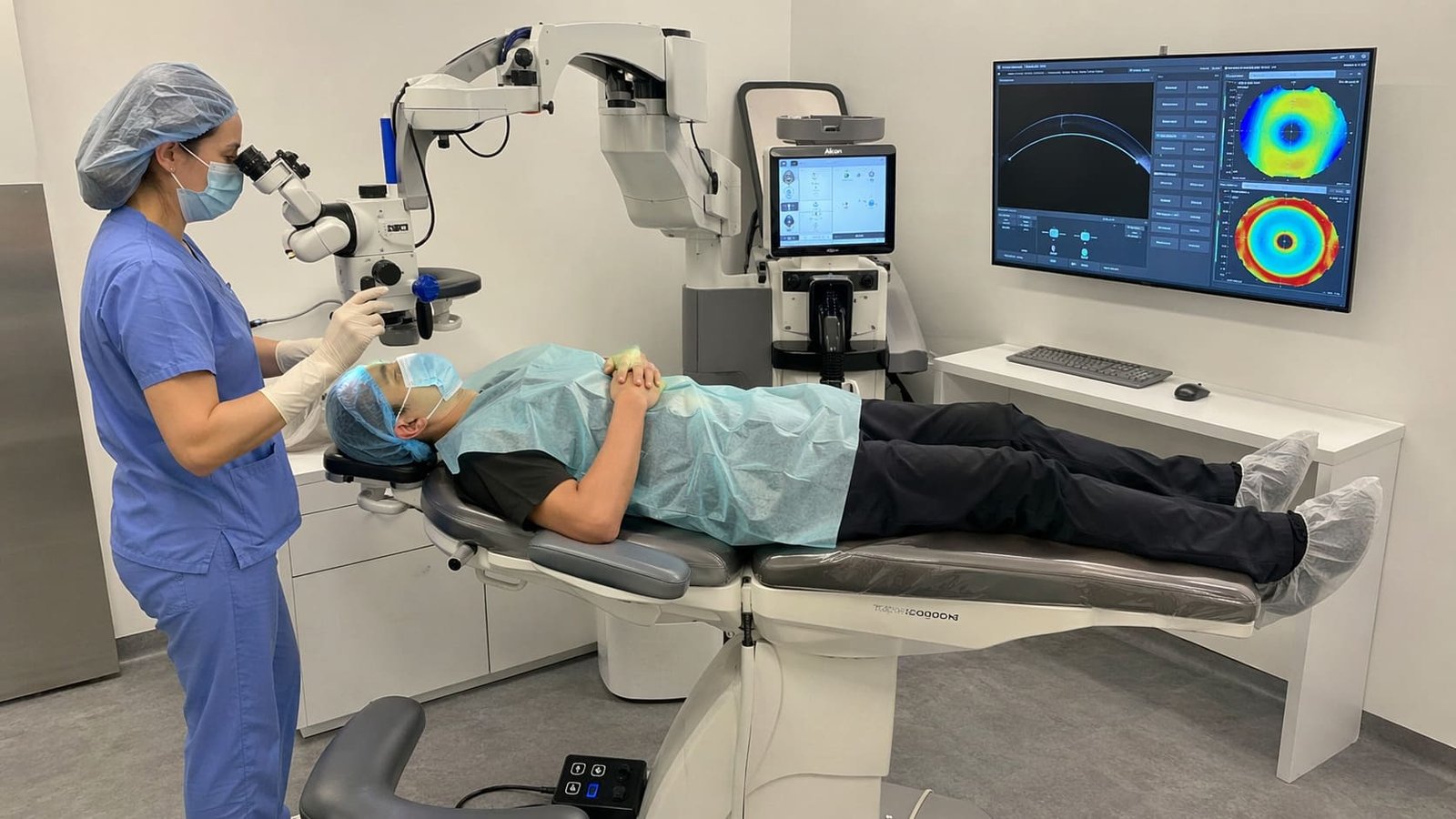
Disease behaviour matters just as much as age or thickness. A surgeon will usually look at scans over time, including keratometry readings, corneal shape maps, and changes in glasses or contact lens prescription, to judge progression risk. One scan on one day rarely tells the whole story.
Patient history also changes the picture. Previous eye surgery, significant scarring, poor healing on the eye surface, or other eye conditions can all affect keratoconus suitability and the type of treatment considered. Guidance from bodies such as the Royal College of Ophthalmologists and practice patterns within groups including the UK Cross-linking Consortium reflect that need for individual judgement.
Early diagnosis can widen the options. Someone referred promptly by an optician may have enough corneal thickness and a clearer pattern of progression than a person who has lived with changing vision for years without specialist review. In that sense, timing shapes eligibility almost as much as the condition itself.
A consultant-led assessment tends to be more nuanced because the same surgeon can interpret the scans, examine the cornea, and judge whether treatment makes sense in the context of the patient’s age, work, driving needs, and contact lens history.
Schedule a consultation to determine your eligibility for corneal cross-linking and discuss personalised management options.
Book AssessmentThe Procedure Unpacked
Cross-linking sounds abstract until you break it down. In simple terms, the aim is to stiffen the cornea by using vitamin B2 drops, called riboflavin, and controlled UV-A light to strengthen links between collagen fibres.
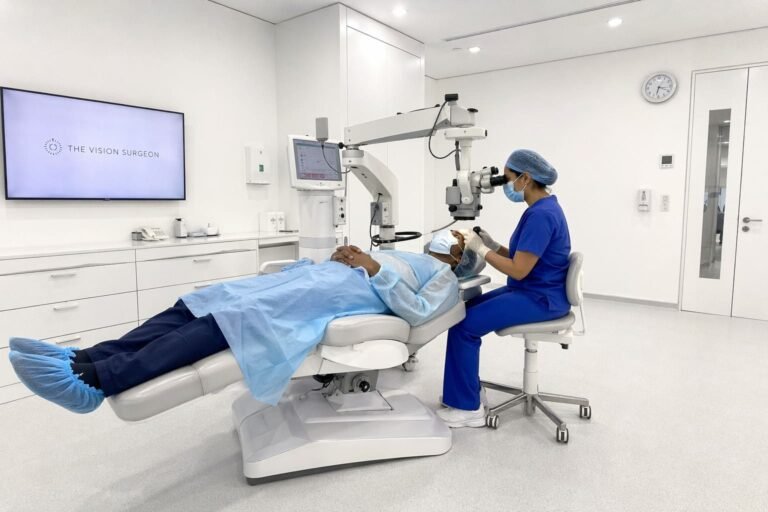
Before anything starts, the eye is numbed with anaesthetic drops. The patient stays awake, but the surface should feel numb rather than painful during the treatment itself. A lid holder keeps the eye open, which can feel unusual even when it is not uncomfortable.
In the standard approach, often called epi-off cross-linking, the thin surface skin of the cornea, known as the epithelium, is gently removed. That step allows riboflavin to soak into the cornea properly. Once enough absorption has taken place, UV-A light is applied for a set period under controlled conditions.
From the patient’s point of view, the procedure is mostly about lying still, looking at a light, and having drops placed in the eye at intervals. From the surgeon’s side, it is highly structured. Details such as corneal thickness, riboflavin saturation, exposure timing, and surface protection all matter to corneal stability and safety.
Some centres also discuss transepithelial or epi-on cross-linking, where the surface layer stays in place. The attraction is a gentler recovery, but the cornea can be harder to penetrate effectively, which means the method and patient selection need careful thought. That choice is not a matter of convenience alone.
A consultant-led setting often changes the feel of the day. When the same ophthalmic surgeon who assessed the cornea is also delivering the treatment, explanations tend to be more specific, and decisions can be tied closely to the actual scan findings rather than a standard pathway.

The Recovery Reality
A common misunderstanding is that cross-linking recovery is quick because the treatment itself is relatively short. For many patients, the first few days say otherwise.
After epi-off cross-linking, the eye can feel sore, gritty, watery, and very sensitive to light. Blurred vision is common. Some people describe the discomfort as the most difficult part, especially on the first day or two, even though pain relief and other medicines are usually provided.
A bandage contact lens is often placed on the eye at the end of treatment to protect the surface while it heals. Antibiotic drops are commonly used for a short period, and other drops may be prescribed as part of the aftercare plan. Follow-up matters here because the healing speed of the surface can vary.
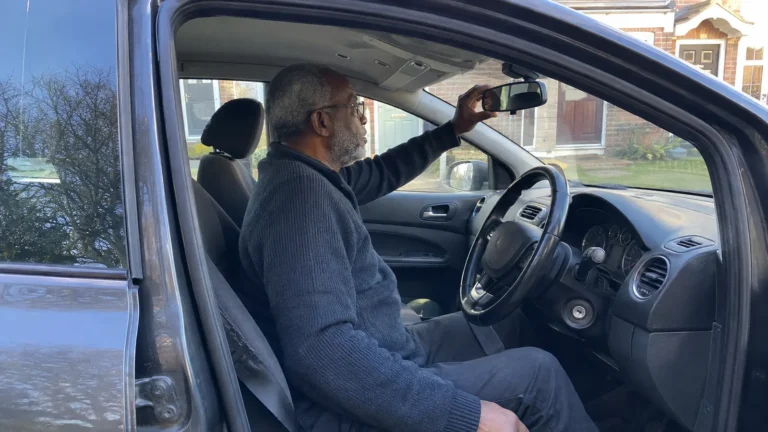
Vision rarely settles in a neat straight line. During the first week, many people notice blur, haze, glare, and a sense that the eye simply does not focus properly. Reading can be frustrating. Screen use may need to be cut back for a few days, and driving may not be possible until sight is clearer and legal standards are met.
Over the following weeks, the pain usually eases well before the vision feels normal again. Some patients return to desk work within several days, while others need longer, particularly if the treated eye is their better eye or their job relies on precise visual tasks. Healing after epi-on treatment may feel easier, but the trade-off is that not everyone is suitable for that method.
Emotionally, the stop-start nature of recovery can catch people off guard. An eye may feel better one day and look blurrier the next. That pattern does not always mean something is wrong, but it does explain why clear aftercare advice and straightforward access to review are so important in keratoconus treatment.

The Risk and Expectation Gap
Cross-linking is not a cure for keratoconus. Its main purpose is to stabilise the cornea, not to restore perfect vision.
That distinction changes everything. A patient may still need glasses, contact lenses, or other treatment after cross-linking, because stopping further distortion is different from reversing the distortion already present. Some people notice modest visual improvement, but that is not the promise the treatment is built on.
Expected effects and uncommon complications also need separating. Temporary haze, fluctuating vision, and short-term discomfort are part of the known recovery pattern for many patients. More serious problems, such as infection, delayed healing, or persistent corneal haze, are uncommon but important because they can affect sight and require prompt management.
Consent works properly only when that gap is clear. Someone who arrives expecting immediate visual improvement can feel alarmed by a blurry recovery, even if the eye is healing as expected. Someone who understands that the goal is long-term corneal stability usually interprets the same early blur very differently.
Clinical expertise does not remove risk, but it does shape how risk is assessed, explained, and managed. That includes judging who should not have treatment, choosing the right method, and reviewing the eye closely afterwards if healing does not follow the usual pattern.
The Local Expertise Distinction
Many patients still assume that specialist keratoconus care means travelling far from home or accepting a clinic model where different people handle different parts of the process. For a condition that depends so heavily on detailed scanning, timing, and follow-up, continuity matters more than many expect.
With keratoconus, the assessment is not a formality before a procedure. It is where progression is judged, scans are interpreted in context, and the balance between monitoring and treatment is worked out. When the same consultant makes those decisions and then performs the procedure, the logic of the plan tends to be clearer to the patient as well.
That local continuity also changes recovery. If the eye is more painful than expected, if the bandage lens feels uncomfortable, or if vision seems slow to improve, nearby review is easier to arrange and less disruptive than a long return process. For people in Essex and Suffolk, practical access can make aftercare feel far less uncertain.
At The Vision Surgeon, Mr Mukherjee’s broader corneal and refractive background is relevant because keratoconus does not always sit neatly in a single-treatment box. Some patients need monitoring. Others need cross-linking. A smaller number may later need contact lens optimisation or further corneal management. That fuller view is part of what consultant-led eye care looks like in practice.

Receive a detailed aftercare and recovery guide tailored to keratoconus cross-linking procedures.
Get Guidance PackThe Reframing: What Matters Most
The real question is usually not what cross-linking is, or even how many days recovery takes. The sharper question is whether cross-linking is the right decision for this eye, at this point, for this person.
Keratoconus care is shaped by timing, progression, corneal thickness, and the life a patient needs to get back to once the immediate healing phase is over. A student in the middle of exams, a parent with little room for downtime, and a contact lens wearer with subtle scan changes may all face the same diagnosis but need a different decision on the same day.
Seen that way, cross-linking is less a standard treatment pathway and more a judgement about when intervention protects the future shape of the cornea better than watchful monitoring does. That shift in perspective usually leads to a calmer, better-informed choice, because the aim stops being to have a procedure and becomes to manage keratoconus wisely.