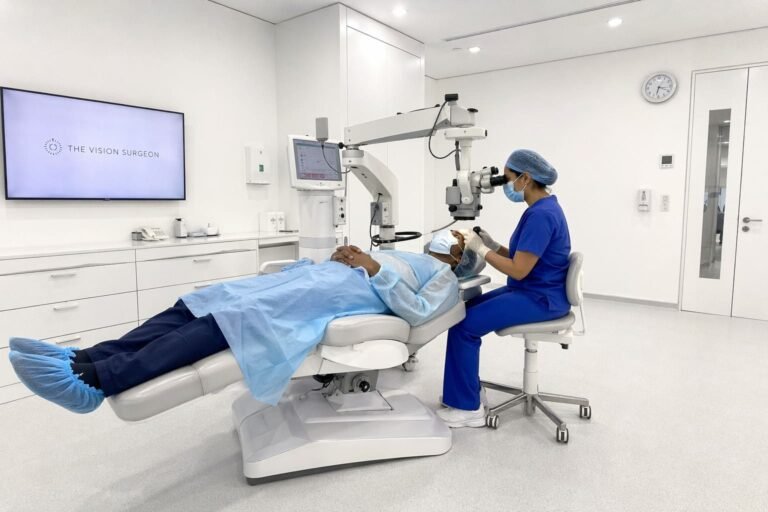

Does private health insurance usually cover cataract surgery or lens replacement surgery?
If your optician has mentioned cataracts and you have Private Medical Insurance, or PMI, the main issue is why surgery is being done. Cataract surgery is often covered when it is medically necessary and approved by the insurer. Elective refractive lens exchange, also known as lens replacement surgery, is usually self-funded.

Insurance cover depends on clinical classification
Your policy is unlikely to treat every form of lens surgery in the same way. We separate three situations that are easy to mix up in normal conversation: cataract treatment, cataract treatment with a refractive lens upgrade, and elective refractive lens exchange, or RLE, for reducing dependence on glasses or contact lenses.
The Association of British Insurers, or ABI, describes private medical insurance as cover for private treatment of acute conditions that start after the policy begins. That wording matters because a cataract is a medical eye condition, whereas elective lens replacement for glasses reduction is normally treated differently.
Bupa, as one example of an insurer explaining cataract cover, says cataract surgery is often covered as part of health insurance, subject to the policy. The small print still matters. Insurer approval, your policy excess, outpatient cover and any pre-existing condition rules can all affect what you pay yourself.
Everyday language causes half the confusion here. A patient may say “lens replacement” because the surgeon replaces the natural lens, but the insurer will ask why that lens is being replaced. The same lens-removal technique can sit in two different insurance categories.
Discuss your vision goals with our experienced consultant and receive a thorough personal assessment.
EnquireSimilar surgery does not mean the same insurance answer
Cataract surgery and refractive lens exchange are closely related operations, but the reason for treatment changes the insurance position. The Royal College of Ophthalmologists says modern cataract surgery and RLE both replace the natural lens with an intraocular lens, or IOL, which means an artificial lens placed inside the eye.
The difference sits in the eye itself. Cataract surgery treats blur or light scatter from a misty natural lens. RLE is performed to reduce the need for glasses or contact lenses when the natural lens is clear enough for that to be the main aim.
| Procedure | Main reason | Likely insurance treatment |
|---|---|---|
| Cataract surgery | Treating vision affected by a misty natural lens | Often assessed as medical treatment, subject to policy approval |
| Cataract surgery with a refractive upgrade | Treating cataract while choosing a lens to reduce glasses use | Core cataract treatment may be covered, but the upgrade may cost extra |
| Elective refractive lens exchange | Replacing the lens mainly to reduce glasses or contact lenses | Generally treated as self-funded elective treatment |
At The Vision Surgeon, we often start by clarifying whether the issue is cataract treatment, elective RLE, or cataract surgery with a refractive upgrade. That classification gives you a clearer question for your insurer and avoids the weak assumption that similar surgery always means similar cover.
One grey area deserves plain wording. If your cataract needs treatment and you choose a lens option aimed at reducing glasses, the medical part and the refractive part may be treated separately. Your insurer may agree to one and ask you to self-fund the other.

Ask your insurer for written confirmation of cover before booking surgery. The key detail is whether they are approving cataract treatment, outpatient appointments and any lens upgrade separately.

Premium lenses can be the point where cover and expectations separate
The question we hear is simple: if the insurer covers cataract surgery, does that include the lens you actually want? The answer depends on the policy and the lens choice.
A standard lens usually means one clear focus
Standard cataract treatment commonly involves replacing the cloudy natural lens with a clear artificial lens. In insurance language, that may be the lens included within cataract treatment.
A standard monofocal lens has one main focus, usually set for distance vision. You may still need glasses for some tasks afterwards, especially reading, and the exact plan depends on your eyes and your priorities.
Premium lens choices may add a self-pay element
Multifocal lenses aim to give more than one focus point, often for distance and near vision. Toric lenses are used to correct astigmatism, which is an uneven curve of the eye that blurs vision. Extended depth of focus lenses, or EDOF lenses, are designed to give a broader range of focus than a simple monofocal lens.
Those options can be useful, but they are not automatically suitable for every eye. They also sit closer to refractive planning, which means planning surgery around how much you want to reduce glasses, rather than just removing the cataract.
Bupa says standard health insurance may include cataract treatment with a clear artificial replacement lens, but a specialised refractive or corrective lens may involve extra cost depending on the insurer. As indicative self-pay guidance, cataract surgery or lens replacement at our Colchester practice is priced from £2,000 to £4,000 per eye depending on lens choice.
At The Vision Surgeon, we separate the insured treatment question from the lens-choice discussion so you can see what is medical cover and what may be a refractive upgrade. That keeps the financial conversation honest, and it also keeps the clinical decision in the foreground.

The right insurer questions make the funding position clearer
Take a short list into the insurer call and ask for written confirmation where possible. The ABI tells policyholders to read their terms, ask the insurer about cover and limits, and stay in touch at each stage so cover can be confirmed.
- Ask whether cataract surgery is covered under your exact policy. Use the diagnosis wording from your optician or consultant if you have it.
- Ask whether pre-authorisation is required. Pre-authorisation means the insurer agrees cover before treatment goes ahead.
- Ask whether outpatient appointments are included. Outpatient cover can affect assessment appointments, diagnostic tests and follow-ups that do not involve an overnight stay.
- Ask what lens the policy covers. If cover is limited to a standard lens, ask whether you can pay the difference for another lens type.
- Ask how your policy excess applies. Your excess is the amount you pay yourself before the insurer pays the covered amount.
- Ask about pre-existing cataracts. Pre-existing conditions are commonly excluded from individual PMI policies, although some circumstances may be handled differently by the insurer.
- Ask whether you need a GP referral, optician referral, approved consultant or approved hospital before the insurer will authorise treatment.
That call should leave you with two separate answers: whether the medical treatment is covered, and whether any lens upgrade or outpatient element sits outside the policy. Keep the insurer’s authorisation details with your clinic paperwork.
Bring your policy documents and any optician or consultant letter to the assessment. The wording in those documents often makes the difference between a clear approval request and a slower claims process.
A consultant assessment gives the insurer a better question to answer
Insurance calls become far more precise after a clinical assessment because the diagnosis, treatment purpose and lens plan have been set out properly. Without that, you may be asking your insurer about “lens replacement” when the real issue is cataract surgery, or asking about cataract cover when your aim is elective RLE.
For patients in Colchester, Essex and Suffolk, a local private assessment can sort that out without a London trip. Mr Mukherjee is a consultant ophthalmologist based in Colchester, and the same named surgeon assesses suitability, discusses lens options and performs treatment where appropriate. That matters when the decision turns on fine distinctions, such as cataract treatment with a standard lens compared with cataract surgery plus a refractive upgrade.
Age and prescription also feed into the clinical route. The Royal College of Ophthalmologists says people over 50 with a glasses prescription higher than the normal range for laser eye surgery are likely to be suitable for RLE, with other options generally better for younger patients who still have a clear, flexible natural lens. That does not make RLE an insured treatment, but it does show why the right operation has to be decided clinically before the funding answer is settled.
For Essex and Suffolk patients comparing private cataract surgery, lens replacement surgery and insurance cover, the useful first priority is accurate classification. The label on the operation matters less than the reason for it, because correct classification protects both your treatment choice and your cost expectations.
Get answers to your questions about surgery, aftercare and the benefits of consultant-led treatment.
Message UsQuestions we get asked about cataract and lens replacement insurance
Can I have insured cataract surgery and pay extra for a premium lens?
Some policies may cover the standard cataract treatment while leaving a premium or corrective lens upgrade for you to fund yourself. Your insurer needs to confirm this before treatment because policy wording differs.
Does a cataract diagnosis guarantee private insurance cover?
A cataract diagnosis does not guarantee cover. Your insurer will look at your policy terms, timing, eligibility, authorisation requirements and any pre-existing condition rules.
Will insurance cover my first consultation for cataracts?
Outpatient cover can affect whether assessment appointments and follow-ups are included. Ask your insurer whether your policy covers the consultation before you arrange private assessment.
Is refractive lens exchange the same as cataract surgery for insurance purposes?
RLE uses a very similar surgical method, but it is usually done to reduce glasses or contact lens dependence. Insurers commonly treat that as elective lens replacement rather than medically necessary cataract treatment.
Can I choose a cataract surgeon in Colchester through my insurer?
Some policies use approved consultant or approved hospital lists. Ask your insurer whether your chosen consultant and hospital are approved before relying on cover.
This is general information, not medical advice.