Are varifocals still the best option after 50, or can lens replacement offer a better long-term solution?
Varifocals still work well for many people over 50, but they are not always the most practical long-term answer. As the natural lens ages, near, middle, and distance vision can all become harder to manage with glasses alone, especially if early cataract changes are starting as well. Lens replacement surgery, also known as refractive lens exchange, can reduce dependence on glasses by replacing the ageing natural lens with an artificial one chosen to suit your vision needs.
Why varifocals become less effective after 50
Many people first notice it in ordinary moments. Reading a menu in dim light feels harder than it used to. Computer work becomes tiring. Driving, checking the dashboard, and then glancing at a road sign can start to feel less smooth.
Age is usually the reason, not poor glasses and not poor care from your optician. After 40, and more noticeably after 50, the natural lens inside the eye stiffens. That process is called presbyopia, and it reduces the eye’s ability to focus up close. In time, lens ageing can also affect contrast, sharpness, and comfort across different distances.
Varifocals try to solve this by putting several prescriptions into one lens. For many people they remain useful, but they do have limits. The transition between reading, intermediate vision, and distance vision can feel narrow, and some wearers never feel fully relaxed in them.
Common frustrations include:
- Tilting the head to find the right part of the lens
- Feeling strain during computer work or reading
- Struggling in supermarkets, on stairs, or in low light
- Needing frequent prescription changes
- Finding that glasses still do not give crisp vision at every distance
Early cataract can make those problems more noticeable. Even before a cataract becomes advanced, the natural lens may scatter light or reduce clarity in a way glasses cannot fully correct. Opticians and NHS services often monitor these changes carefully, but monitoring is different from correcting the root cause.
Another point is adaptation. Varifocals often require a period of adjustment, and each new pair may need a fresh period of settling in. Some people adapt easily. Others remain aware of the lens design every day, particularly when using screens or moving between indoor and outdoor settings.
For an active person who wants clear, dependable vision through the day, that constant compromise can start to feel less acceptable than it once did.
What is lens replacement surgery and how does it work?
Lens replacement surgery replaces the eye’s natural lens with an artificial lens to improve vision. The medical term is refractive lens exchange, often shortened to RLE. It uses the same basic surgical method as cataract surgery, except it may be done before a cataract has become the main problem.
A simple way to think of it is this: if the eye’s natural lens has become less effective with age, surgery removes that lens and replaces it with a clear artificial one that cannot develop a cataract later on. That is why lens replacement can address both presbyopia and cataract change.
Laser eye surgery reshapes the cornea, which is the clear front surface of the eye. Lens replacement works inside the eye by changing the lens itself. For many people over 50, especially those whose reading vision has worsened and whose prescription is still shifting, lens replacement is often the more relevant option.
Lens options in plain language
Different artificial lenses suit different priorities.
Monofocal lenses usually give clear vision at one main distance, often for driving or general distance tasks. Reading glasses may still be needed.
Multifocal lenses improve vision at more than one distance, which may reduce the need for glasses for both far and near tasks.
Trifocal lenses aim to give a broader range, including intermediate vision for screens and dashboard use, though suitability depends on the eye and on lifestyle expectations.
A consultation usually includes detailed eye measurements, a review of your prescription, checks on the cornea and retina, and a discussion about what matters most to you in daily life. Some people want the best chance of reading without glasses. Others care more about night driving or sharp distance vision.
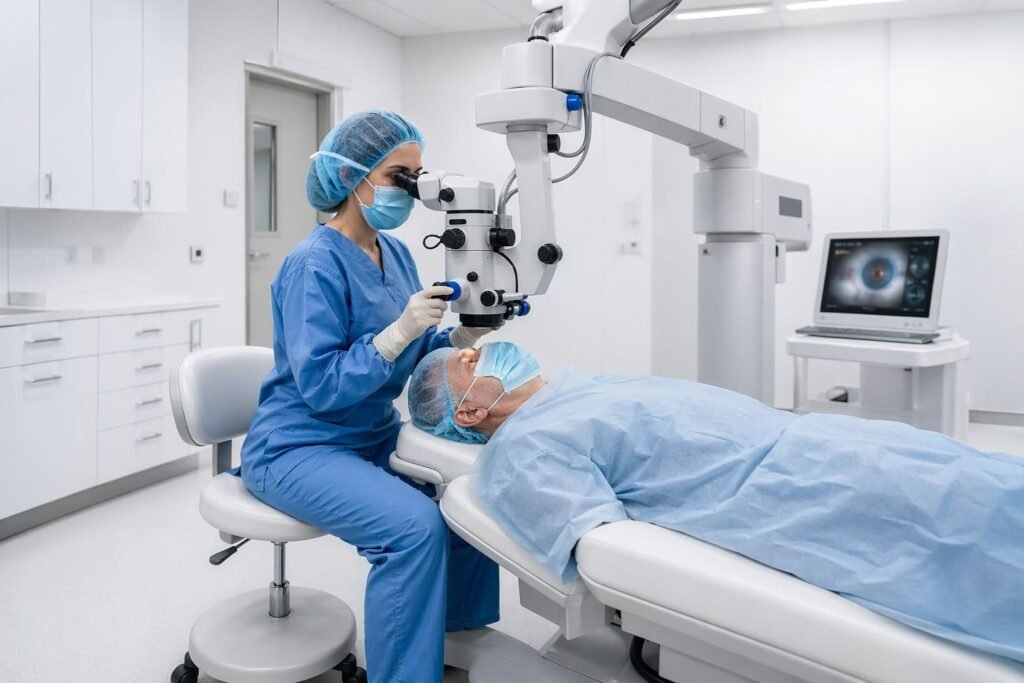
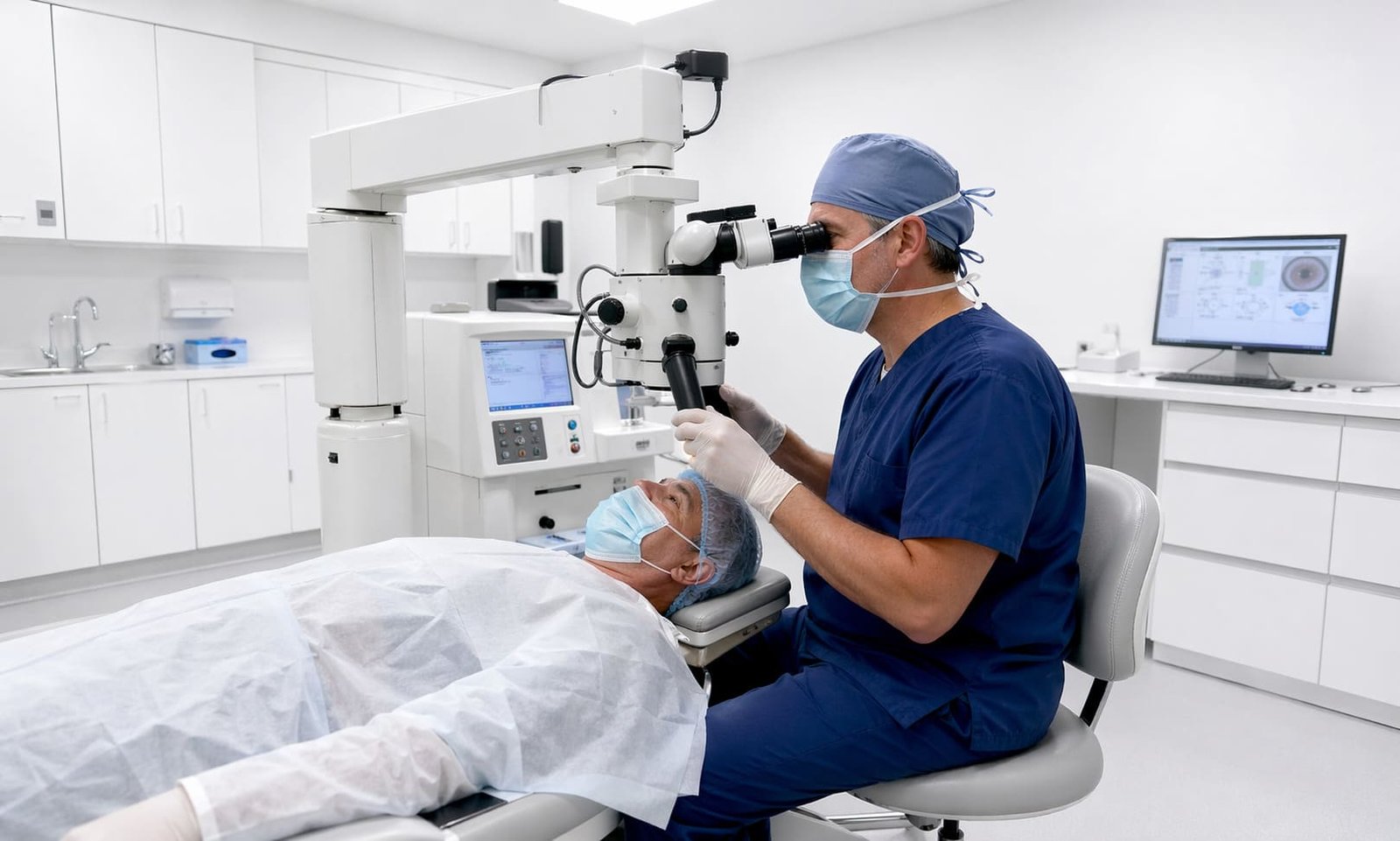
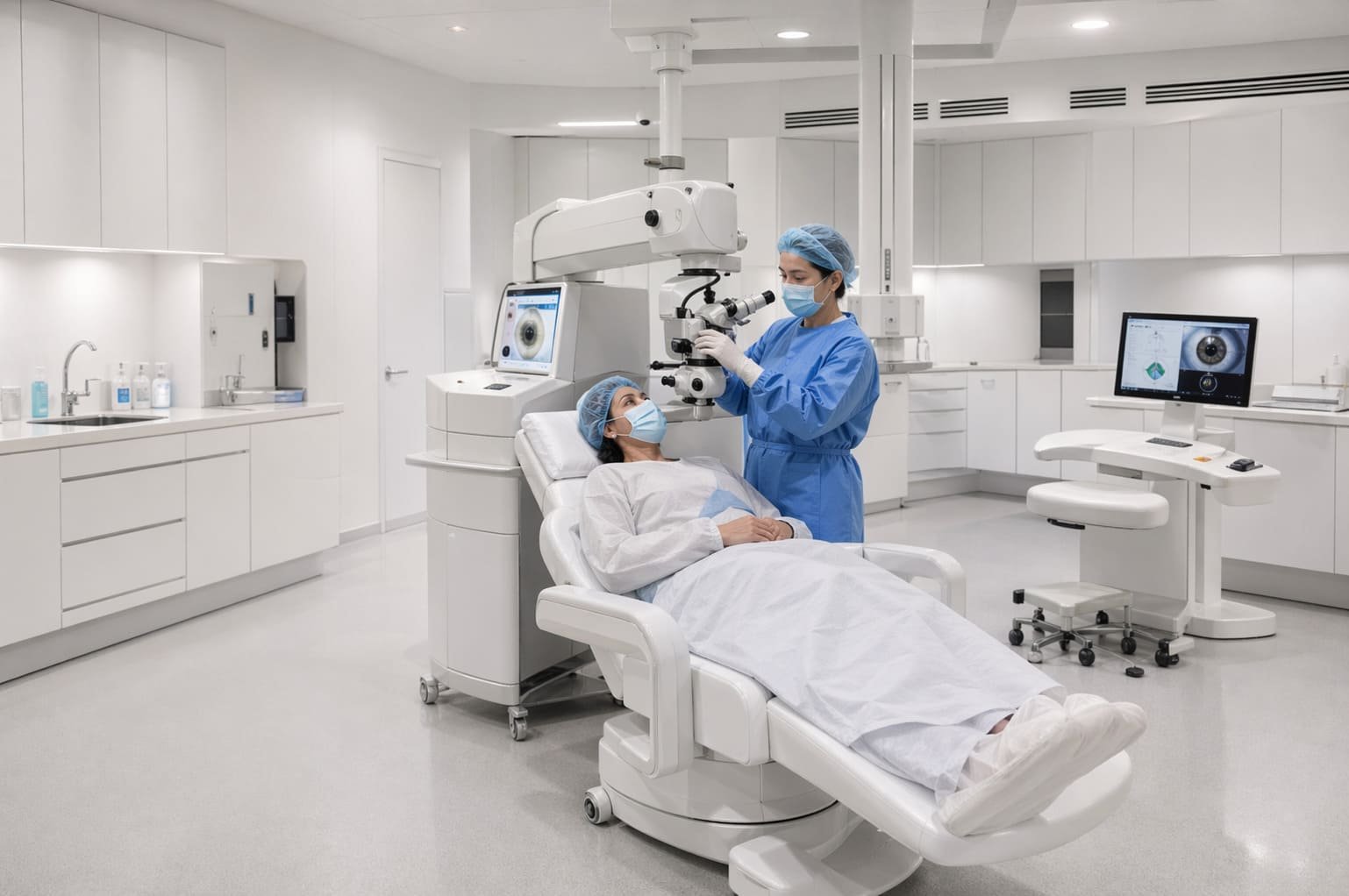
Treatment is usually performed as day-case surgery. The eye is numbed with drops, the cloudy or ageing lens is removed through a very small opening, and the new lens is placed inside the eye. Most patients go home the same day.
Recovery tends to be measured in days and weeks rather than months. Vision may begin to improve quickly, although the final result can take a little time to settle, especially if both eyes are treated on separate dates.
Discuss your vision goals with our experienced consultant and receive a thorough personal assessment.
EnquireComparing varifocals and lens replacement: long-term value and lifestyle impact
For some people, the decision comes down to convenience. For others, it is about clarity, independence, or the running cost of replacing glasses every few years.
- Varifocals usually involve ongoing costs for eye tests, new lenses, frame changes, coatings, and occasional spare pairs.
- Lens replacement involves a higher upfront cost, but it may reduce long-term reliance on glasses.
- Glasses are non-surgical and familiar, whereas surgery involves assessment, recovery, and a balanced discussion of risk.
That financial comparison matters, but lifestyle often matters more. If you wear varifocals for reading, screen work, driving, social occasions, and holidays, then glasses shape almost every part of your day. Some people are perfectly content with that. Others become increasingly frustrated by always needing the right pair, the right lighting, and the right head position.
A private lens replacement procedure generally costs in the region of £2,000 to £4,000 per eye, depending on the lens chosen and the challenge of the case. By contrast, the cost of varifocals builds gradually through repeated updates over many years. The exact balance will differ from person to person, but it is sensible to view glasses and surgery as two different spending patterns rather than as a simple cheap-versus-expensive choice.
Independence is another part of the picture. Holidays, sport, eating out, working on a laptop, reading in bed, and checking a phone in bright sunlight can all feel easier when you are less dependent on spectacles. That does not mean surgery removes glasses for everyone in every setting, but many people value the reduction in daily reliance.
Stability also plays a role. Once the natural lens has been replaced, that lens will not go on to form a cataract. For someone in their 50s or 60s who is noticing both presbyopia and early lens ageing, that can make lens replacement feel like a more durable answer than continuing to update varifocals as the eyes change.
Having a full eye health assessment before deciding on lens replacement ensures the treatment plan addresses all personal vision needs and medical factors.

Am I suitable for lens replacement surgery?
Suitability depends on the whole eye, not just on age. Many good candidates are over 50, use varifocals, and want more freedom from glasses, but a proper assessment still matters because the safest and most useful treatment varies from one person to another.
Several factors are reviewed during a consultant ophthalmologist assessment:
- Your age and prescription history
- Whether reading vision, distance vision, or both are causing difficulty
- Signs of cataract or lens ageing
- Corneal health, retinal health, and eye pressure
- Any history of glaucoma, dry eye, previous eye surgery, or other medical issues
- Your priorities, including driving, reading, screen use, and tolerance for glasses
Someone with early cataract, worsening presbyopia, and frustration with varifocals may be an obvious candidate. Another person with certain retinal conditions, untreated eye disease, or expectations that no lens can realistically meet may need a different plan.
Certain people are better suited to other procedures. If the natural lens is still healthy and the prescription pattern points elsewhere, laser vision correction or implantable contact lens surgery may be discussed instead. Honest assessment matters here, because the right operation is the one that fits the eye in front of the surgeon, not the one that sounds most appealing.
The Royal College of Ophthalmologists supports careful patient selection and clear consent in refractive surgery, and that principle is especially important in over-50s vision correction. Measurements must be precise, and the discussion should include benefits, trade-offs, and realistic expectations.
At The Vision Surgeon, Mr Mukherjee carries out the assessment personally, which means that the same consultant who advises you also decides whether lens replacement is truly appropriate for your eyes.
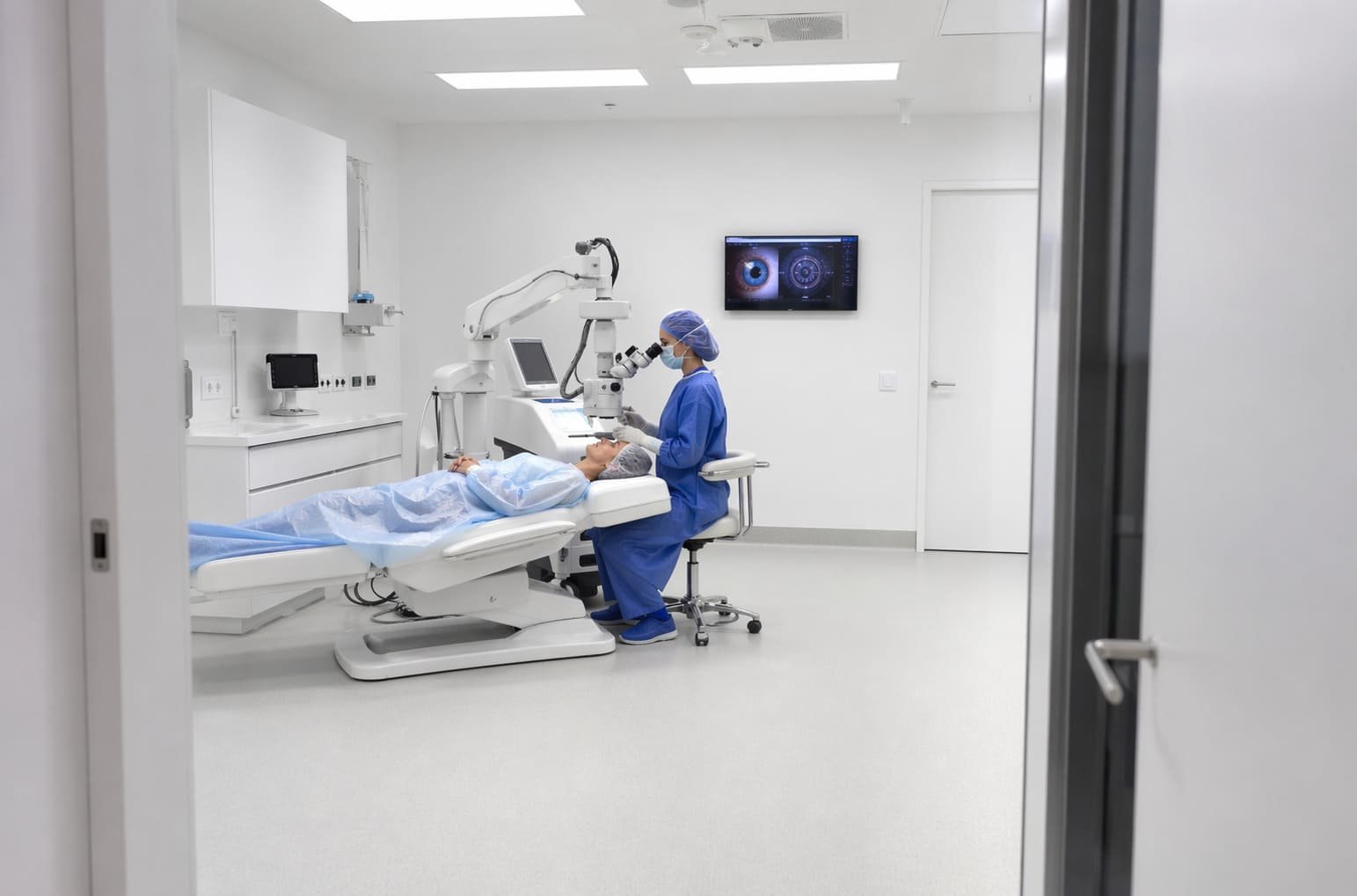
After lens replacement surgery, closely follow aftercare advice regarding eye drops and activity restrictions to support a smooth, comfortable recovery.
Risks, recovery, and what to expect from lens replacement
Every eye operation carries risk, and lens replacement is no exception. A responsible discussion should cover that clearly. Most people are mainly concerned about pain, safety, recovery time, and whether vision will feel natural afterwards.
During the early recovery period, mild grittiness, watering, blur, or sensitivity to light can occur. Those effects are often temporary. Vision frequently improves quite quickly, although each eye settles at its own pace.
Possible risks include infection, inflammation, raised eye pressure, retinal problems, unwanted visual symptoms such as glare or haloes, and the chance that glasses may still be needed for some tasks. Rare complications can be serious, which is why proper assessment, sterile technique, follow-up care, and access to an experienced consultant ophthalmologist matter so much.
Visual adaptation deserves a mention as well. A multifocal lens can reduce dependence on spectacles, but the brain still needs time to adjust to the new way of focusing. Night driving symptoms, contrast changes, or awareness of rings around lights may improve with time, but they should be discussed in advance rather than brushed aside.
A typical recovery pattern
- On the day of surgery, most people return home after a short stay and begin prescribed eye drops.
- Over the first few days, vision often starts to clear, though fluctuation is common.
- During the following weeks, the eye settles further and follow-up appointments check healing and visual progress.
Aftercare is part of the treatment, not an afterthought. Guidance usually covers eye drops, bathing, exercise, driving, and when to return to work. Good clinics also make space for questions if recovery feels slower than expected or if symptoms change in a way that needs review.
That balance between reassurance and caution is important, because informed patients usually cope better with the normal ups and downs of recovery.
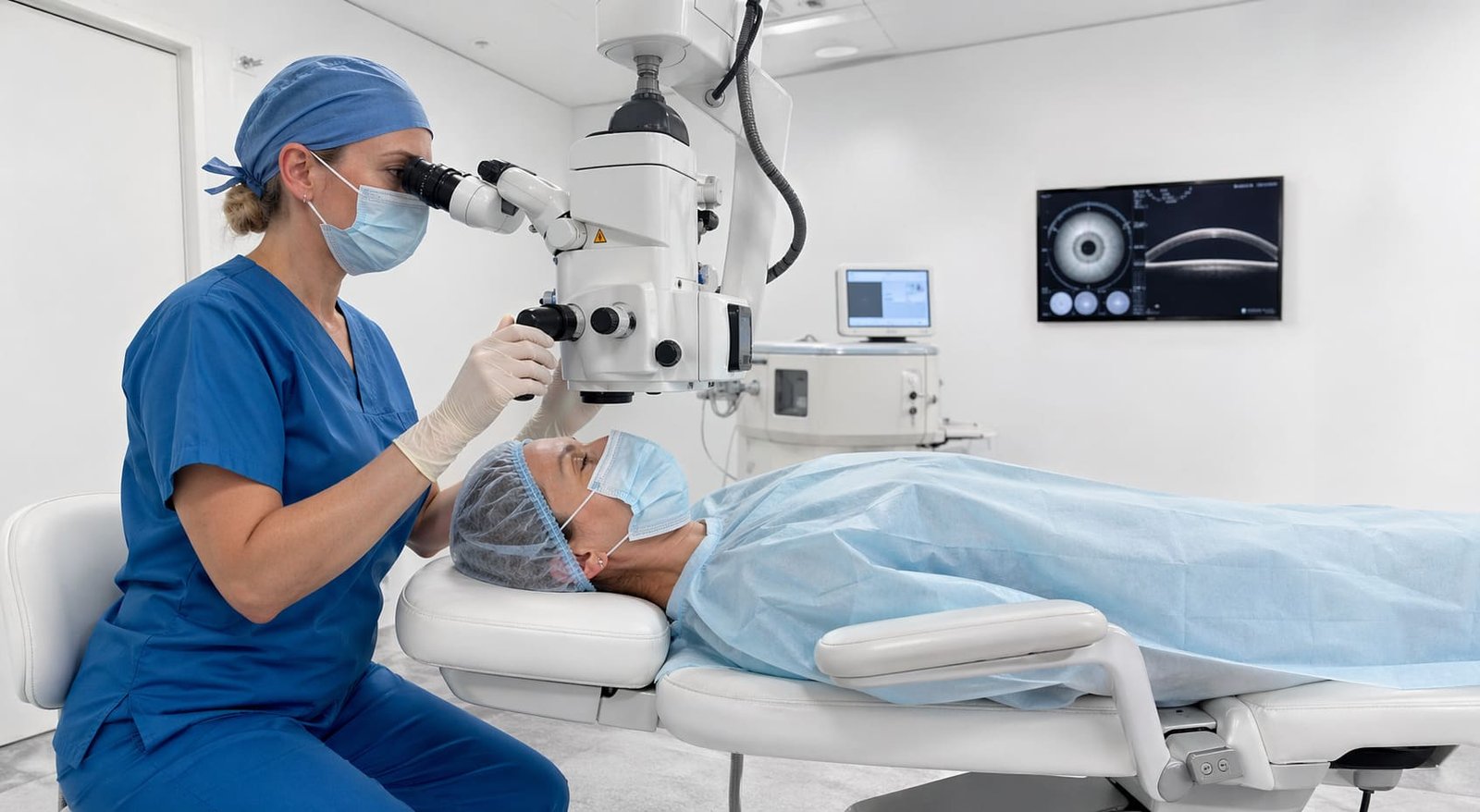
Why choose a consultant-led clinic in Colchester for your vision correction?
Where you have surgery can shape the whole experience. Convenience matters, but continuity matters as well, particularly if you are weighing up different lens options and want advice from the same person who will perform the operation.
A consultant-led clinic offers a more direct path. You are assessed by a consultant ophthalmologist, your measurements are interpreted in context, and your surgery plan is built around your eyes and your daily life. That is different from a model where testing, counselling, surgery, and aftercare are split between several people.
For patients in Essex and Suffolk, local treatment in Colchester can also remove the extra burden of travelling for surgery. Follow-up visits are simpler, family support is easier to arrange, and the whole process can feel more manageable.
Mr Mukherjee’s background is relevant here. He is a consultant ophthalmologist with Royal College of Ophthalmologists CertLRS accreditation in laser refractive surgery and additional fellowship training across refractive surgery, cornea, and glaucoma. He also leads an NHS ophthalmology unit, which gives him broad experience across routine and complex eye care.
That combination can be reassuring for people who want private treatment without feeling as though they are stepping outside mainstream specialist practice. In practical terms, it means your decision about lens replacement is being guided by someone who deals with the full spectrum of eye health, including the conditions that can affect suitability.
Colchester Eye Centre and Oaks Hospital give patients a local setting for assessment, surgery, and review, which keeps the process grounded in one place rather than sending patients elsewhere on the day of treatment.
Get answers to your questions about surgery, aftercare and the benefits of consultant-led treatment.
Message UsRethinking vision correction after 50: moving beyond glasses
Many adults assume that stronger glasses are simply part of getting older. Sometimes that is true. Sometimes it is only part of the story.
By your 50s, vision goals often become more specific. You may want to read comfortably, drive confidently, use screens without strain, and keep up with work or hobbies without constantly adjusting frames or searching for better light. Those are reasonable expectations, and they deserve more than a reflex decision to update the prescription yet again.
Glasses remain a good answer for many people. At the same time, they are no longer the only realistic option for age-related changes such as presbyopia and lens ageing. Modern lens replacement has given many over-50s a different route, one that can align more closely with how they actually live.
The most useful starting point is to think beyond the glasses you wear now and focus on the kind of vision you want over the next decade. That wider view often changes the conversation.