Can you have lens replacement surgery in Essex and avoid travelling to London?
Yes. Lens replacement surgery is available in Essex, including Colchester, so many patients do not need to travel to London for assessment, surgery, or aftercare. For the right person, a local consultant-led service can offer the same practical pathway many people assume only exists in a major city, with the added benefit of easier appointments and follow-up close to home.
Understanding lens replacement surgery and who it is for
Lens replacement surgery, also called refractive lens exchange or RLE, involves removing the eye’s natural lens and replacing it with an artificial lens to correct vision. It uses the same basic surgical approach as cataract surgery, but it is performed for vision correction before a cataract becomes the main issue. Depending on the lens chosen, it may reduce reliance on glasses for distance, reading, or both.
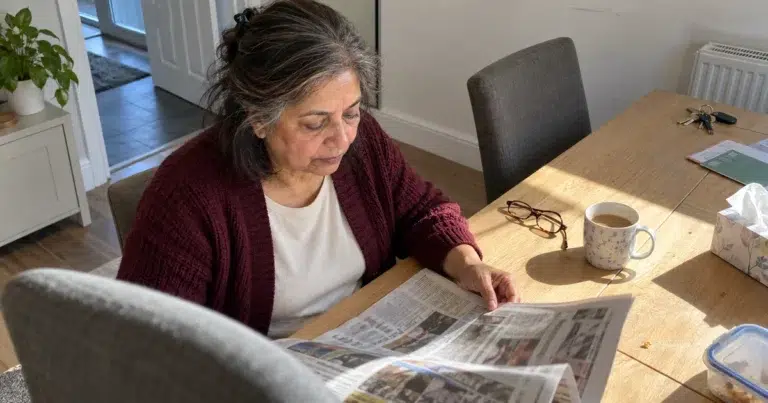
Many people who look into lens replacement in Essex are in their 50s or 60s, although suitability depends on the individual rather than age alone. The procedure is often considered by people whose reading vision is getting worse, whose prescription remains inconvenient despite glasses or contact lenses, or who have been told that laser eye surgery may not be the most suitable option.
A few groups commonly explore this route:
- Adults with age-related reading changes, often called presbyopia
- People with a strong long-sighted or short-sighted prescription
- Patients who want an alternative to ongoing dependence on varifocals
- Those with early lens changes who are already noticing declining visual quality
Local access matters for simple reasons. Pre-operative measurements, the procedure itself, and follow-up appointments are easier to manage when they happen in Essex or Suffolk rather than in central London. For someone arranging transport, time off work, or support after surgery, a local patient process can feel much more manageable than a long day of travel.
Another misconception deserves clearing up. Advanced eye care does not sit only in London hospitals or city-centre clinics. Standards still need to align with professional expectations shaped by bodies such as the Royal College of Ophthalmologists, the General Medical Council and the Care Quality Commission, whether care is delivered in a capital city or closer to home.
The patient process: what to expect from consultation to recovery in Essex
People often feel calmer once they can picture the process from start to finish. Lens replacement surgery follows a structured pathway, and staying local usually makes each stage simpler to organise.
First consultation
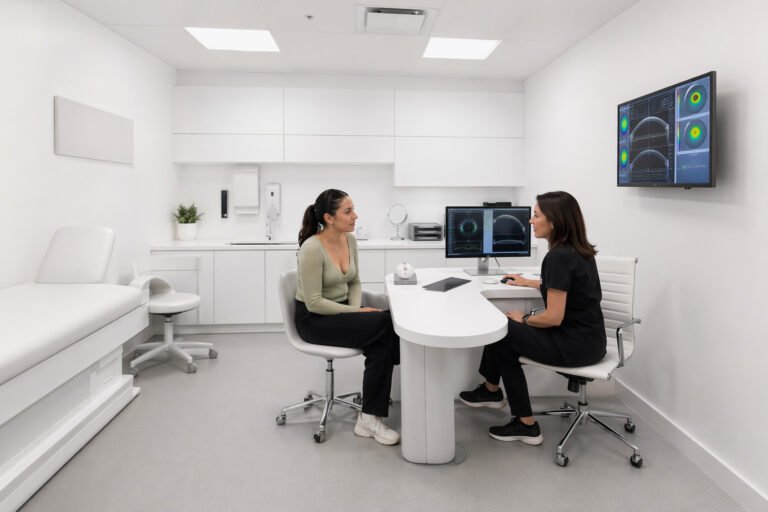
Your first appointment usually covers your prescription history, symptoms, general eye health and what you want from surgery. Some patients mainly want freedom from reading glasses. Others are more concerned with distance vision, glare, or the inconvenience of changing between several pairs of spectacles.
During this visit, the consultant assesses whether lens replacement makes sense in the context of your age, prescription and lifestyle. A local service also means the conversation is less likely to feel rushed, especially if you want time to talk through lens choices such as monofocal or multifocal lenses.
Pre-operative assessment
Once surgery looks appropriate, a fuller assessment is needed. This stage includes detailed measurements of the eye, checks on the cornea and retina, and calculations used to select the artificial lens power.
Those measurements matter because lens replacement surgery is highly personalised. Small differences in the shape and length of the eye can affect lens choice, and that is why a proper assessment is a safety step as much as a planning step.
Day of surgery
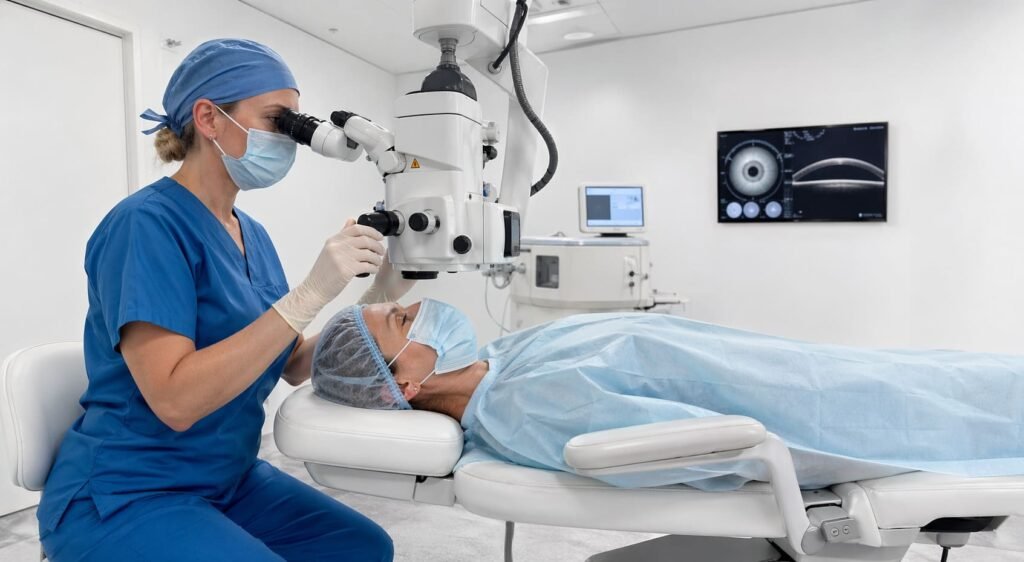
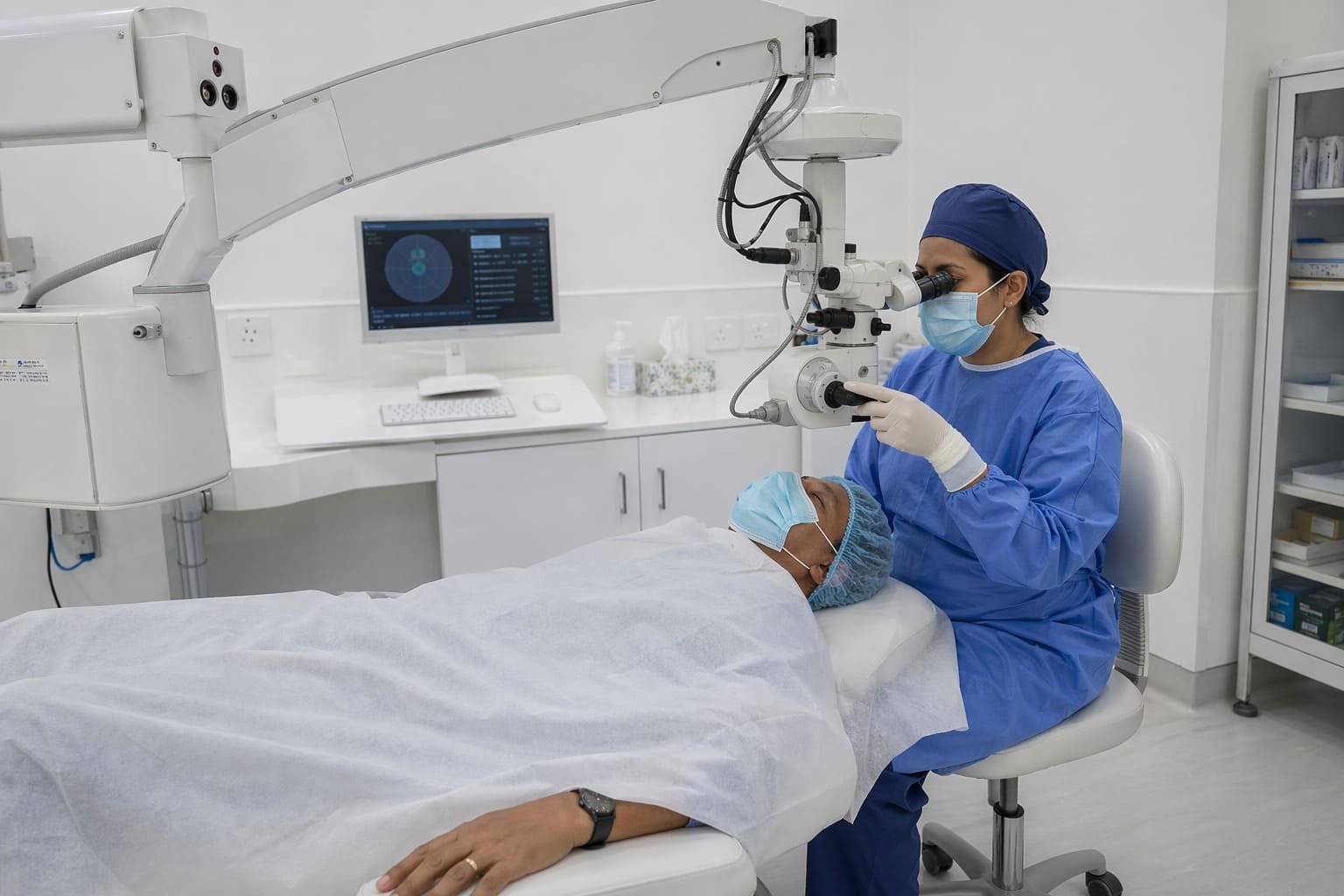
On the day itself, lens replacement surgery is usually carried out as a day-case procedure. Patients attend the clinic or hospital, have the eye prepared with drops, and then undergo surgery under local anaesthetic, commonly with the support of a light sedative if appropriate.
Because the treatment is local, practical arrangements are easier. A process to Oaks Hospital or the Colchester Eye Centre is very different from organising same-day travel into London, particularly if your vision will be blurred straight afterwards and someone needs to accompany you home.
Aftercare and recovery
Most people notice visual improvement quite soon, although vision can fluctuate in the early period while the eye settles. You will usually need eye drops for a set period, and you will attend follow-up reviews to check healing, eye pressure and the quality of vision.
Continuity matters here. Seeing the same consultant through assessment, surgery and aftercare gives context to every review. If a patient mentions haloes at night, dry eye symptoms or an uneven visual result between the two eyes, those concerns can be interpreted against the full history rather than as an isolated complaint at a remote follow-up clinic.
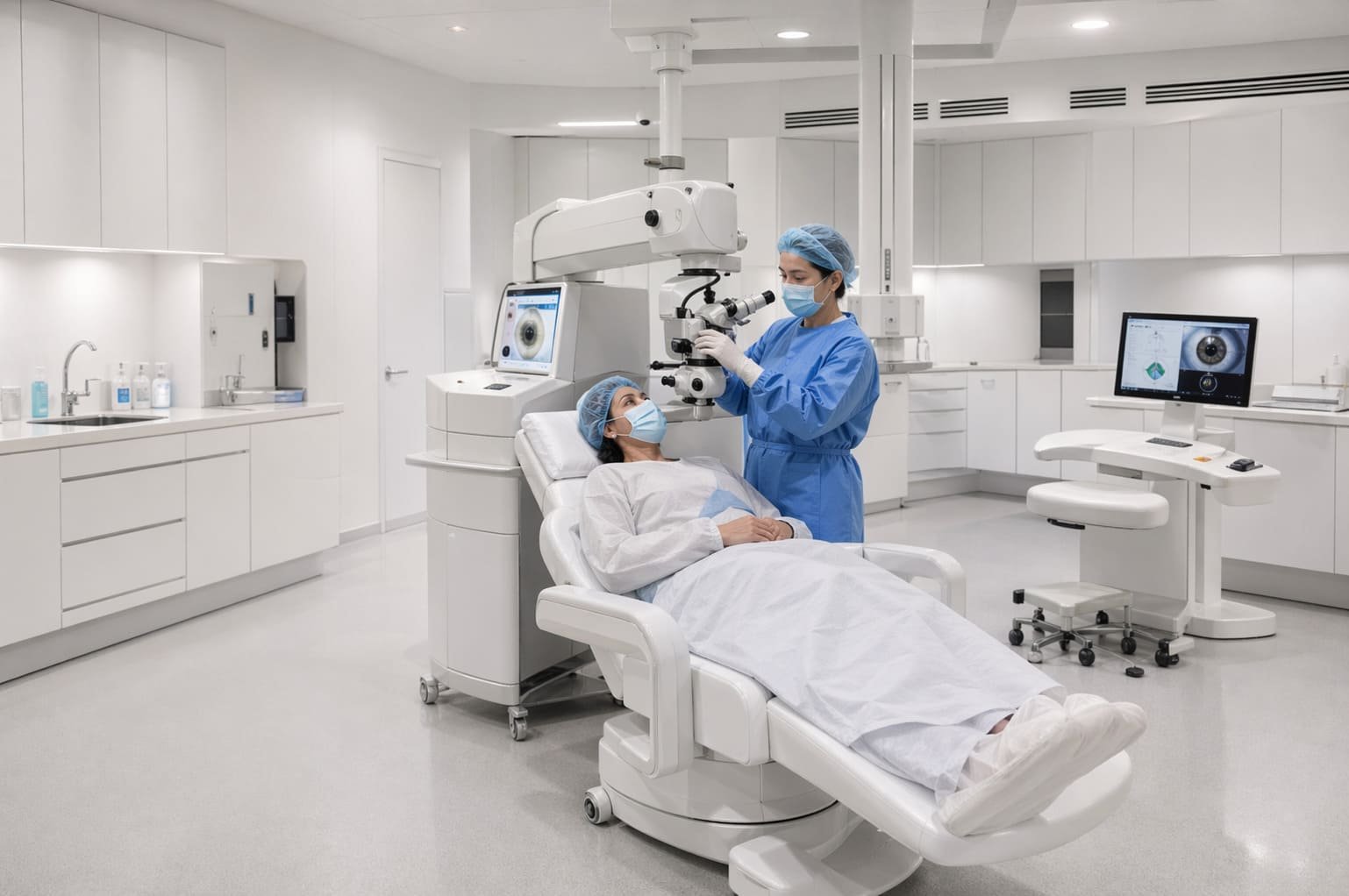
Discuss your vision goals with our experienced consultant and receive a thorough personal assessment.
EnquireAm I suitable? Key eligibility factors for lens replacement surgery
Suitability for lens replacement surgery depends on more than wanting to be rid of glasses. The right candidate is someone whose eyes, prescription and expectations all fit the procedure.
A general guide looks like this:
- Age-related reading problems are often a starting point, especially from the late 40s onwards
- Higher prescriptions can make lens replacement more attractive than corneal laser surgery in some cases
- Stable general eye health is important, including a healthy retina and optic nerve
- Realistic expectations are needed, particularly around night vision, reading tasks and the possibility of still needing glasses in some situations
Several factors can make a person less suitable. Significant retinal disease, uncontrolled glaucoma, active eye inflammation, certain corneal problems or untreated dry eye may alter the picture. Some patients are better suited to another option, such as LASIK, TransPRK, implantable contact lens surgery, or standard cataract surgery if a cataract is already the main cause of blurred vision.
Prescription pattern matters as well. Someone over 50 whose distance and near vision are both becoming frustrating may find lens replacement more logical than laser treatment on the cornea. By contrast, a younger patient with a healthy lens and stable prescription may be better assessed for laser vision correction or an implantable lens.
A thorough assessment is therefore a quality safeguard, not an obstacle placed in the way. Guidance from the Royal College of Ophthalmologists and wider GMC expectations around consent and patient safety both support careful selection, because the best procedure is the one that suits the eye in front of the surgeon.
A detailed pre-operative assessment can identify subtle eye health factors that may influence which lens type will work best for you.

Risks, benefits, and realistic outcomes of lens replacement surgery
Lens replacement surgery can offer major practical benefits, but it still counts as surgery inside the eye and needs a balanced discussion. Good consent depends on understanding both sides clearly.
Potential benefits include:
- Reduced reliance on glasses or contact lenses
- Correction of distance vision, reading vision, or both depending on lens choice
- No future cataract developing in the treated lens, because the natural lens has been replaced
- A single approach that can address age-related focusing problems and refractive error together
Recognised risks also need to be part of the picture:
- Infection, which is uncommon but serious if it occurs
- Inflammation or raised eye pressure after surgery
- Glare, haloes, or reduced quality of vision in some lighting conditions
- Retinal problems in a small number of patients, with risk varying by eye type and prescription
- Residual prescription, which may mean glasses are still useful for some tasks or that further treatment is discussed
Results vary from person to person. Many patients achieve a high level of functional vision after lens replacement, but no responsible surgeon should promise a perfect outcome or complete freedom from glasses in every setting. Multifocal lenses can widen the range of vision, yet they may also bring trade-offs, especially around night-time visual effects.
Consultant-led care influences safety in practical ways. Continuity supports better pre-operative selection, clearer consent, and faster recognition of anything unusual in recovery. At The Vision Surgeon, patients are assessed and treated by Mr Mukherjee personally, which keeps the decision-making consistent from the first measurements to aftercare.
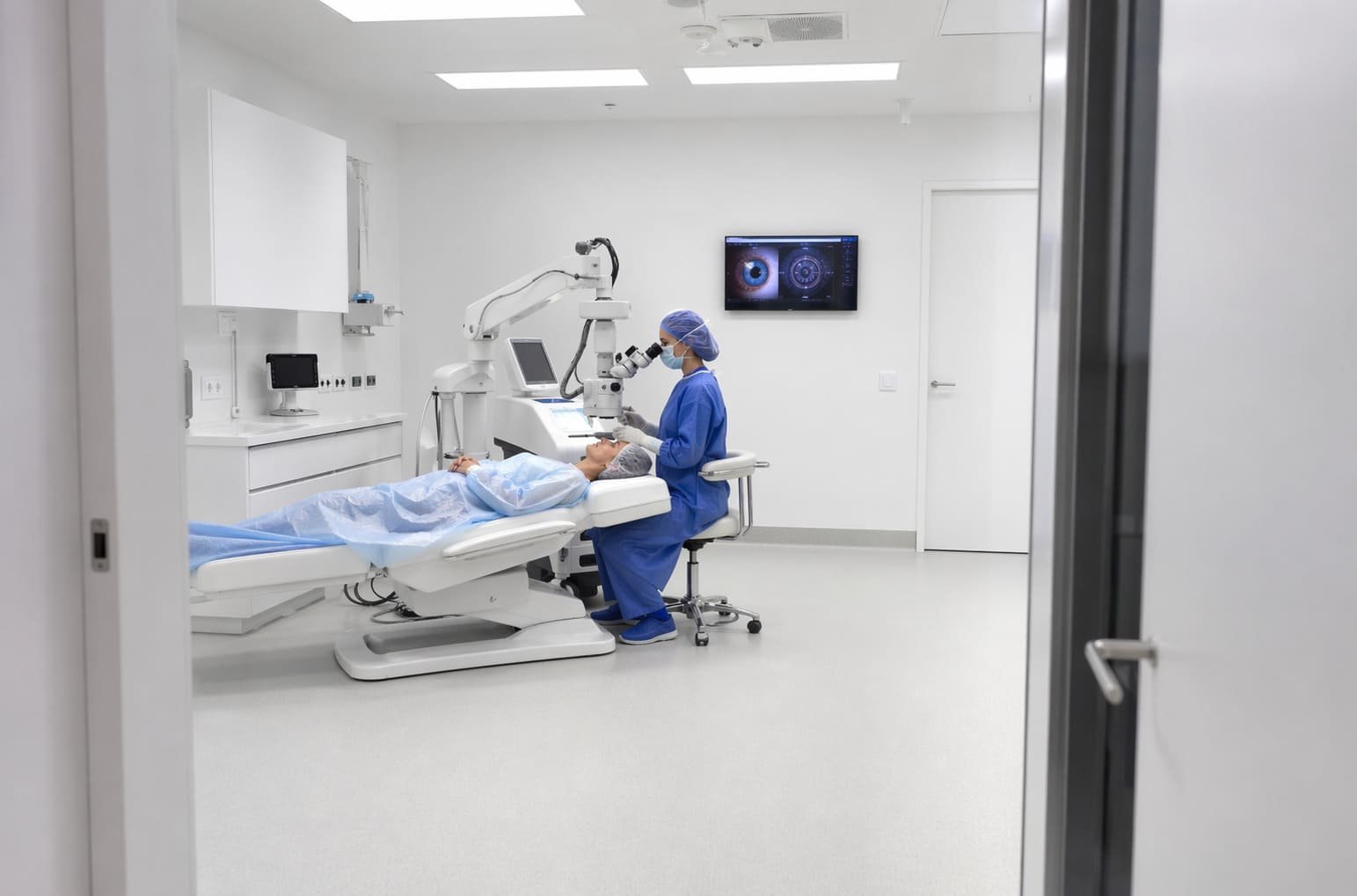
Continuity with the same consultant through assessment, surgery and aftercare often leads to a smoother experience and greater patient confidence.
Indicative costs and value: lens replacement surgery in Essex
Private lens replacement surgery in Essex often falls within a broad range of about £2,000 to £4,000 per eye. The final figure depends on the lens selected, the challenge of the prescription, the investigations needed before surgery and the aftercare package included.
Price differences usually reflect clinical choices rather than marketing labels. A monofocal lens, which typically aims to give clear vision at one main distance, is different from a multifocal lens intended to reduce glasses use across more than one range. Extra testing or treatment planning can also affect the total.
When comparing fees, it helps to look at what is actually included. Some providers package assessment, surgery and follow-up together, whereas others may separate parts of the pathway. A lower headline price can therefore describe a different level of service.
Value also sits in the shape of care, in the invoice. Local consultant-led surgery can spare repeated travel into London, reduce time away from work or family, and simplify follow-up if you need reassurance during recovery. Over many years, some patients also weigh surgery against the ongoing cost of glasses, contact lenses, solutions and prescription changes, especially once varifocals enter the picture.
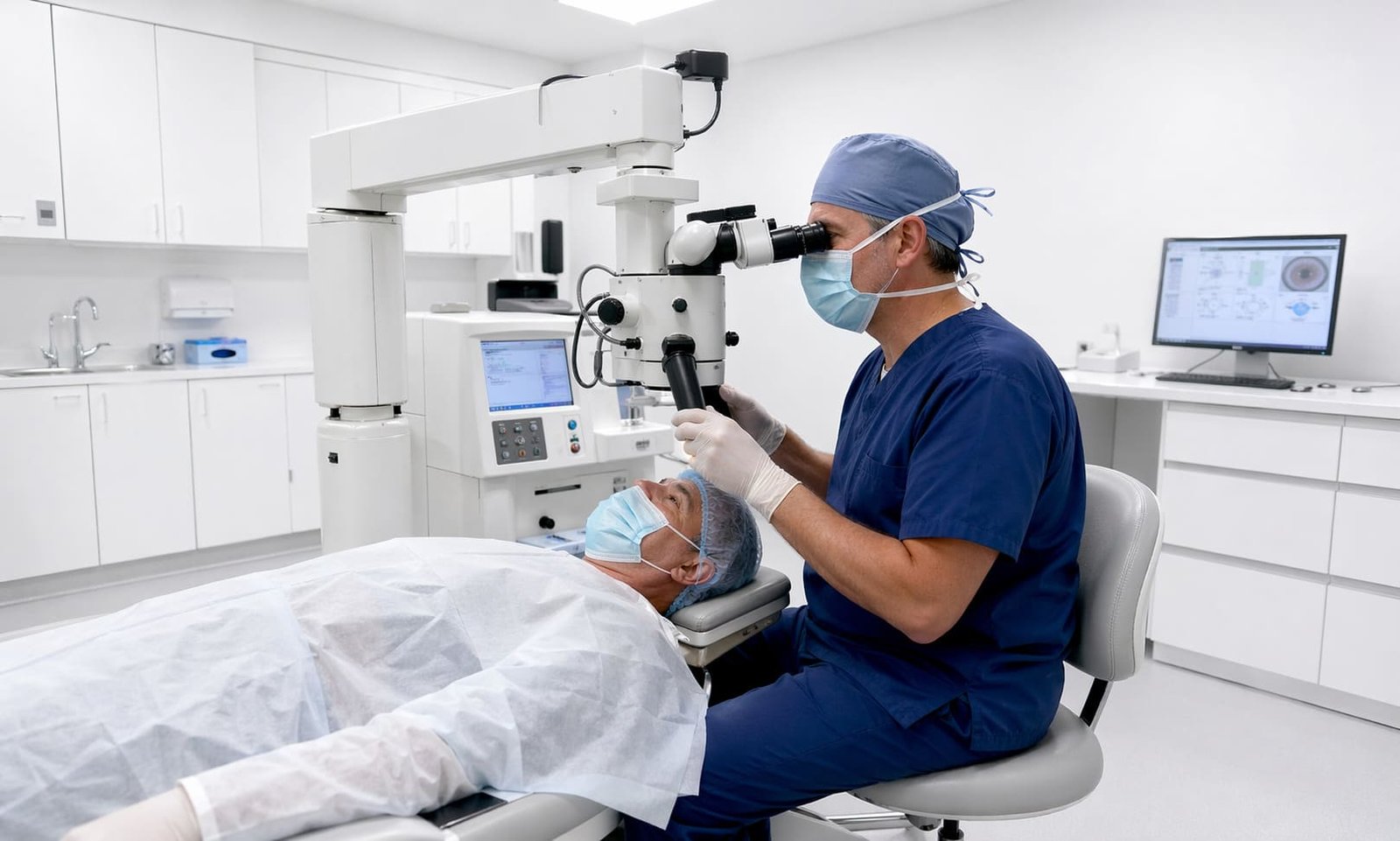
Why choose lens replacement surgery locally in Colchester?
For many people in Essex and Suffolk, Colchester offers a practical middle ground between convenience and specialist care. You can attend consultations, have surgery, and return for reviews without building your whole treatment plan around a London trip.
Several local advantages stand out. A consultant-led model means the same specialist can assess suitability, choose the lens strategy and perform the operation. That continuity is particularly relevant in refractive lens exchange, where small details about work, hobbies, night driving and reading demands can shape the recommendation.
Location also changes the patient experience in ordinary but meaningful ways. Free parking, easier drop-off arrangements and shorter travel times can make surgery day less tiring. For older patients, or anyone anxious about eye treatment, that reduction in logistical strain can be as important as the procedure itself.
Mr Mukherjee’s background adds another layer of reassurance. He is a consultant ophthalmologist with NHS leadership experience and triple fellowship training across refractive surgery, cornea and glaucoma, which gives him a broad view of who is suitable for lens replacement and who may need a different answer. That breadth matters because good refractive care depends on honest selection, not on forcing every patient into the same procedure.
A local service also avoids a common frustration associated with larger systems, namely seeing one clinician at assessment and another on surgery day. In a treatment as personal as lens surgery, that consistency can shape confidence from the first appointment right through to the final post-operative check at Colchester Eye Centre or Oaks Hospital.
Get answers to your questions about surgery, aftercare and the benefits of consultant-led treatment.
Message UsLooking ahead: the future of eye surgery access in Essex
Access to advanced eye surgery in Essex is becoming easier to understand and easier to compare. Patients are more informed than they once were, and many now look closely at who performs the surgery, where it happens, and how aftercare is organised before making a decision.
Several shifts are helping local services feel more viable:
- Patients increasingly expect named consultant care rather than a chain-style pathway.
- Lens technology and diagnostic planning continue to support more personalised treatment choices.
- Local access matters more as people weigh convenience, continuity and recovery alongside surgical expertise.
That change does not mean every person will choose the same route. Some will still prefer London, and others will decide that surgery is not right for them at all. Yet the old assumption that high-level vision correction requires a city-centre provider is fading, and that gives people across Essex and Suffolk a stronger position from which to make a calm, informed choice.