
If an optician says you are not suitable for laser, does that rule out every type of eye surgery?
No. Being told you are not suitable for laser eye surgery does not automatically mean you cannot have any form of vision correction surgery. Laser suitability and overall surgical suitability are different things, and a consultant ophthalmologist can assess whether another procedure, such as lens replacement, implantable contact lens surgery, cataract surgery, or TransPRK, may be a better fit.

Table of Contents
Direct answer: what does “not suitable for laser” really mean?
Hearing that you are not suitable for laser can feel like a full stop, especially if you were hoping to reduce your dependence on glasses or contact lenses. In many cases, though, it simply means one type of procedure may not be the right match for your eyes.
Laser eye surgery has specific suitability criteria. A person may be outside the usual prescription limits, have a cornea that is too thin for LASIK, show signs of dry eye, or have an eye condition that needs a different approach. None of that automatically means surgery is off the table.
An optician in screening and referral. Under the standards expected by bodies such as the General Optical Council, opticians identify potential concerns and advise when specialist review is needed. A consultant ophthalmologist then carries out the fuller medical assessment needed to decide whether another route is possible.
Common reasons for being told you are not suitable for laser include:
- a prescription that is very high or still changing
- corneal thickness or shape that does not suit LASIK
- dry eye symptoms
- early cataract changes
- signs of keratoconus or another corneal condition
That distinction matters, because “not suitable for laser eye surgery” often means “you may need a different procedure”.
Who is typically told they are not suitable for laser eye surgery?
Several groups of people hear this advice more often than others, and the reason is usually clinical rather than arbitrary. Laser treatment needs the right prescription, the right corneal structure, and healthy eyes overall.
Younger adults can be turned down if their prescription is still changing. If vision has not stabilised, treatment may be postponed because the eye itself is still changing.
Older adults are often told laser is not the best option if early lens changes are already developing. Once cataract or age-related stiffening of the natural lens becomes part of the picture, lens-based surgery may make more sense than corneal laser treatment.
A very strong short-sighted or long-sighted prescription can also put someone outside standard laser eye surgery eligibility. In that situation, a lens implant or lens replacement may correct vision more effectively.
Corneal health is another common reason. A thin cornea, an irregular corneal shape, or signs of keratoconus can make LASIK unsuitable. Surface laser techniques such as TransPRK may still be considered in selected cases, but some people will be better served by a non-laser option.
Dry eye often complicates the picture as well. Mild symptoms do not always rule surgery out, but significant dryness may affect comfort, healing, and visual quality after certain procedures.
Many people first hear this from an optician during a routine sight test or a referral conversation. That screening role is useful, but it is still only the starting point. A more detailed surgical assessment can sort out whether you are unsuitable for LASIK specifically, unsuitable for all laser procedures, or suitable for something entirely different.

What other vision correction surgeries are available?
Laser surgery is only one part of modern refractive care. If LASIK is not suitable, several alternatives may still offer good vision correction, depending on your age, prescription, eye health, and lifestyle.
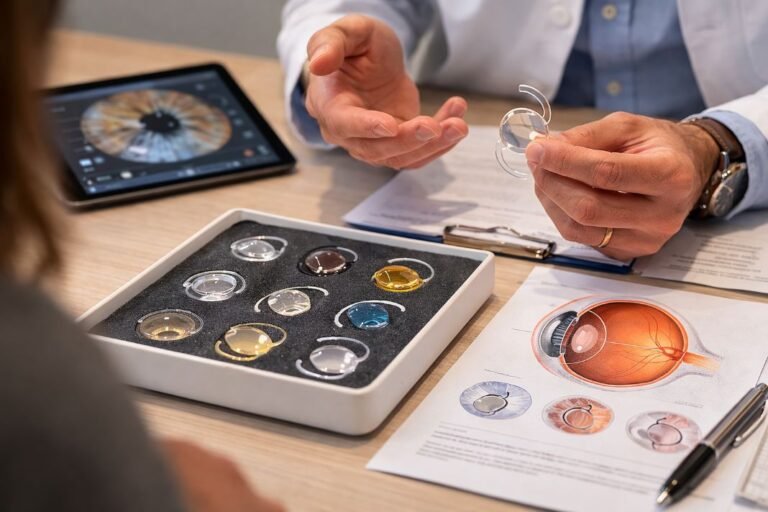
Refractive lens exchange
Refractive lens exchange, also known as lens replacement surgery, removes the eye’s natural lens and replaces it with an artificial lens. This is often considered for people over 50, especially if their prescription is changing, reading vision has worsened, or early cataract changes are present.
Because the natural lens is replaced, future cataracts do not develop in that eye. Some patients choose multifocal lenses to reduce their need for distance and reading glasses, although suitability for that type of lens depends on the individual eye and visual priorities.
Implantable contact lens surgery
Implantable contact lens surgery, usually called ICL, places a lens inside the eye without removing the natural lens. This can suit younger patients with high prescriptions, especially when the cornea is not ideal for laser treatment.
ICL is a non-laser eye surgery option, and it is often discussed where prescription strength is the main barrier to laser. Adequate space inside the eye is important, so careful measurements are needed before it can be recommended.
Cataract surgery as vision correction
If lens clouding is already affecting vision, cataract surgery may be the appropriate answer. The cloudy lens is removed and replaced with an artificial lens, and the lens choice can often be planned to reduce dependence on glasses.
Some people first seek laser because they want clearer distance vision, then find that cataract surgery is actually the more logical treatment once the eye is properly examined. In that setting, treating the lens rather than the cornea addresses the source of the problem.
TransPRK
TransPRK is a surface laser technique that does not involve creating a corneal flap. It may be considered when LASIK is unsuitable because of corneal thickness or shape, although recovery is usually slower and early discomfort can be greater than with LASIK.
For the right eye, this can widen the range of laser surgery alternatives. A person who is unsuitable for LASIK is not always unsuitable for every laser procedure.
At The Vision Surgeon, this broader view matters because the real question is not “Can I have LASIK?” but “Which procedure fits my eyes best?”

How is suitability for different eye surgeries assessed?
A proper eye surgery assessment goes well beyond a routine sight test. The aim is to work out which procedure is suitable, which should be avoided, and what result is realistically possible for that particular eye.
A consultant ophthalmologist looks at the whole picture, including your prescription, corneal shape, lens health, general eye health, age, work, hobbies, and medical history. That is why a specialist review can lead to a different answer from an initial screening conversation.
A typical suitability consultation includes:
- Measuring your prescription and checking whether it has been stable.
- Scanning and mapping the cornea, often with corneal topography, to assess thickness and shape.
- Examining the natural lens for early cataract or age-related change.
- Checking tear film and the eye surface for dry eye or inflammation.
- Reviewing your medical history, medications, and visual goals.
Those findings are then put together into a recommendation. In some cases, the answer is that surgery is suitable but the procedure is different from the one you expected. In others, the safest advice may be to delay treatment or avoid surgery entirely.
Mr Mukherjee’s CertLRS qualification from the Royal College of Ophthalmologists reflects specialist training in laser refractive surgery, but the assessment itself is broader than laser alone. The point of the consultation is not to fit everyone into one treatment pathway. The point is to find the safest and most appropriate option, or to say clearly when surgery is not advisable.
Risks, realistic expectations, and safety considerations
Any eye procedure needs a balanced discussion of benefits, side effects, limitations, and risk. That is part of informed consent, and it matters just as much when surgery is an alternative to laser as when laser is being considered.
Different operations carry different profiles. Laser procedures can involve dry eye symptoms, glare, halos, or the need for enhancement treatment. Lens-based procedures, including refractive lens exchange and cataract surgery, can involve risks such as infection, inflammation, retinal complications, or visual effects linked to certain lens types. ICL surgery brings its own considerations, including eye pressure and lens positioning.
Expected vision also varies. Some patients achieve excellent distance vision and still need reading glasses. Others choose multifocal lenses and accept a greater chance of halos in return for more spectacle independence. A person with keratoconus, dry eye, or other eye disease may have a more limited visual outcome than someone with otherwise healthy eyes.
Safety in UK eye care sits within a clear regulatory framework, including oversight from the General Medical Council and the Care Quality Commission, alongside professional guidance from the Royal College of Ophthalmologists. Those standards support proper assessment, honest consent, and suitable follow-up.
Good surgical decision-making starts before the procedure itself. An eye that is wrong for LASIK may be right for ICL, wrong for surgery altogether, or best treated after another issue has first been addressed.
Cost guidance and value of personalised care
Cost matters, and it is sensible to look at price alongside suitability, safety, and likely benefit. Eye surgery pricing varies because the procedures themselves vary, and so do the lenses, technology, and aftercare involved.
Indicative private price ranges are often as follows:
- LASIK: about £1,400 to £1,800 per eye
- TransPRK: usually in a similar range to LASIK
- Lens replacement or cataract surgery: about £2,000 to £4,000 per eye, depending on lens choice
- ICL surgery: about £3,000 per eye
Several factors affect the final figure. Lens replacement and cataract surgery usually cost more when premium lens options are chosen. ICL pricing reflects the lens implant itself and the level of pre-operative measurement required. Consultant-led care can also differ from volume clinic pricing because the experience is built around personal assessment and continuity.
Long-term value is worth considering as well. Years of glasses, prescription sunglasses, contact lenses, solutions, and regular changes can add up, particularly for younger adults with strong prescriptions. Even so, surgery should never be reduced to a simple pounds-per-year calculation, because suitability and outcome matter more than headline price.
For that reason, final pricing should always follow a proper examination of the eye rather than a generic online estimate.

Why local consultant-led care matters
Choosing a local surgeon is about more than convenience, although being treated in Colchester rather than travelling further afield certainly makes appointments and aftercare easier for many people in Essex and Suffolk. Continuity is the bigger issue.
In a consultant-led model, the same surgeon assesses your eyes, explains the options, performs the surgery, and reviews your recovery. That continuity can be reassuring, especially if your case is not straightforward or if you have already been told you are not suitable for laser.
Large clinic models can work differently, with screening and surgery separated between different clinicians or sites. Some patients are perfectly comfortable with that arrangement. Others prefer to know exactly who is making the recommendation and who will carry out the procedure.
Mr Mukherjee combines private refractive practice with senior NHS consultant work, which gives added depth when assessing corneal disease, cataract, glaucoma, and more complex eyes. That breadth is particularly relevant for people whose optician advice has left them uncertain, because the answer may lie outside standard laser pathways.
A local, named surgeon also means aftercare happens close to home, with less disruption if extra review is needed in the first days or weeks after treatment.
Looking beyond laser: the importance of a personalised approach
A “no” to laser is often a “needs a different plan” rather than a dead end. Eyes vary too much for one-size-fits-all advice, and the best procedure depends on factors that only become clear during a full medical assessment.
One person may be unsuitable for LASIK because the cornea is thin, yet still be suitable for TransPRK. Another may be better served by ICL because the prescription is too high for corneal laser treatment. Someone in their late 50s with early lens change may find that lens replacement is the more logical route.
That is why a second opinion from a consultant ophthalmologist can be so useful after an optician has raised concerns. The question is not whether laser was refused. The question is whether your eyes still have a safe and sensible surgical option, and in many cases they do.