
Do you need to travel to London to have laser eye surgery?
No. you do not need to go to London for laser eye surgery. Many people have laser eye surgery, lens replacement surgery, or other vision correction procedures safely and effectively much closer to home, with qualified professionals like The Vision Surgeon in Essex. Provided the clinic offers the right expertise, technology, and aftercare. The most useful question is less about geography and more about who assesses you, who performs the procedure, and how your care is managed from start to finish.
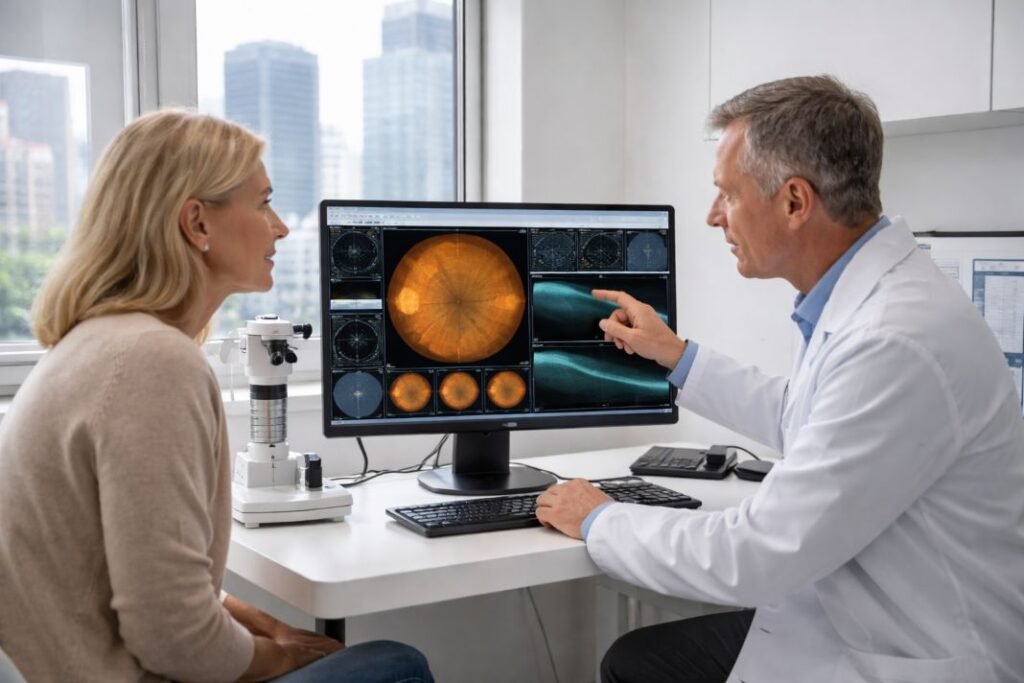
Table of Contents
Understanding the assumption: why London is seen as the centre for eye surgery
Plenty of patients start with the same belief: if you want the highest standard of private eye surgery, you go to London. That idea is understandable. London has long been associated with specialist hospitals, teaching centres, and a dense concentration of private medical services.
History plays a part in that reputation. For many years, patients with unusual eye conditions or those seeking private treatment often did travel into the capital because specialist services were more visibly concentrated there. A familiar address in a major city can still feel reassuring, especially for something as personal as eyesight.
Private eye surgery in the UK has changed, though. Consultant ophthalmologists now practise in regional centres with access to strong hospital facilities, regulated clinical environments, and modern diagnostic equipment. NHS consultants also work across both public and private settings, which means expertise is no longer tied to a London postcode.
A few assumptions still shape the decision:
- London must have better technology
- A local clinic must offer fewer procedures
- Complex prescriptions can only be treated in the capital
Those assumptions do not always reflect current practice. In many cases, the bigger difference lies in the model of care, including whether you see the same surgeon throughout, how aftercare is arranged, and whether your treatment takes place where you were assessed or somewhere else entirely.
Who might consider travelling to London for laser eye surgery?
Some readers worry that their case is too complex for local treatment. That concern is common, especially if you have a high prescription, dry eyes, astigmatism, previous eye problems, or you have been told that you are unsuitable elsewhere.
A small number of people may still choose to travel for specialist eye surgery. Rare corneal disease, unusually complex anatomy, or a need for highly niche tertiary care can sometimes lead to referral into larger specialist centres. That is more relevant to uncommon medical situations than to routine laser vision correction.
Personal preference also matters. Somebody may want a second opinion from a specific consultant ophthalmologist or may simply feel more comfortable being seen in London. Preference is valid, but it is different from medical necessity.
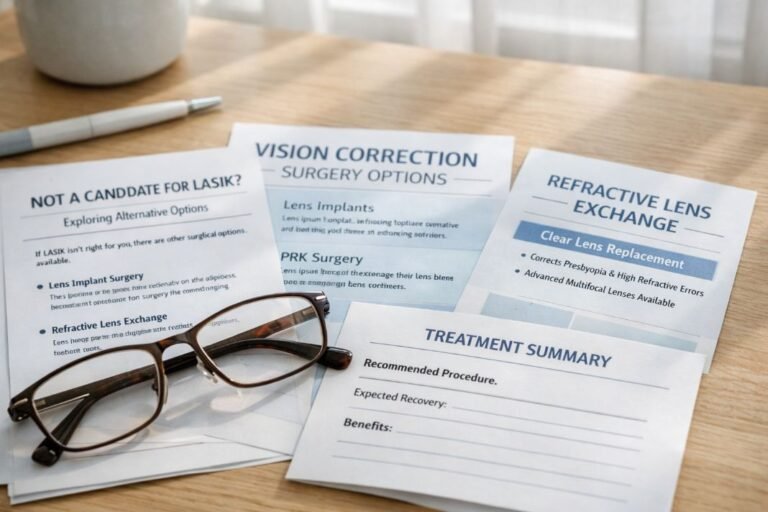
For most patients considering LASIK, which stands for Laser-Assisted In Situ Keratomileusis, or TransPRK, a surface laser treatment without a corneal flap, local assessment is usually the sensible starting point. The same applies to refractive lens exchange, also known as lens replacement surgery, and implantable contact lens surgery, where a lens is placed inside the eye to correct vision. Suitability depends on your eyes, your prescription, your age, and your visual goals, not on the city where the consultation happens.

What to expect from laser eye surgery locally in Colchester and Essex
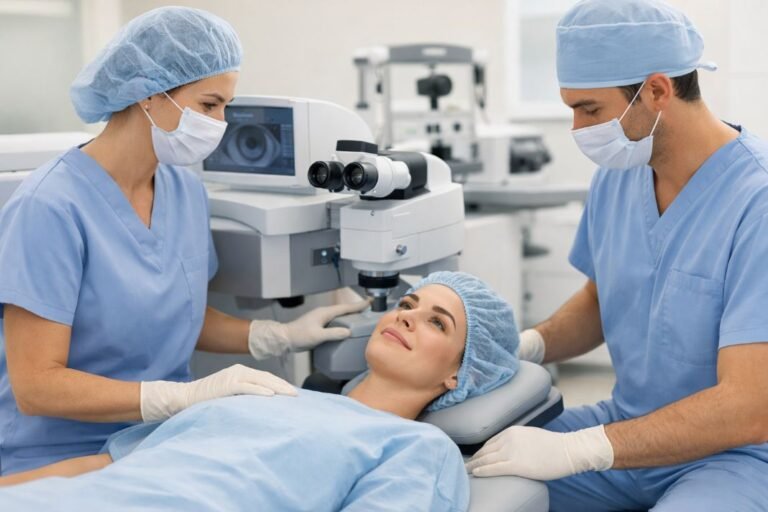
Good local care should feel organised, personal, and clear from the first appointment. In Colchester and Essex, patients may be able to access the full spectrum of private vision correction without adding a long train process or motorway trip to every stage of treatment.
At a consultant-led practice, the process often follows a straightforward path.
- You have a detailed consultation with scans, prescription checks, and a discussion about your daily visual needs.
- Your surgeon explains which options suit your eyes, including LASIK, TransPRK, lens replacement surgery, or ICL.
- If treatment goes ahead, the procedure is planned around your prescription, corneal shape, lens status, and aftercare needs.
- Follow-up visits take place locally, which matters because recovery is monitored over time, on the day itself.
Each procedure addresses a different group of patients. LASIK is often suitable for adults with stable prescriptions and healthy corneas who want quick visual recovery. TransPRK can suit people with thinner corneas or certain surface considerations. Lens replacement surgery is often discussed with patients over 50, particularly if reading vision is worsening or early lens changes are present. ICL can be useful for higher prescriptions where corneal laser treatment may not be the best fit.
Location also shapes the patient process in very practical ways. A consultation at Colchester Eye Centre or treatment arranged through Oaks Hospital can mean easier parking, shorter travel, and simpler follow-up. That may sound mundane, yet it matters a great deal if your eyes are light-sensitive after treatment or if you need someone to drive you home.
At The Vision Surgeon, Mr Mukherjee sees patients personally, assesses suitability himself, and performs procedures himself. For many readers, that continuity feels very different from a chain model where the consultation, surgery, and aftercare may involve different clinicians in different places.

Comparing outcomes, safety, and expertise: London vs. Local clinics
Safety standards do not change because a clinic sits outside the M25. In the UK, private eye clinics are regulated, surgeons work within professional standards, and hospitals or clinics are subject to inspection requirements. Patients should expect proper governance, informed consent, balanced discussion of risks, and appropriate aftercare wherever treatment takes place.
Surgeon qualifications matter more than city branding. A consultant ophthalmologist with refractive training, NHS experience, and recognised credentials through bodies such as the Royal College of Ophthalmologists may offer care at a very high level whether based in London, Essex, or elsewhere. The CertLRS qualification, awarded by the Royal College of Ophthalmologists, is one example of refractive surgery accreditation that patients can look for.
Technology should also be judged specifically. Ask what diagnostic scans are used, how suitability is assessed, what procedure options are available, and where surgery is carried out. A local clinic may have access to the same categories of laser platform, lens technology, and safety processes that readers assume exist only in larger cities.
Mr Mukherjee’s background is relevant here because it reflects the wider point. He is a consultant ophthalmologist with additional fellowship training in laser and refractive surgery, corneal surgery, and glaucoma, and he also leads an NHS ophthalmology unit. That kind of profile shows how advanced expertise can be based locally rather than concentrated in London alone.
Results can never be promised in eye surgery, and any reputable clinic should say so plainly. What patients can reasonably expect is a careful assessment, an honest view on suitability, a discussion of benefits and risks, and treatment that matches accepted professional standards. Prestige alone does not sharpen vision.
Cost and convenience: the practicalities of staying local
Price matters, but the full picture includes time, travel, and how easily aftercare fits into everyday life. For readers comparing local eye surgery with treatment in London, convenience often becomes more important the further they move through the process.
Indicative pricing for laser eye surgery in Essex can be similar to prices seen in larger city clinics. LASIK often falls in the region of £1,400 to £1,800 per eye. TransPRK is generally in a similar bracket. Lens replacement surgery and cataract surgery commonly range from about £2,000 to £4,000 per eye, depending on lens choice, and ICL is often around £3,000 per eye. Final fees depend on the individual assessment and the treatment recommended.
Travel costs are easy to underestimate. A single trip to London may involve rail fares, parking, fuel, time away from work, and a companion for the day of surgery. Add pre-operative testing and follow-up visits, and the practical burden can become much larger than it first appears.
Aftercare is where local treatment often shows its value most clearly:
- follow-up appointments are easier to attend
- short-notice reviews are simpler if you need reassurance
- family members or friends can help without planning a full day around travel
A local setting can also reduce stress on the day itself. Patients having vision correction are usually more comfortable with a familiar route, free parking, and the knowledge that support is nearby if they have questions during recovery. Convenience is not a minor extra in surgery that depends on careful review after the procedure.
The role of personalised, consultant-led care in your decision
Location often dominates the conversation, yet many patients care just as much about who will actually treat them. Continuity has a strong effect on confidence because eye surgery involves trust before, during, and after the procedure.
In some clinic models, the person who first discusses your options may not be the surgeon who operates. In others, surgery takes place in a separate city, with aftercare shared across several clinicians. That arrangement can work, but some patients prefer a more direct line of responsibility.
Consultant-led care means your decisions are made by the doctor who has examined your eyes, interpreted your scans, and planned your treatment. If your corneas are thinner than expected, if dry eye affects the choice of procedure, or if lens replacement is a better option than LASIK, that judgement comes from the same clinician who will carry out the operation.
An NHS consultant background adds another layer of reassurance for many people. It suggests broad clinical exposure, regular management of complications and co-existing eye disease, and experience beyond straightforward private cases. Combined with refractive qualifications and fellowship training, it gives patients a clearer sense of who is making decisions about their sight.
A boutique setting can feel different in smaller ways too. Staff know your name. The surgeon knows your prescription history. Follow-up conversations build on earlier ones instead of starting again from a file. For an elective procedure that people may think about for months or years, that familiarity often matters more than the appeal of a London address.

Looking beyond London: what really matters when choosing laser eye surgery
The most helpful way to frame the decision is simple: choose the place and the surgeon that fit your eyes, your needs, and your life. Geography may influence convenience, but it does not automatically determine quality.
A sensible comparison includes the surgeon’s qualifications, the range of procedures offered, the honesty of the suitability assessment, the safety standards of the clinic, and the quality of aftercare. It should also include practical details such as who performs the surgery, where it takes place, and how easy it will be to attend follow-up appointments if your recovery needs closer review.
Regional eye care in the UK has matured significantly. Patients no longer need to assume that advanced vision correction begins and ends in London. For many, the right answer is closer to home, with the same attention to standards and a far easier patient process.
A calm, informed decision usually starts by looking past reputation and focusing on evidence, transparency, and rapport. Once those pieces are in place, the best location tends to become much clearer.